 +86-18627039022
 jackiecheng@loongceram.com



 English

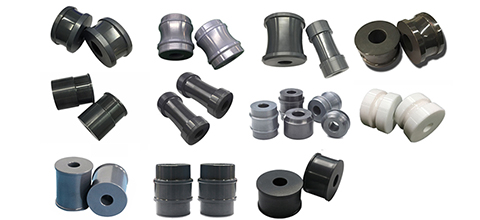
Technical Ceramics for Wear-Resistant Industrial Components
Introduction: Why Wear Problems Lead Engineers to Technical Ceramics In industrial systems, wear is rarely a sudden failure mechanism. Instead, it is a progressive and predictable degradation process that directly affects equipment lifetime, maintenance frequency, and operational stability. In applications such as bulk material handling, chemical processing, pump and valve systems, and precision equipment, conventional […]
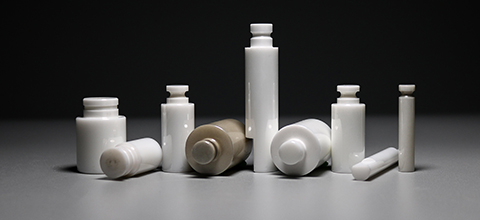
Sintering Methods for Technical Ceramics:
Pressureless Sintering, Hot Pressing, and Hot Isostatic Pressing Introduction: Why Sintering Determines the Final Quality of Technical Ceramics In technical ceramics, sintering is not simply a densification step—it is the process stage where microstructure, defect population, and long-term reliability are fundamentally established. Unlike metals, ceramics cannot rely on plastic deformation to relax internal stresses or […]

Manufacturing Methods of Technical Ceramics:From Powder Engineering to Precision Components
Introduction In technical ceramics, material composition alone does not define performance. Instead, the manufacturing route ultimately determines the achievable mechanical strength, thermal stability, dimensional accuracy, and long-term reliability of a ceramic component. Unlike metals, ceramics exhibit little to no plastic deformation after forming. Once sintering is completed, the microstructure, defect population, and residual stress state […]
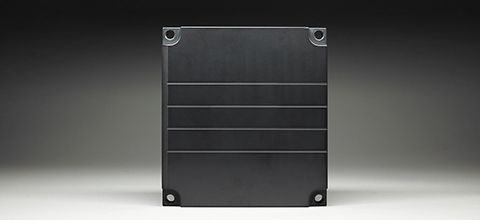
A Comprehensive Guide to Technical Ceramics
Introduction As modern industries continue to push the limits of temperature, mechanical load, precision, and chemical stability, conventional materials such as metals and polymers are increasingly unable to meet performance requirements. In this context, technical ceramics—also known as advanced ceramics, engineering ceramics, or high-performance ceramics—have become indispensable materials across a wide range of high-end industrial […]
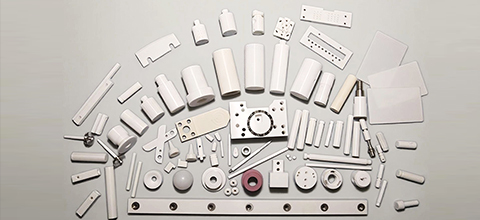
The Importance of Structural Ceramics in Modern Industries Introduction: Why Structural Ceramics Matter Today As industrial systems continue to operate under increasingly extreme conditions—higher temperatures, greater mechanical loads, aggressive chemical environments, and stricter reliability requirements—structural ceramics have become indispensable materials in modern engineering. Unlike traditional ceramics used primarily for aesthetic or domestic purposes, structural ceramics […]

