

Toughening Mechanisms, Performance Advantages, and Advanced Industrial Applications
Alumina ceramics (Al₂O₃) are widely used across industrial sectors due to their excellent mechanical strength, electrical insulation, and chemical stability. However, their inherent brittleness and relatively low fracture toughness—typically only 3–4 MPa·m¹ᐟ²—significantly limit their use in high-impact or severe wear environments.
Zirconia Toughened Alumina (ZTA) ceramics were developed to overcome these limitations. By combining the high hardness and stiffness of alumina with the exceptional toughness of zirconia, ZTA represents a new generation of advanced ceramic composites. Today, ZTA ceramics play an increasingly critical role in medical devices, industrial wear components, aerospace systems, and precision engineering applications.
1. Core Toughening Mechanisms of ZTA Ceramics
Multi-Mechanism Synergy for Superior Fracture Resistance
Unlike conventional ceramics that rely on a single strengthening mechanism, ZTA ceramics achieve enhanced toughness through synergistic microstructural design, primarily driven by the unique phase transformation behavior of zirconia.
1.1 Stress-Induced Phase Transformation Toughening (Primary Mechanism)
Pure zirconia undergoes phase transitions with temperature:
- Monoclinic (m-ZrO₂) at room temperature
- Tetragonal (t-ZrO₂) above ~1170 °C
- Cubic (c-ZrO₂) above ~2376 °C
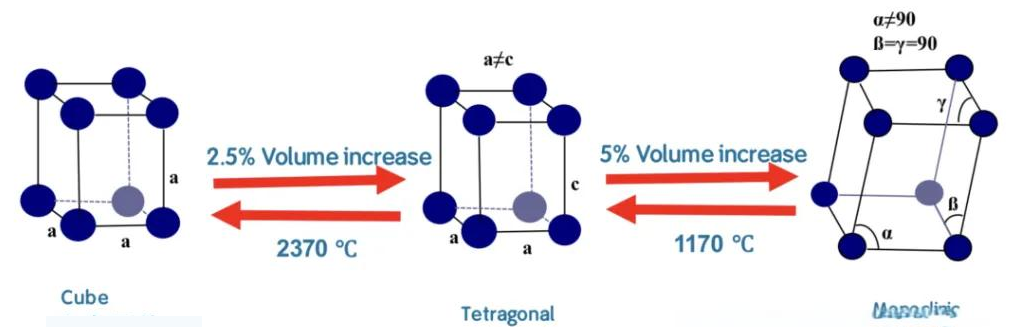
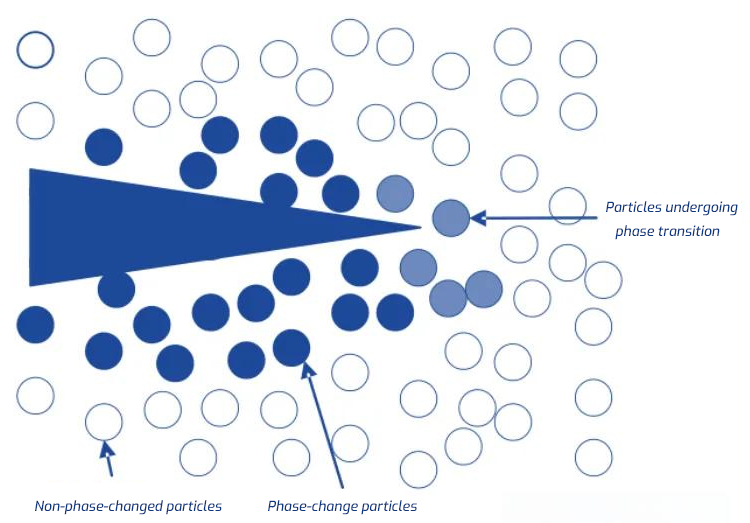
In ZTA ceramics, nano- or submicron-sized tetragonal zirconia particles are stabilized at room temperature within the alumina matrix. When external stress is applied—particularly at a crack tip—the metastable tetragonal phase transforms into the monoclinic phase.
This transformation is accompanied by a 3–5% volumetric expansion, which generates localized compressive stress at the crack tip. The result is a crack-shielding effect that effectively suppresses crack propagation while dissipating fracture energy, dramatically increasing fracture toughness.
1.2 Microcrack Toughening
The localized volume expansion caused by zirconia phase transformation induces uniformly distributed microcracks within the alumina matrix. These microcracks do not interconnect or cause catastrophic failure; instead, they redistribute stress fields.
As a macrocrack propagates, it must deviate around or intersect these microcracks, increasing the crack path length and energy consumption—further improving fracture resistance.
1.3 Dispersion Toughening and Surface Compressive Strengthening
Dispersed tetragonal and cubic zirconia particles force cracks to follow a tortuous and branched propagation path, increasing fracture energy without increasing crack size.
Additionally, during surface finishing processes such as grinding or polishing, surface zirconia particles may transform to the monoclinic phase, forming a compressive residual stress layer. This layer counteracts tensile stresses during service, reducing the likelihood of surface crack initiation and enhancing overall component reliability.
2. Mechanical and Thermal Properties of ZTA Ceramics
Quantitative Performance Advantages
ZTA properties can be precisely tailored through zirconia content, sintering methods (pressureless sintering, hot pressing, HIP), and microstructural optimization.
Table 1. Typical Properties of Zirconia Toughened Alumina (ZTA)
| Property | Typical Range | Test Standard | Comparison vs. Alumina |
|---|---|---|---|
| Density | 4.0–4.5 g/cm³ | ASTM C20 | Slightly higher |
| Vickers Hardness | 1500–2000 HV | ISO 6507 | Comparable, higher toughness |
| Flexural Strength | 400–800 MPa | ISO 14704 | +30–50% |
| Fracture Toughness (K₁c) | 5.0–8.0 MPa·m¹ᐟ² | ASTM C1421 | 1.5–2× higher |
| Elastic Modulus | 300–380 GPa | ASTM C1259 | Similar |
| Thermal Expansion (25–1000 °C) | 8.0–9.0 ×10⁻⁶/°C | ASTM E831 | Better thermal stability |
| Max Service Temperature | 1400–1600 °C | — | Higher reliability |
| Wear Resistance | 2–3× alumina | — | Significant improvement |
Table 2. Performance Comparison with Other Engineering Ceramics
| Material | K₁c (MPa·m¹ᐟ²) | Hardness (HV) | Flexural Strength (MPa) | CTE (×10⁻⁶/°C) | Typical Applications |
|---|---|---|---|---|---|
| ZTA | 5.0–8.0 | 1500–2000 | 400–800 | 8.0–9.0 | Wear parts, medical, tooling |
| Alumina | 3.0–4.0 | 1800–2200 | 300–400 | 7.5–8.5 | Insulation, basic wear |
| Silicon Carbide | 3.0–4.5 | 2200–2800 | 400–600 | 4.0–5.0 | High-temp structures |
| Silicon Nitride | 6.5–7.5 | 1400–1800 | 600–1000 | 3.0–3.5 | Bearings, turbines |
| Zirconia | 8.0–12.0 | 1200–1500 | 900–1200 | 10.5–11.0 | Dental, fixtures |
ZTA offers one of the best hardness–toughness balances among structural ceramics, avoiding the brittleness of alumina and the lower hardness or thermal instability of fully stabilized zirconia.
3. Application Expansion of ZTA Ceramics
3.1 Medical Applications: Implant-Grade Bioceramics
ZTA ceramics exhibit excellent biocompatibility, corrosion resistance, and wear behavior:
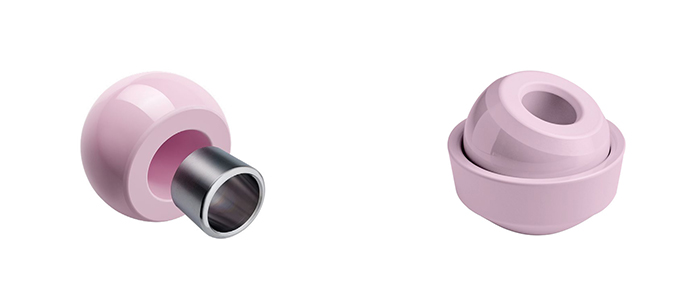
- Orthopedic joint components : service life of 20–50 years, reduced wear debris, fracture toughness of 5–6 MPa·m¹ᐟ²
- Dental restorations and implants: high hardness (1600–1800 HV), aesthetic appearance, and chemical stability in oral environments
3.2 Industrial and Precision Manufacturing
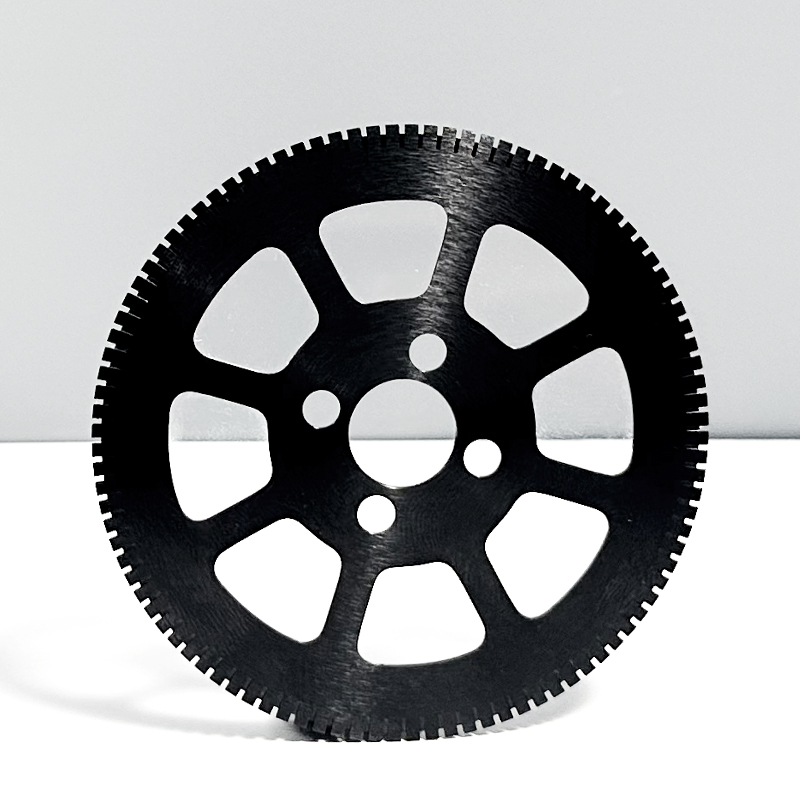
- Cutting tools: ZTA ceramic tools offer reduced flank wear, excellent thermal stability, and service life 3–5× longer than metal tools
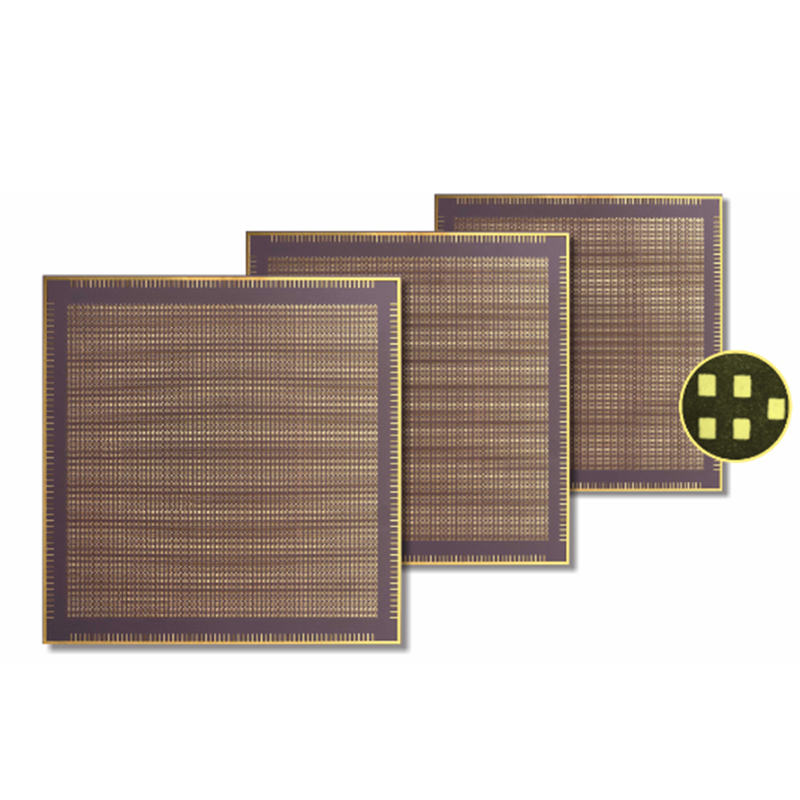
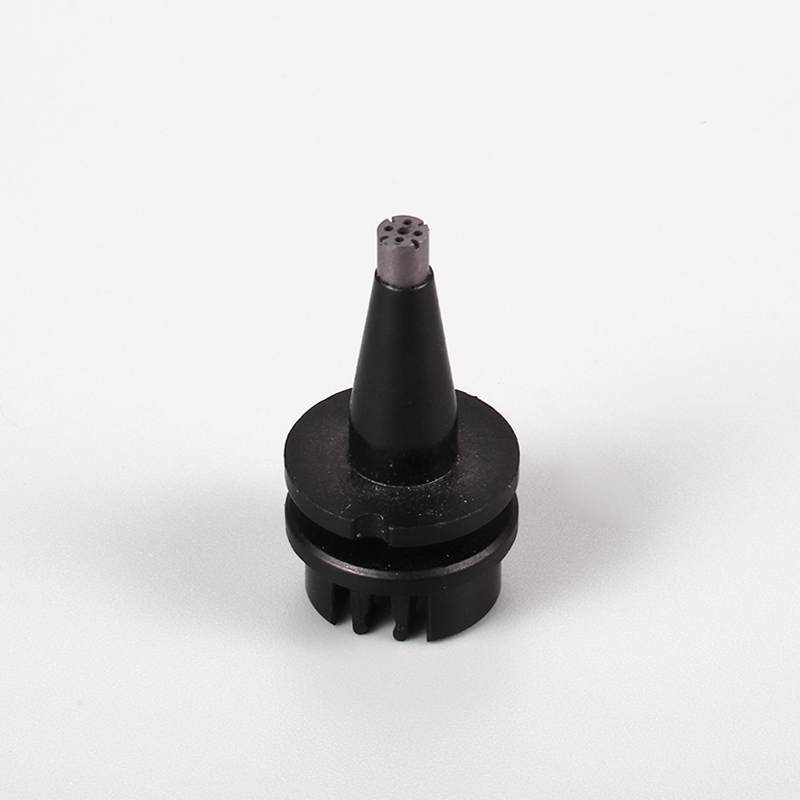
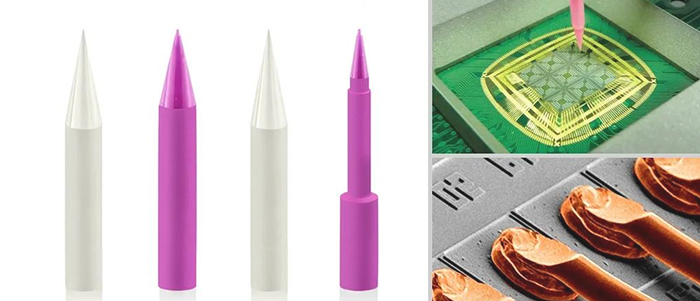
- Semiconductor packaging: wire bonding capillaries, ceramic substrates with high strength and electrical insulation
- Severe wear components: liners, grinding media, and valve parts outperform high-chromium steels by 3–5× in wear life
3.3 Aerospace and Energy Systems
- High-temperature engine components: stable up to 1600 °C, low thermal expansion, excellent thermal shock resistance
- Thermal protection systems (TPS): heat shields and insulation tiles for extreme re-entry environments
- Energy equipment: fuel cell components and high-temperature furnace parts with chemical resistance
3.4 Protective and Defense Applications
- Lightweight ballistic armor: multi-hit capability with 30–50% weight reduction compared to metals
- Wear-resistant coatings: plasma-sprayed ZTA coatings improve surface durability of metal components
4. Future Development Trends of ZTA Ceramics
Ongoing advances in powder engineering, microstructural control, and sintering technologies continue to push ZTA performance boundaries. Optimized zirconia content (typically 10–20 vol%) and advanced forming methods such as ceramic injection molding (CIM) enable tighter tolerances and higher reliability.
With the integration of materials informatics and multi-scale simulation, ZTA ceramics are expected to play an even greater role in next-generation industrial systems requiring balanced toughness, wear resistance, and thermal stability.