





Anti-Static AluminaESD-safe
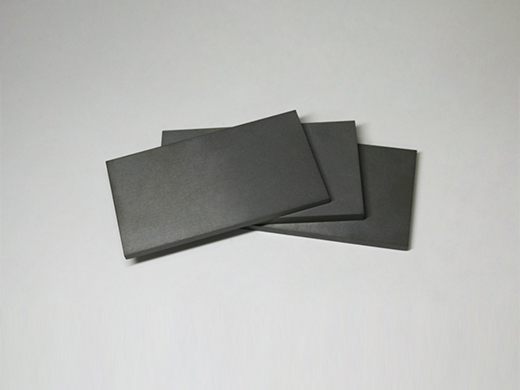
Black Anti-Static Alumina
Anti-static alumina ceramics overcome the limitations of traditional alumina in electrostatic-sensitive applications through conductive modification technology, establishing themselves as an ideal material for precision electronics, medical devices, and explosion-proof environments. Their core value lies in the dual properties of “high strength + anti-static capability.” Despite challenges such as high costs and complex manufacturing processes, demand from high-end industrial and technological sectors is expected to drive further expansion of their application fields through material innovation in the future.
Jump to
Performance advantage
Anti-static: no electrostatic breakdown of the product
Controllable surface resistivity: through doping or coating technology, the surface resistivity can be reduced to 10⁶-10⁹ Ω,
to meet the ESD protection standards (such as IEC 61340-5-1), effectively eliminating the risk of electrostatic buildup.
Fast electrostatic dissipation: electrostatic decay time <0.1-2 seconds (ordinary materials >60 seconds),
to avoid electrostatic discharge (ESD) damage to sensitive components.
Multi-functional conductive modification: support a variety of modification methods (such as carbon nanotube doping,
metal coating, ion implantation), to adapt to the needs of different scenarios
Controllable surface resistivity: through doping or coating technology, the surface resistivity can be reduced to 10⁶-10⁹ Ω,
to meet the ESD protection standards (such as IEC 61340-5-1), effectively eliminating the risk of electrostatic buildup.
Fast electrostatic dissipation: electrostatic decay time <0.1-2 seconds (ordinary materials >60 seconds),
to avoid electrostatic discharge (ESD) damage to sensitive components.
Multi-functional conductive modification: support a variety of modification methods (such as carbon nanotube doping,
metal coating, ion implantation), to adapt to the needs of different scenarios
Material grade
99.99 alumina
<img class=”wp-image-1670″ style=”width: 900px;” src=”https://www.loongceram.com/wp-content/uploads/2025/07/防静电氧化锆.jpg” alt=””>
Applications
Application Field
Electronics and Semiconductor Manufacturing
ESD protection components: wafer handling robotic arms, vacuum suction cups, probe cards (to prevent static damage to chips)
Precision fixtures: anti-static ceramic tweezers, carriers (to avoid adsorption of dust or triggering of discharges)
Anti-static suction nozzles
Medical and Bioengineering
Surgical tools: anti-static ceramic scalpels, endoscopic components (to reduce static adhesion to biological tissues)
Implantable devices: artificial joints with anti-static surface treatment (to reduce the risk of inflammation caused by friction static) (Implantable devices: artificial joints with antistatic surfaces (to reduce the risk of inflammation caused by friction static)
Industrial explosion protection and safety
Explosion-proof tools: wrenches, scrapers for use in flammable and explosive environments (to avoid static sparks)
Powder handling equipment: antistatic grinding tanks, conveying piping (to prevent static powder explosions)
Optics and precision instruments
Optical mounts: antistatic ceramic mirror holders (to reduce dust adsorption and to improve imaging quality)
Vacuum chambers: linings for semiconductor coating equipment (both corrosion-resistant and antistatic) Vacuum chambers: lining for semiconductor coating equipment (both corrosion-resistant and anti-static)
Electronics and Semiconductor Manufacturing
ESD protection components: wafer handling robotic arms, vacuum suction cups, probe cards (to prevent static damage to chips)
Precision fixtures: anti-static ceramic tweezers, carriers (to avoid adsorption of dust or triggering of discharges)
Anti-static suction nozzles
Medical and Bioengineering
Surgical tools: anti-static ceramic scalpels, endoscopic components (to reduce static adhesion to biological tissues)
Implantable devices: artificial joints with anti-static surface treatment (to reduce the risk of inflammation caused by friction static) (Implantable devices: artificial joints with antistatic surfaces (to reduce the risk of inflammation caused by friction static)
Industrial explosion protection and safety
Explosion-proof tools: wrenches, scrapers for use in flammable and explosive environments (to avoid static sparks)
Powder handling equipment: antistatic grinding tanks, conveying piping (to prevent static powder explosions)
Optics and precision instruments
Optical mounts: antistatic ceramic mirror holders (to reduce dust adsorption and to improve imaging quality)
Vacuum chambers: linings for semiconductor coating equipment (both corrosion-resistant and antistatic) Vacuum chambers: lining for semiconductor coating equipment (both corrosion-resistant and anti-static)
Black Anti-Static Alumina Machining
It can be processed by injection molding, compression molding, isostatic pressing, grouting molding and extrusion molding, etc. After sintering, processing can only be carried out using the diamond grinding method. The advanced green body and blank processing technology developed by Precision Ceramics Company enables the manufacture of more complex components using traditional processing methods. In addition, alumina can be easily bonded to metals or other ceramics through metallization and brazing techniques.
Alumina can be processed in green billets, billets or in a completely dense state. In the green or billet state, alumina can be processed into complex geometric shapes relatively easily. However, in order to fully densify the material, the sintering process will cause the alumina green body to shrink by approximately 20%. This shrinkage means that when processing alumina before sintering, very strict tolerances cannot be maintained. To achieve very strict tolerances, diamond tools must be used to process/grind fully sintered materials. During this manufacturing process, very precise diamond-coated tools/grinding wheels are needed to grind the material until the desired shape is formed. Due to the inherent toughness and hardness of the material, this can be a time-consuming and costly process.