

1. Introduction
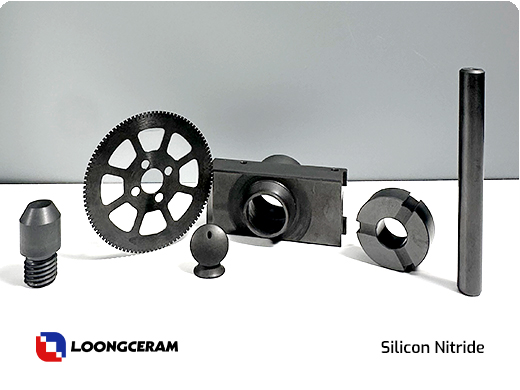
Silicon nitride (Si₃N₄) is one of the most important structural ceramics today, known for its high strength, toughness, excellent thermal stability, and outstanding wear resistance. It is widely used in aerospace, automotive engines, semiconductor equipment, and precision machinery manufacturing.However, silicon nitride is not a single form of material—it can exist in different types depending on the preparation and sintering process. Each type shows distinct differences in density, strength, toughness, and applications. This article analyzes the different types of silicon nitride, their corresponding sintering techniques, and provides data-based guidance for material selection across various industries.
2. Structure and Physical Properties of Silicon Nitride
2.1 Crystal Structure
Silicon nitride mainly exists in α-phase and β-phase crystal structures under normal conditions, and a γ-phase can form under high pressure. Among them, α- and β-phases are the main forms used in industrial applications.
- α-phase (α-Si₃N₄):
Space group P31c, hexagonal crystal system. The (SiN₄) tetrahedra are connected by shared nitrogen atoms, forming an ABCDABCD-type layered stacking sequence with a long periodicity. The lattice parameters are approximately a = 7.75 Å, c = 5.62 Å. It is stable at low temperatures and commonly found in silicon nitride powders. - β-phase (β-Si₃N₄):
Space group P63/m, also hexagonal. The (SiN₄) tetrahedra form an ABAB stacking structure with higher symmetry and shorter periodicity. Lattice parameters are approximately a = 7.60 Å, c = 2.91 Å. Stable at high temperatures, β-Si₃N₄ is the dominant crystal phase in sintered ceramics, providing higher strength and toughness. - γ-phase (γ-Si₃N₄):
Forms only under extreme conditions (T > 1500°C, P > 10 GPa). It has a cubic spinel structure with ultra-high hardness (up to 35 GPa). However, due to its complex preparation, it has not yet achieved industrial production.
2.2 Physical Properties
The unique covalent bonding and dense crystal structure of silicon nitride give it characteristic “three highs and two lows”:
high hardness, high temperature resistance, high strength, and low thermal expansion, low thermal conductivity.
- Mechanical Properties:
High hardness and strength — microhardness of 18–21 GPa, second only to diamond and cubic boron nitride. Bending strength at room temperature reaches 800–1200 MPa, and above 500 MPa at 1200°C. - Thermal Properties:
Excellent thermal resistance, low thermal expansion, and low thermal conductivity.
Melting point ~1900°C (decomposes under normal pressure), thermal expansion coefficient 2.5–3.5×10⁻⁶/°C, and good thermal shock resistance.
Thermal conductivity ranges from 10–30 W/(m·K), making it a good heat-insulating material. - Electrical Properties:
Excellent electrical insulation — resistivity 10¹⁴–10¹⁶ Ω·cm at room temperature, breakdown strength 5–10 kV/mm, suitable for high-temperature insulating components.
3. Main Types of Silicon Nitride and Sintering Processes
The performance of silicon nitride depends heavily on its fabrication and sintering route. Based on sintering pressure, atmosphere, and additive types, silicon nitride can be categorized into the following main types:
3.1 Reaction-Bonded Silicon Nitride (RBSN)
Principle:
Produced from high-purity silicon powder reacting with nitrogen gas at 1400–1450°C.
Characteristics:
Low shrinkage, near-net shaping possible; retains porosity, with relatively low density (2.6–2.8 g/cm³).
Typical Applications:
Refractory supports, heater tubes, metallurgical protection sheaths.
3.2 Hot-Pressed Silicon Nitride (HPSN)
Principle:
Sintered under high temperature and pressure (1700–1900°C, ~10 MPa) using a graphite mold to achieve direct densification.
Advantages:
High density (>99%), excellent strength and toughness; uniform microstructure with good crack resistance.
Applications:
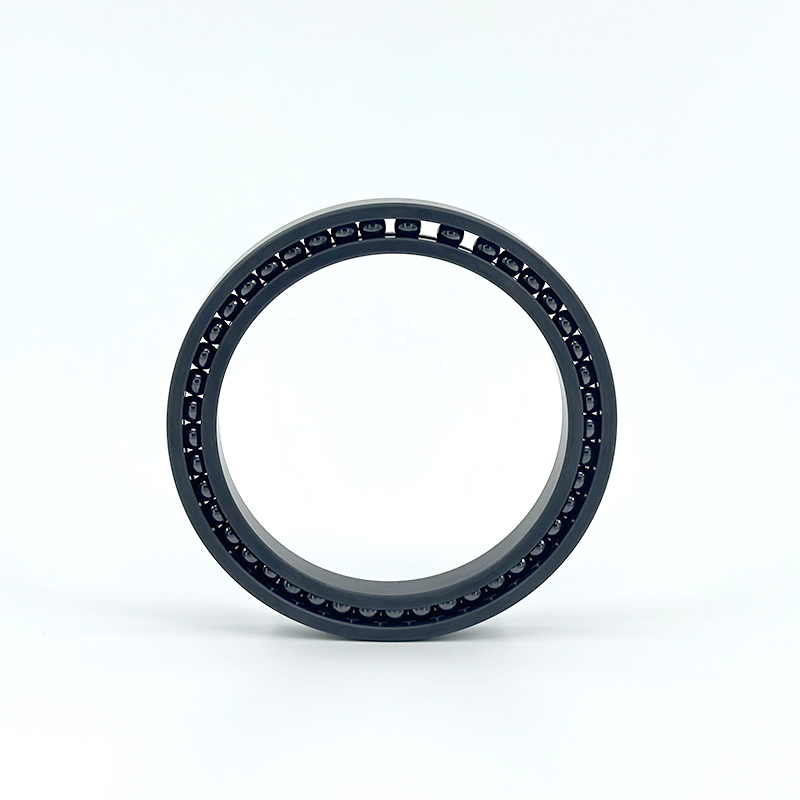
Cutting tools, bearing rollers, high-temperature molds.
3.3 Sintered Reaction-Bonded Silicon Nitride (SRBSN)
Principle:
An RBSN preform is first made, then densified by high-temperature secondary sintering.
Features:
Improved strength while maintaining dimensional precision; intermediate performance between RBSN and GPSN.
Applications:
Gas turbine rotors, mechanical seals, wear-resistant insulators.
3.4 Gas-Pressure-Sintered Silicon Nitride (GPSN)
Principle:
Sintered in high-pressure nitrogen (10–20 MPa) at 1800–2000°C to suppress Si₃N₄ decomposition.
Performance:
High density and balanced mechanical properties close to hot-pressed products; excellent thermal conductivity and oxidation resistance.
Typical Data:
Flexural strength: 1200 MPa, Fracture toughness: 7 MPa·m¹/².
Applications:
Automotive turbocharger rotors, bearings, heat exchangers, high-temperature molds.
3.5 Pressureless Sintered Silicon Nitride (SSN)
Principle:
Sintered in a nitrogen atmosphere with oxide additives (Y₂O₃, MgO, Al₂O₃, etc.) without applied external pressure.
Advantages:
Low cost, suitable for complex geometries; efficient for mass production.
Applications:
Semiconductor fixtures, welding jigs, heat-spreading substrates, pump and valve parts.
Comparison of Silicon Nitride by Sintering Method
| Type | Density (g/cm³) | Flexural Strength (MPa) | Toughness (MPa·m¹/²) | Features | Applications |
|---|---|---|---|---|---|
| RBSN | 2.6–2.8 | 300–500 | 3–4 | Low cost, porous | Refractory supports |
| SRBSN | 3.0 | 700 | 5 | Moderate strength | Gas turbines |
| HPSN | 3.2 | 900–1100 | 6 | High density | Cutting tools, molds |
| GPSN | 3.25 | 1000–1200 | 7 | Balanced performance | Automotive turbines, bearings |
| SSN | 3.1 | 800–900 | 5 | Low cost, flexible shaping | Heat spreader substrates |
4. Summary and Industry Trends
The multiple silicon nitride systems enable flexible solutions for various engineering needs:
- RBSN/SRBSN — ideal for components requiring structural stability but subjected to moderate loads.
- HPSN/GPSN — best for high-strength, high-thermal-stress environments such as aerospace engines and power machinery.
- SSN — highly promising for electronic thermal management and semiconductor manufacturing applications.
5. Conclusion
The diverse silicon nitride family provides a flexible materials platform ranging from structural parts to electronic packaging.
Understanding the different types and sintering processes of silicon nitride helps engineers optimize material selection and supports ongoing innovation in the ceramics industry.