

1. Introduction
Current advancements and innovations in photovoltaic (PV) technology consistently revolve around two core objectives: “improving conversion efficiency” and “reducing manufacturing costs.” This process relies not only on innovations in cell technology (such as PERC, TOPCon, HJT, etc.) but also heavily on the support of upstream materials and equipment technology.
Silicon Carbide (SiC) ceramic is an inorganic compound with extremely strong covalent bonds. Its unique bonding structure endows it with a series of distinctive physical and chemical properties:
- High-Temperature Performance: Decomposition temperature under normal pressure is as high as 2700°C, and it maintains extremely high strength even above 1600°C.
- Thermal Properties: High thermal conductivity (approx. 100-270 W/m·K), low coefficient of thermal expansion (4.5×10⁻⁶ /°C), and excellent thermal shock resistance.
- Chemical Properties: Strong corrosion resistance, does not react with most molten metals and acids.
- Mechanical Properties: High hardness (Mohs hardness 9.0-9.5, Vickers hardness 2500-3000 HV), good wear resistance.
- Electrical Properties: Wide bandgap of 3.26 eV, far exceeding the 1.1 eV of traditional silicon material, showcasing its characteristics as a wide bandgap semiconductor.
2. Application of SiC Ceramics in the Hot Zone System of Polysilicon Ingot Furnaces
Polysilicon ingot technology is one of the main methods for producing silicon wafers for solar cells, with the directional solidification ingot furnace being the core equipment. The “hot zone system” inside the furnace is key to determining ingot quality, energy consumption, and production costs.
2.1 Silicon Carbide Crucible
Quartz ceramic (SiO₂) crucibles are widely used due to their high purity and moderate cost. However, at high temperatures (>1450°C), they soften and slowly react with molten silicon: Si + SiO₂ → 2SiO↑. The generated SiO gas not only contaminates the silicon feedstock but also forms a “silicon shell” on the inner wall of the crucible, leading to difficulties in demolding and potential crucible breakage.
SiC ceramic crucibles provide an ideal solution. Firstly, SiC crucibles maintain dimensional stability and mechanical strength well above the melting point of silicon (1414°C). Secondly, the reaction rate between SiC crucibles and molten silicon is extremely low, significantly reducing silicon contamination and crucible corrosion. Furthermore, the high thermal conductivity of SiC crucibles contributes to a more uniform temperature distribution within the hot zone, improving the crystal growth quality of the ingot and reducing defects like dislocations. Finally, the wear resistance and thermal shock resistance of SiC crucibles allow them to withstand hundreds of thermal cycles, far exceeding the few dozen cycles typical of quartz crucibles.
2.2 SiC Insulation and Structural Components
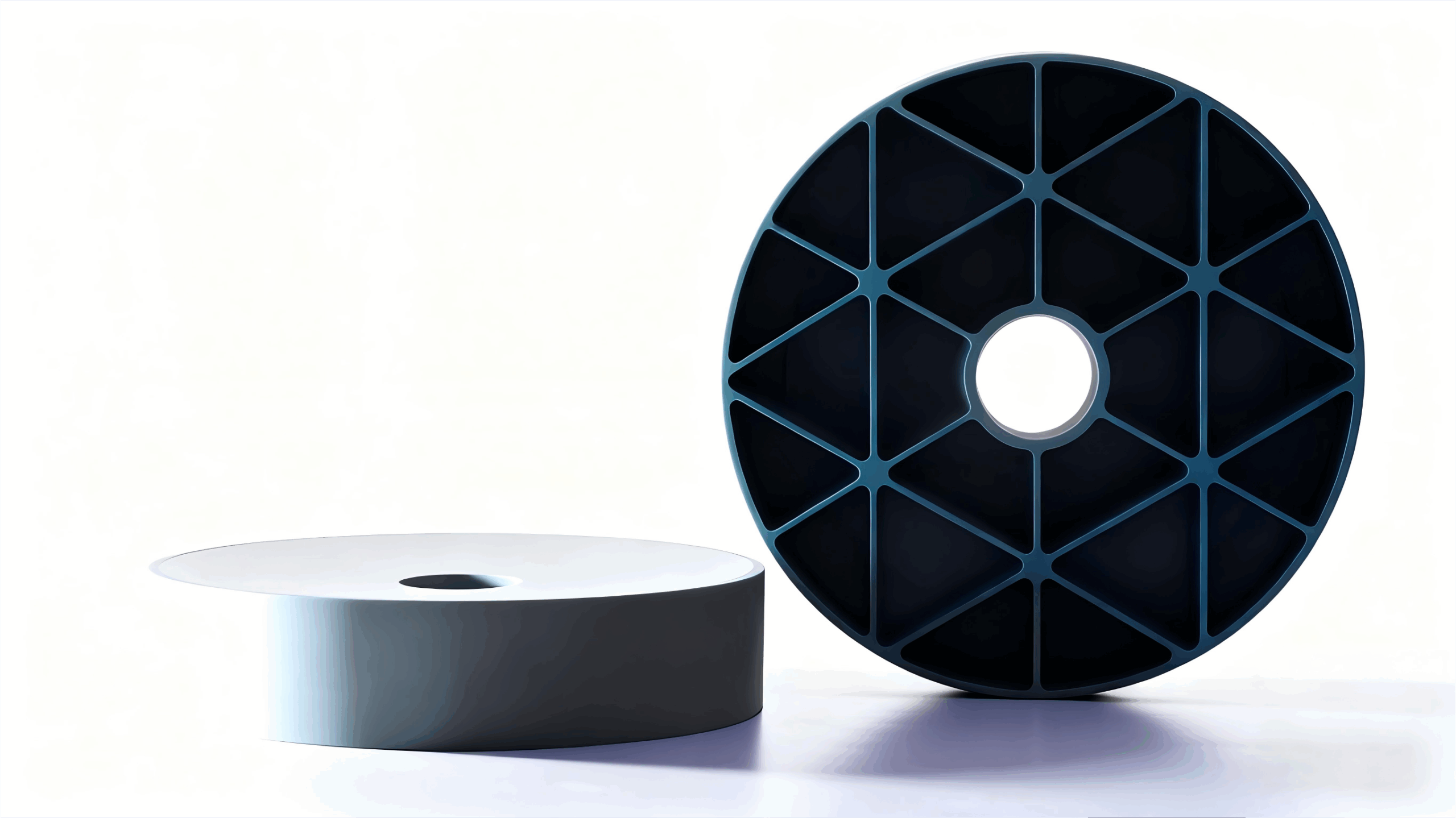
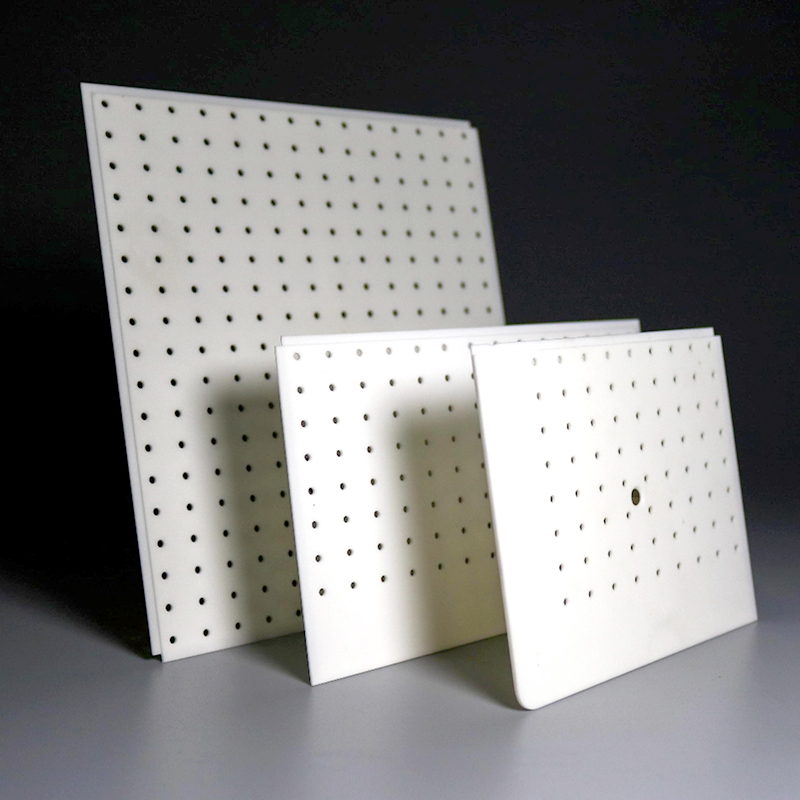
Besides crucibles, other components in the ingot furnace hot zone also widely use SiC ceramics, including heaters, wafer boats, guide tubes/insulation barrels, columns, and protective plates.
- SiC heating elements are the core heating bodies in ingot furnaces, known for their good resistance stability, long service life, and ability to operate long-term at 1600°C in an oxidizing atmosphere.
- SiC plates located at the top and sides of the hot zone are used to guide heat, uniformize the temperature field, and reduce heat loss; their high thermal conductivity and thermal shock resistance ensure the stable long-term operation of the hot zone.
- As support and heat-resistant structural components, which require no deformation or volatilization at high temperatures, SiC ceramic is entirely suitable.
3. Application of SiC in Photovoltaic Sintering Furnace Furniture
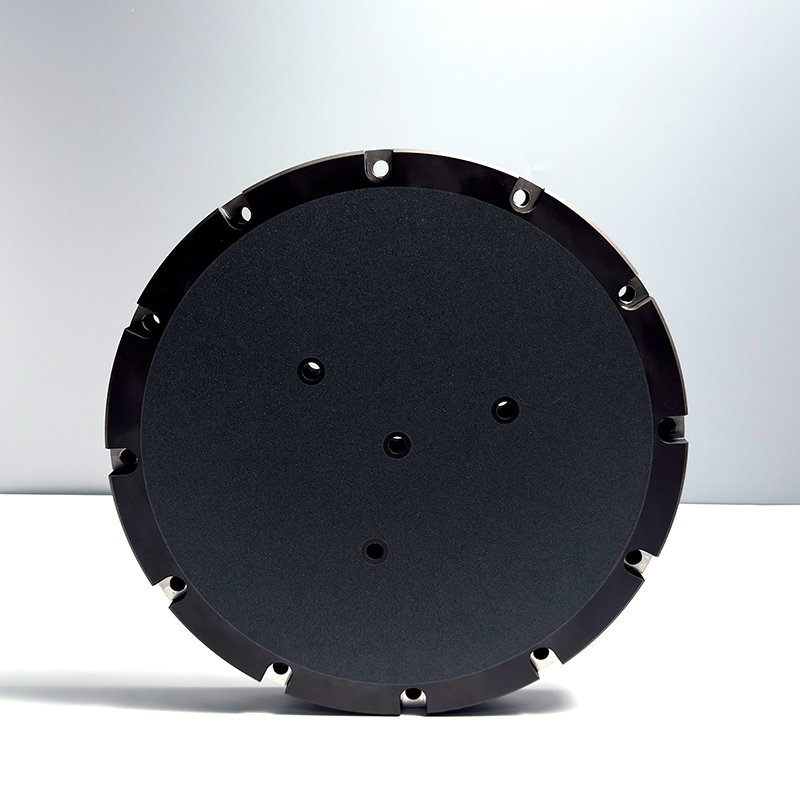
In the cell manufacturing process, silicon wafers printed with electrodes undergo high-temperature sintering (800-900°C) to metallize the electrodes and form ohmic contact with the silicon. The trays (or boats) that carry the wafers during sintering have traditionally been made of quartz or stainless steel.
SiC ceramic furnace furniture offers distinct advantages in this application.
- The oxidation and corrosion resistance of SiC ceramic gives it a much longer lifespan than metal furniture, reducing replacement frequency and maintenance costs, thereby improving equipment utilization.
- SiC ceramic exhibits minimal deformation under repeated high-temperature thermal cycling, maintaining extremely high flatness to ensure uniform heating of the wafers, prevent warping, and reduce breakage rates.
- The lower density of SiC allows for thinner and lighter components, increasing single-furnace loading capacity and reducing energy consumption.
4. Application of SiC as a Third-Generation Semiconductor Substrate in Photovoltaics
SiC is a typical third-generation wide bandgap semiconductor material. Devices made from it (such as SiC MOSFETs) offer high frequency, high efficiency, high-temperature tolerance, and high-voltage tolerance.
4.1 Photovoltaic Inverters
The photovoltaic inverter is the key equipment that converts direct current (DC) electricity generated by solar cells into alternating current (AC) for grid connection. Its conversion efficiency directly affects the overall power generation efficiency of the PV system. Compared to traditional Si-based inverters, inverters using SiC power devices (made from SiC monocrystals) enable:
- Higher switching frequencies, thereby reducing the size and cost of passive components like inductors and capacitors, making the inverter more compact and lighter.
- Lower switching losses, especially under partial load conditions, leading to significant efficiency gains, potentially increasing inverter efficiency from ~98% for Si-based to over 99%.
- Higher operating temperatures, reducing cooling system requirements and improving reliability.
4.2 Future Potential: SiC-based Photovoltaic Cells
In theory, SiC itself is a photovoltaic material, but its indirect bandgap and high cost make it uncompetitive with silicon. However, research is exploring its use as a substrate for growing other high-efficiency III-V multi-junction solar cells (e.g., GaInP/GaAs/Ge) for application in concentrated photovoltaics (CPV) or space solar power, aiming to achieve conversion efficiencies far exceeding those of traditional silicon cells.
5. Conclusion and Outlook
Thanks to its unique and comprehensive excellent properties, silicon carbide ceramic plays an increasingly important role across the photovoltaic industry chain. In the future, as the PV industry’s pursuit of “reducing costs and increasing efficiency” continues, the demand for SiC ceramics will grow stronger. Research focus will concentrate on:
- Continuously reducing the manufacturing cost of high-purity, large-size, complex-structure SiC ceramic components through industry chain integration and technological innovation.
- Deepening the application of new processes like CVD and 3D printing in SiC ceramic preparation to achieve precise customization of materials and structures.
It is foreseeable that silicon carbide ceramic will continue to be a critical supporting material for photovoltaic technology iteration and industry upgrading.