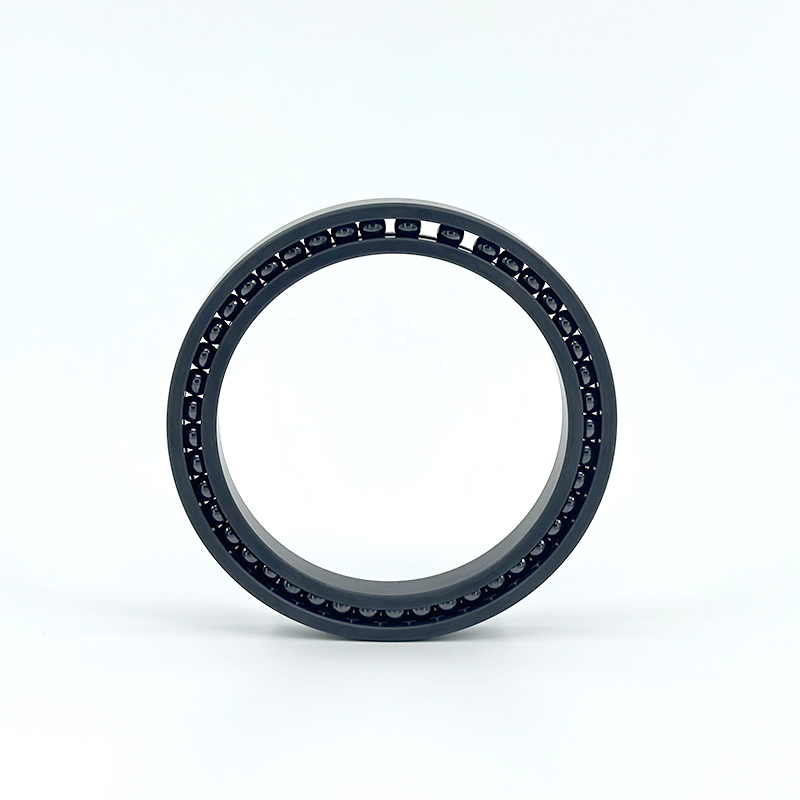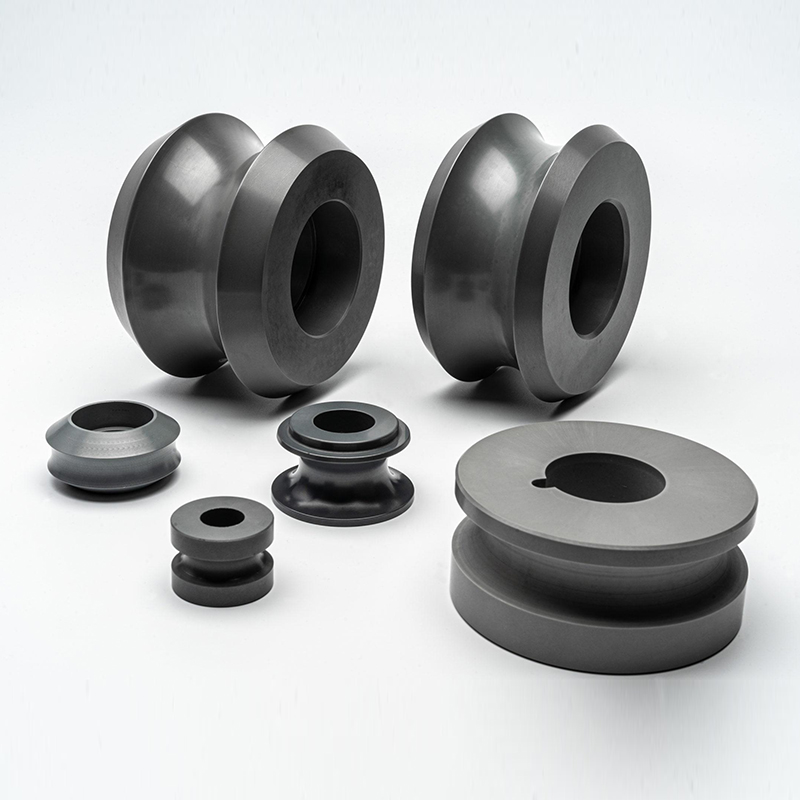


Silicon nitride (Si₃N₄) is one of the most promising structural ceramics with exceptional mechanical and thermal properties. Combining high strength, thermal shock resistance, wear resistance, and low density, it has become a key material in advanced engineering fields. From aerospace engines and semiconductor manufacturing to automotive turbines, precision bearings, and energy systems, Si₃N₄ ceramics are increasingly replacing traditional metals and oxide ceramics in critical applications.
1. Introduction
As a covalent-bonded ceramic material, silicon nitride exhibits a unique balance of strength, thermal stability, and chemical resistance, making it one of the most versatile materials for extreme environments. Its high-performance characteristics have positioned it as a cornerstone of modern engineering ceramics.
2. Chemical Structure and Microstructural Mechanisms
2.1 Chemical Formula and Bonding Characteristics
Silicon nitride has the chemical formula Si₃N₄, dominated by strong Si–N covalent bonds with a bond energy of 470 kJ/mol.
These highly directional bonds form a three-dimensional SiN₄ tetrahedral network, structurally similar to silicates but much denser and more stable.
This strong bonding explains both the high hardness and brittleness of Si₃N₄ ceramics.
2.2 Crystal Structure Types
Depending on synthesis conditions (temperature and pressure), Si₃N₄ exists mainly in three crystalline forms, each exhibiting different physical characteristics:
| Crystal Type | Structural Features | Density (g/cm³) | Stability (°C) | Key Properties |
|---|---|---|---|---|
| α-Si₃N₄ | Layered, fine-grained | 3.17 | <1600 | High reactivity, easy to sinter |
| β-Si₃N₄ | Hexagonal columnar crystals | 3.20 | <1900 | Excellent thermal stability and strength |
| O’-SiAlON | Solid solution phase of Si₃N₄ | 3.22 | <1800 | Improved toughness and thermal shock resistance |
3. Material Properties
The outstanding properties of silicon nitride originate from its high covalent bond ratio (>70%), resulting in unique performance advantages:
High-Temperature Strength
Columnar β-Si₃N₄ grains interlock to form a “self-reinforcing” microstructure, retaining over 80% of room-temperature strength at 1200°C.
Exceptional Thermal Shock Resistance
With a thermal expansion coefficient of 3.0×10⁻⁶/K, much lower than metals, Si₃N₄ can withstand rapid temperature fluctuations without cracking — making it ideal for gas turbine and combustion environments.
High Specific Strength and Modulus
With a density below 3.22 g/cm³, the specific strength of Si₃N₄ at 1000°C is 3–5 times higher than that of Inconel and titanium alloys.
Outstanding Chemical Stability
A dense SiO₂ surface film forms naturally, providing protection against alkalis, fluorides, and molten metals.
Low Friction and Excellent Wear Resistance
Si₃N₄ shows a low dry friction coefficient (0.2–0.3), outperforming most engineering ceramics and high-temperature alloys.
Comprehensive Performance Comparison
| Property | Si₃N₄ | Al₂O₃ | AlN | SiC | ZrO₂ |
|---|---|---|---|---|---|
| Density (g/cm³) | 3.2 | 3.9 | 3.26 | 3.1 | 6.0 |
| Flexural Strength (MPa) | 800–1000 | 350 | 320 | 450 | 900 |
| Thermal Conductivity (W/m·K) | 30–90 | 25 | 180 | 120 | 3 |
| Thermal Expansion (×10⁻⁶/K) | 3.0 | 8.0 | 4.5 | 4.2 | 10.5 |
| Fracture Toughness (MPa·m¹/²) | 6–8 | 3–4 | 2.5 | 4 | 10–12 |
4. Sintering Technologies and Microstructural Control
Due to its strong covalent bonding and low self-diffusion rate, Si₃N₄ is notoriously difficult to densify. Therefore, various energy-assisted and additive-assisted sintering techniques are employed to achieve full densification.
| Sintering Method | Temperature (°C) | Atmosphere / Pressure | Densification Mechanism | Features & Applications |
|---|---|---|---|---|
| Reaction-Bonded Si₃N₄ (RBSN) | 1200–1400 | N₂, ambient | Solid-gas reaction forming β-Si₃N₄ | High shape precision, lower strength |
| Hot-Pressed Si₃N₄ (HPSN) | 1600–1800 | N₂, 20–40 MPa | Liquid-phase assisted grain rearrangement | High strength and density, limited size |
| Gas-Pressure Sintered Si₃N₄ (GPSN) | 1750–1900 | N₂, 5–20 MPa | Diffusion-assisted densification under gas pressure | Industrial mainstream, large-scale fabrication |
| Spark Plasma Sintering (SPS) | 1500–1700 | Vacuum/inert gas | Electric field activation and surface diffusion | Fast sintering, fine grains, high cost |
5. Industrial Applications: The Ideal Material for Extreme Environments
Aerospace and High-Temperature Components
Si₃N₄ maintains high strength and oxidation resistance at elevated temperatures, making it suitable for turbine blades, nozzles, heat shields, and combustion liners in aerospace and energy systems.
Semiconductor and Electronic Packaging
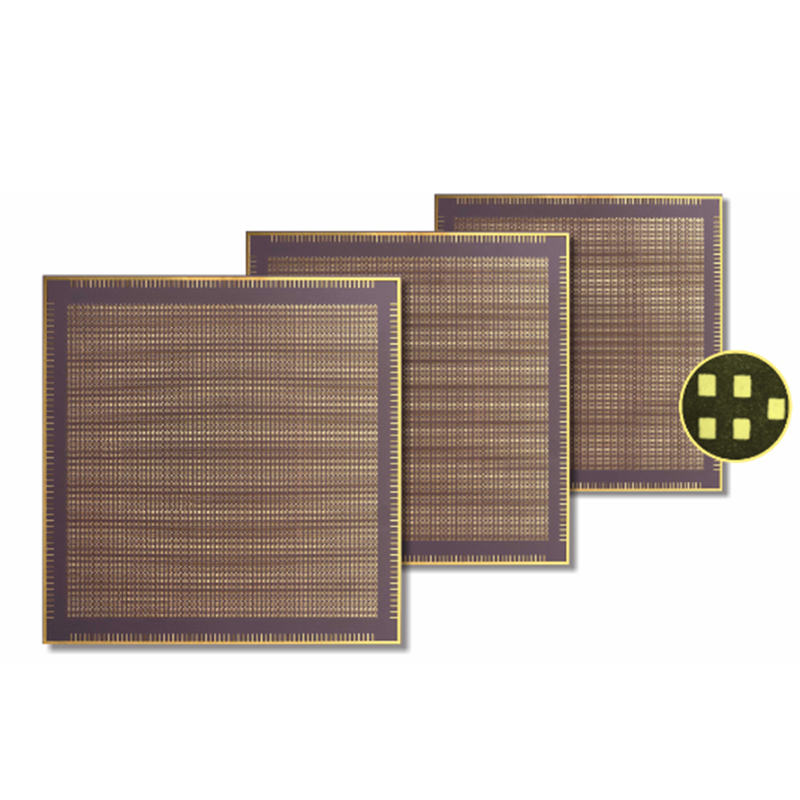
With excellent thermal conductivity and a thermal expansion coefficient compatible with silicon chips, Si₃N₄ serves as a substrate for high-power modules, as well as in PECVD passivation layers and MEMS dielectric films.
Mechanical and Energy Engineering
Due to its low density (40% that of steel), high strength, and self-lubrication, Si₃N₄ is widely used in ceramic bearings, extending service life by 5–10 times compared to steel. It is also used in sealing parts, wear-resistant valves, high-temperature pumps, and hydrogen energy systems.
6. Conclusion
Silicon nitride stands out as a next-generation engineering ceramic combining strength, low density, thermal shock resistance, and chemical stability.
From aerospace engines to semiconductor substrates, Si₃N₄ continues to demonstrate unmatched potential as a material for high-performance, extreme-condition applications.
With the continuous advancement of gas-pressure sintering and composite processing technologies, Si₃N₄ is poised to remain a core structural material in 21st-century high-performance ceramics.