

In semiconductor manufacturing, thermal drift simply means that equipment/components undergo micro thermal expansion and contraction, thermal deformation, or positional deviation due to temperature changes (even extremely slight ones), leading to nanoscale precision failure. It is one of the core precision interference issues in advanced semiconductor processes (especially 7nm and below), and also a key challenge that must be overcome in core links such as lithography and etching.
Core Key: The Ultimate Requirements for Temperature and Precision in Semiconductor Manufacturing
The positioning and overlay precision requirements of semiconductor lithography/etching links reach sub-nanometer level (<1nm). Even a tiny temperature fluctuation of 0.01℃ or a local temperature difference of 1℃ on components will cause slight deformation of metals, glass, ceramics and other materials, directly leading to deviations in chip pattern transfer and wafer etching, and ultimately resulting in a sharp drop in chip yield or even scrapping.
This kind of precision deviation/deformation caused by temperature changes is thermal drift in the semiconductor field, which has two core manifestations and is also the most important problem to be solved in actual production:
- Positional thermal drift: Precision components (such as lithography machine stage, wafer stage, laser positioning mirror) undergo tiny positional deviation due to temperature changes. For example, a 0.5nm deviation of the wafer stage positioning point will cause misalignment of EUV lithography patterns;
- Morphological thermal drift: The component itself undergoes micro deformation (such as mirror warpage, substrate slight bending) due to local heat accumulation/temperature difference. For example, a 0.3nm warpage of the laser positioning square mirror will invalidate the reference of laser interference positioning.
Main Sources of Thermal Drift in Semiconductor Manufacturing
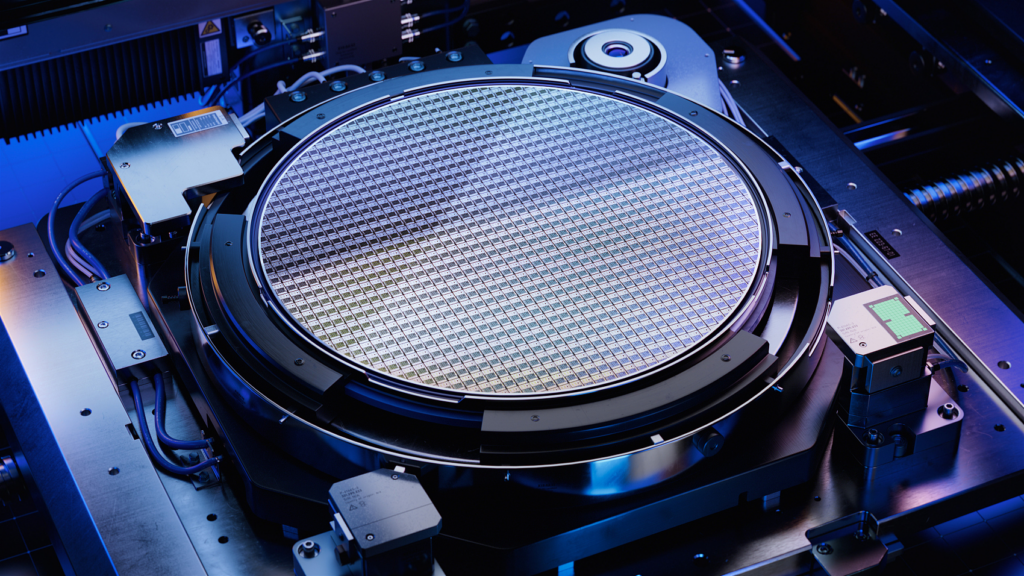
The interior of semiconductor equipment is a closed precision system. Even tiny heat sources can cause thermal drift. The core sources are divided into 4 categories, mostly concentrated in the lithography link (EUV/DUV lithography machines are the hardest-hit areas of thermal drift):
- Process heat generation: The extreme ultraviolet (EUV) exposure of EUV lithography machines (power >250W) and plasma discharge in the etching link will cause local thermal shock to wafers and chamber components;
- Equipment operation heat generation: The high-speed movement of the lithography machine stage (acceleration >10g), the operation of the motor/drive system, and the work of the vacuum pump and cooling system will generate continuous low heat flow;
- Environmental temperature change: Temperature fluctuations in the clean room (even ±0.1℃) and heat exchange between equipment and the environment will cause slow thermal expansion and contraction of components;
- Poor thermal conductivity of materials: The component material itself has low thermal conductivity, so heat cannot be dissipated quickly, forming a local thermal gradient (for example, the center of the same substrate is 0.5℃ higher than the edge), directly leading to uneven deformation.
Why is Thermal Drift a Fatal Shortcoming of Microcrystalline Glass, but Can Be Perfectly Solved by High-Purity Cordierite?
This is also the core reason why high-purity cordierite replaces microcrystalline glass, which lies in the combination of “ultra-low expansion” and “high thermal conductivity” — both are indispensable:
Shortcoming of Microcrystalline Glass: Only Ultra-Low Expansion, but Cannot Solve Heat Accumulation
The core advantage of microcrystalline glass (such as Zerodur) is its ultra-low coefficient of thermal expansion (0±30ppb/K), which theoretically will not undergo overall deformation due to temperature changes. However, its thermal conductivity is extremely low (only 10-12 W/(m·K)), so heat cannot be dissipated quickly, forming a local thermal gradient on components — even if there is no overall expansion, local temperature difference will cause micro warpage/deformation of components. This is “morphological thermal drift”, which is also the core reason why microcrystalline glass is abandoned for EUV lithography machine stages.
Simply put: Microcrystalline glass can only solve thermal drift caused by “uniform temperature change”, but cannot solve thermal drift caused by “local heat accumulation” — and semiconductor lithography is precisely the scenario with the most serious local thermal shock.
Core Advantages of High-Purity Cordierite: Ultra-Low Expansion + High Thermal Conductivity, Double Solution to Thermal Drift
Taking Kyocera CO720 and domestic equivalent models as examples, high-purity cordierite has both:
- Ultra-low thermal expansion (0±20ppb/K): Better expansion stability than microcrystalline glass, fundamentally avoiding positional thermal drift caused by uniform temperature changes;
- High thermal conductivity (30-40 W/(m·K)): 3-4 times that of microcrystalline glass, which can quickly dissipate local heat within 1 second, make the overall temperature of components uniform, and completely avoid morphological thermal drift caused by local thermal gradients.
This combination makes high-purity cordierite the only material currently capable of solving both types of thermal drift simultaneously, and also the key reason why it can become the core material for EUV lithography machine stages and laser positioning square mirrors.
A Brief Summary of the Core Pain Points and Solutions of Semiconductor Thermal Drift
Pain Point: The sub-nanometer precision of advanced semiconductor processes is extremely sensitive to temperature changes — even slight local heat accumulation/temperature changes will cause precision deviation;
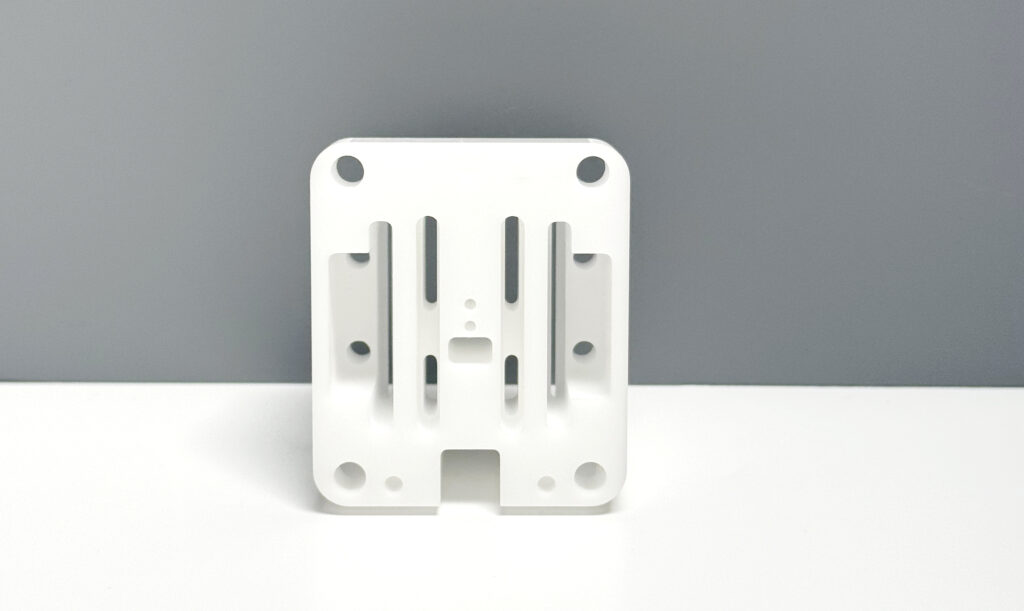
Core Solution: Adopt advanced ceramic materials such as high-purity cordierite with ultra-low thermal expansion and high thermal conductivity, and completely solve thermal drift from two dimensions — “fundamentally inhibiting deformation” and “quickly dissipating heat”, so as to ensure the stability of nanoscale precision.
For procurement professionals and engineers seeking high-purity cordierite ceramics or customized ceramic components, ShenzhenLoongceram provides advanced solutions backed by innovation, quality and global support. As various industries continue to break performance limits, Loongceram is ready to provide materials that make modern technology more powerful, safer and more efficient.