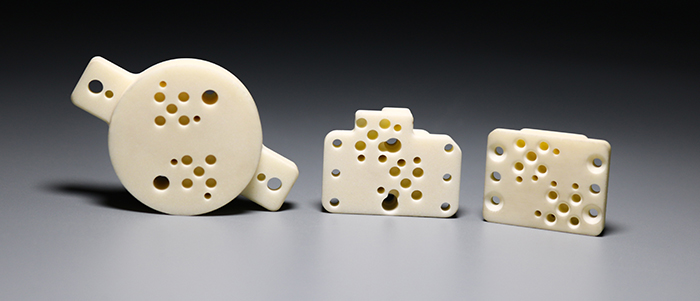
Alumina Ceramics for Wear-Resistant Industrial Components
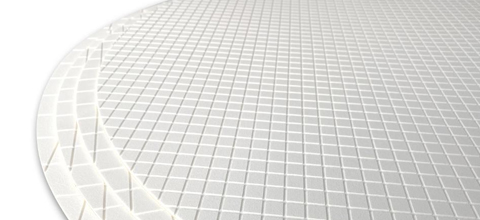
1. Why Alumina Remains the Baseline Wear Ceramic Alumina (Al₂O₃) is often considered the reference material for wear-resistant ceramics.Not because it excels in every performance metric, but because its property set is stable, predictable, and scalable across industrial volumes. From an engineering standpoint, alumina’s wear resistance originates from: However, hardness alone does not guarantee durability. […]
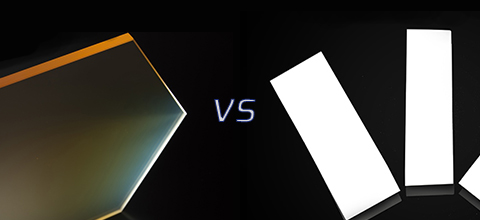
Alumina vs. Zirconia vs. ZTA:
How to Select Wear-Resistant Ceramics for Industrial Components Introduction: Wear-Resistant Ceramic Selection Is an Engineering Decision In industrial wear applications, premature component failure rarely results from a lack of hardness alone.Instead, failure is typically driven by a mismatch between material behavior and actual service conditions, such as impact loading, vibration, thermal fluctuation, or complex wear […]
Alumina vs. Zirconia: Which Ceramic Is Better for Wear-Resistant Components?
Introduction: Wear Resistance Is an Engineering Trade-Off, Not a Single Property In wear-critical industrial applications, material selection is rarely driven by a single performance metric.While hardness is often associated with wear resistance, real-world wear behavior depends on a complex interaction between material properties, loading conditions, and processing quality. Alumina (Al₂O₃) and zirconia (ZrO₂) are two […]
Silicon Carbide Ceramics for Severe Wear and Harsh Environments
Introduction: When Conventional Wear Materials Reach Their Limits In extreme industrial environments, wear rarely occurs in isolation.Components are often exposed simultaneously to high abrasion, elevated temperatures, corrosive chemicals, and thermal cycling.Under such conditions, many wear-resistant materials—hardened steels, surface-treated alloys, or even oxide ceramics—experience accelerated degradation due to softening, oxidation, or chemical attack. Silicon carbide (SiC) […]
Zirconia-Based Ceramics for Wear-Resistant Applications with Mechanical Stress
1. Introduction: When Wear Is Combined with Mechanical and Thermal Stress In many industrial systems, wear-resistant components are not exposed to abrasion alone.They often operate under combined conditions of sliding wear, impact loading, vibration, and thermal fluctuation. In such environments, materials with extremely high hardness but limited fracture toughness may fail through microcrack accumulation and […]