

Abstract
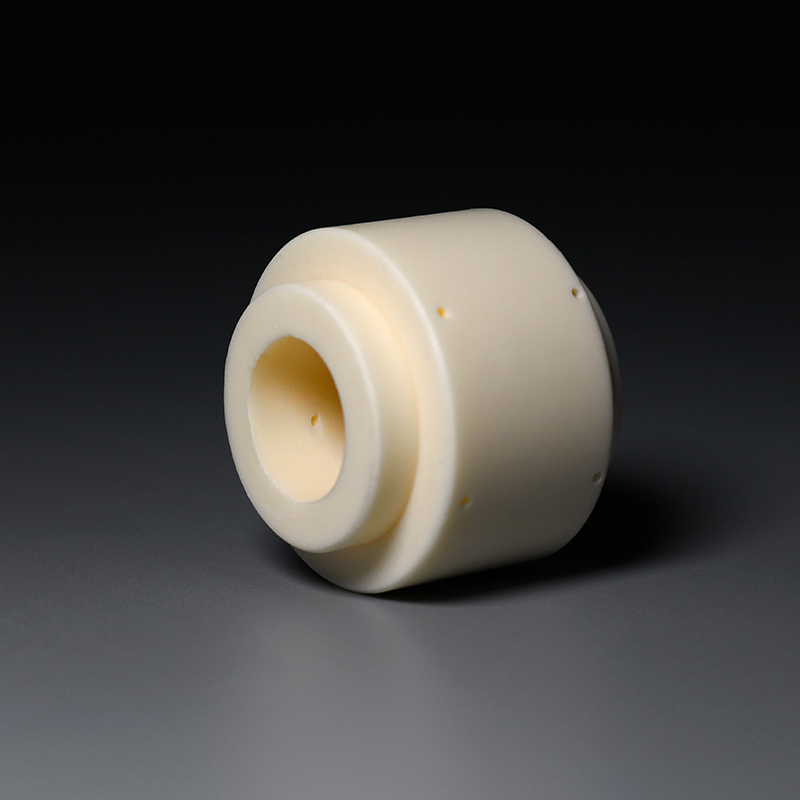
Hexagonal boron nitride (h-BN) ceramic crucibles are widely recognized in high-temperature and high-purity processing environments due to their exceptional thermal stability, chemical inertness, and non-wetting behavior. This article provides a technical overview of h-BN ceramic crucibles, covering material properties, manufacturing processes, performance parameters, and key industrial applications in metallurgy, semiconductors, glass processing, and advanced materials research.
1. What Is Hexagonal Boron Nitride (h-BN)?
Hexagonal boron nitride is a non-oxide ceramic material with a graphite-like layered crystal structure. Each layer consists of alternating boron and nitrogen atoms bonded via strong covalent bonds, while interlayer interactions are governed by weak van der Waals forces. This unique structure gives h-BN a combination of properties rarely found in conventional ceramic materials:
- High thermal stability
- Excellent electrical insulation
- Low thermal expansion
- Outstanding chemical inertness
- Intrinsic lubricity
Because of these characteristics, h-BN is often referred to as “white graphite”, although its electrical behavior is fundamentally different from carbon-based materials.
2. Manufacturing Process of h-BN Ceramic Crucibles
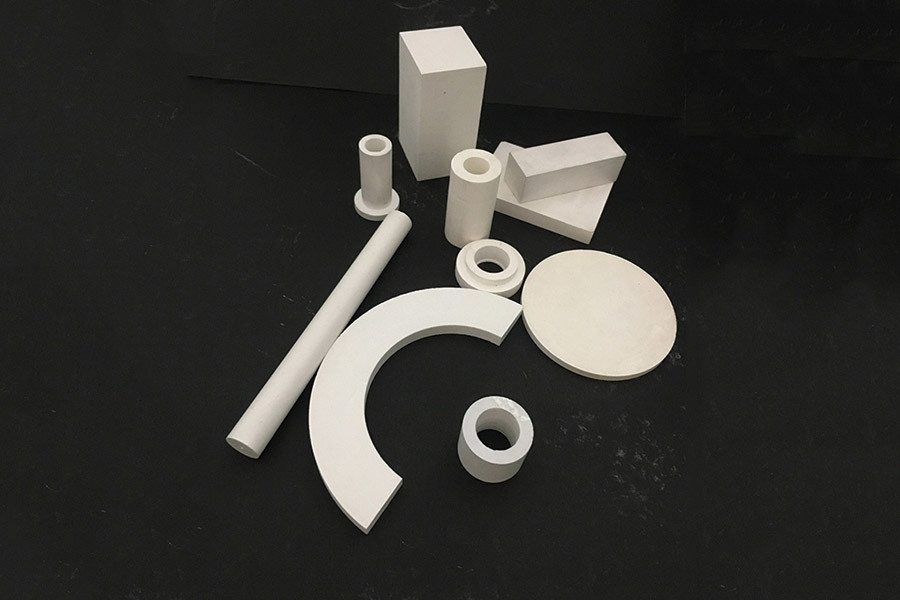
High-performance h-BN crucibles are typically produced using high-purity hexagonal boron nitride powders (>99.5%) combined with advanced densification techniques.
2.1 Raw Material Selection
Ultra-high purity h-BN powder is essential to avoid contamination during high-temperature processing, particularly in semiconductor and electronic materials manufacturing. Impurity levels are strictly controlled below 0.5% to ensure chemical stability and melt purity .
2.2 Vacuum Hot-Press Sintering
Vacuum hot-press sintering is commonly used to fabricate dense and mechanically stable h-BN crucibles. Under high temperature and uniaxial pressure in a vacuum or inert atmosphere, the layered BN structure is consolidated without significant grain growth, preserving both thermal shock resistance and machinability.
This process enables:
- Controlled density (~2.00 g/cm³)
- Stable microstructure
- Consistent thermal and mechanical properties
3. Key Material Properties of h-BN Ceramic Crucibles
3.1 Thermal Performance
h-BN ceramic crucibles exhibit exceptional high-temperature capability:
- Maximum service temperature
- Air: ~900–1000 °C
- Vacuum: up to 1800 °C
- Inert atmosphere: up to 2200 °C
The material maintains structural stability without melting or softening, making it suitable for ultra-high-temperature processes .
3.2 Thermal Conductivity and Expansion
Unlike most insulating ceramics, h-BN combines high thermal conductivity (50–70 W/m·K) with an ultra-low coefficient of thermal expansion (1.0–1.2 ×10⁻⁶/K). This unique combination allows rapid heat distribution while minimizing thermal stress, significantly reducing the risk of cracking during heating and cooling cycles .
3.3 Chemical Inertness and Non-Wetting Behavior
h-BN does not react with most molten metals, glasses, acids, or alkalis. In addition, molten metals exhibit extremely low wettability on h-BN surfaces, preventing adhesion and contamination—an essential requirement for high-purity melting and crystal growth processes.
3.4 Electrical and Mechanical Properties
- Electrical resistivity: >10¹⁴ Ω·cm
- Flexural strength: ~22 MPa
- Compressive strength: ~85 MPa
While h-BN is not designed as a structural ceramic, its mechanical strength is sufficient for crucible and containment applications under static or low-stress conditions .
Table 1. Physical, Thermal, Mechanical, and Electrical Properties of h-BN Ceramic
| Category | Property | Typical Value | Engineering Significance |
|---|---|---|---|
| Chemical | Chemical Composition | Hexagonal Boron Nitride (h-BN) | Graphite-like layered structure |
| Purity | ≥ 99.5% BN | Suitable for high-purity processing | |
| Physical | Density | ~2.0 g/cm³ | Lightweight compared with oxide ceramics |
| Color | White | Non-carbon, non-contaminating | |
| Thermal | Maximum Service Temperature (Air) | 900–1000 °C | Limited by oxidation |
| Maximum Service Temperature (Vacuum) | ≤ 1800 °C | Stable for high-temperature experiments | |
| Maximum Service Temperature (Inert Atmosphere) | ≤ 2200 °C | Suitable for ultra-high-temperature furnaces | |
| Thermal Conductivity | 50–70 W/m·K | High heat transfer despite electrical insulation | |
| Coefficient of Thermal Expansion (CTE) | 1.0–1.2 ×10⁻⁶ /K | Excellent thermal shock resistance | |
| Mechanical | Flexural Strength | ~22 MPa | Adequate for static crucible applications |
| Compressive Strength | ~85 MPa | Good dimensional stability under load | |
| Hardness | Low (Machinable) | Easy to machine into complex shapes | |
| Electrical | Volume Resistivity | > 10¹⁴ Ω·cm | Excellent electrical insulation |
| Chemical Stability | Wettability to Molten Metals | Non-wetting | Clean melting, no adhesion |
| Chemical Resistance | Excellent | Resistant to most metals, glasses, salts | |
| Processing | Machinability | Excellent | Conventional machining possible |
| Typical Forming Method | Vacuum Hot-Press Sintering | Dense and uniform microstructure |
4. Typical Applications of h-BN Ceramic Crucibles
4.1 Metal Melting and Alloy Processing
h-BN crucibles are widely used for melting non-ferrous metals such as aluminum, magnesium, copper, zinc, and their alloys. The non-reactive and non-wetting surface ensures:
- Clean metal melts
- Minimal material loss
- Extended crucible service life
4.2 Semiconductor and Electronic Materials
In semiconductor manufacturing, h-BN crucibles serve as containers for:
- Semiconductor material melting
- Single crystal silicon preparation
- Compound semiconductor processing
Their high electrical insulation, purity, and thermal stability make them particularly suitable for controlled atmosphere furnaces .
4.3 Glass Melting and Forming
h-BN crucibles are compatible with various glass compositions, including soda-lime glass and borosilicate glass. Their non-stick behavior significantly improves surface quality and process efficiency.
4.4 Advanced Materials Research and High-Temperature Experiments
Laboratories and research facilities use h-BN crucibles for:
- High-temperature chemical reactions
- Nitride ceramics sintering (Si₃N₄, AlN)
- Phosphor materials and specialty powders
5. Handling and Operational Considerations
To maximize service life, several operational guidelines are recommended:
- Gradual heating to avoid thermal shock
- Avoid direct contact with furnace walls
- Controlled cooling after high-temperature operation
- Prefer inert or protective atmospheres at elevated temperatures
- Avoid water cleaning; dry mechanical cleaning is recommended
6. Why h-BN Crucibles Are Trusted in High-Purity Processes
From a materials engineering perspective, h-BN ceramic crucibles occupy a unique position between oxide ceramics and graphite-based materials. They combine:
- Purity comparable to high-grade alumina
- Thermal behavior closer to graphite
- Chemical stability superior to most non-oxide ceramics
This balance explains their growing adoption in semiconductor, advanced metallurgy, and new materials industries.
FAQ – Hexagonal Boron Nitride Ceramic Crucibles
Q1: Is h-BN suitable for use in oxidizing atmospheres?
A: h-BN can be used in air up to approximately 900–1000 °C. Above this temperature, oxidation becomes significant.
Q2: Why does molten metal not stick to h-BN crucibles?
A: The layered crystal structure and low surface energy of h-BN result in excellent non-wetting behavior.
Q3: Can h-BN crucibles be machined to custom shapes?
A: Yes. Due to relatively low hardness, h-BN is easily machined into complex geometries.
Q4: How does h-BN compare to graphite crucibles?
A: h-BN offers similar thermal performance but with superior electrical insulation and chemical inertness.
Q5: Is h-BN suitable for semiconductor-grade applications?
A: Yes, especially when high-purity (>99.5%) material is used, minimizing contamination risks.
Q6: What limits the mechanical strength of h-BN?
A: The layered structure provides excellent thermal properties but limits load-bearing capability.
Q7: In which industries is h-BN demand growing fastest?
A: Semiconductor manufacturing, advanced ceramics, and new energy materials are currently the fastest-growing sectors.