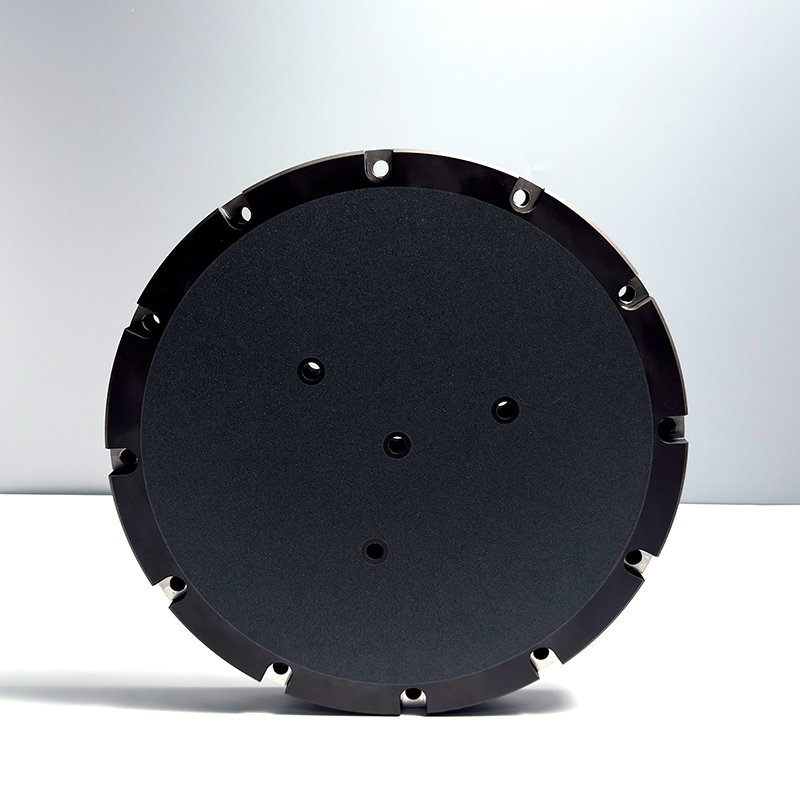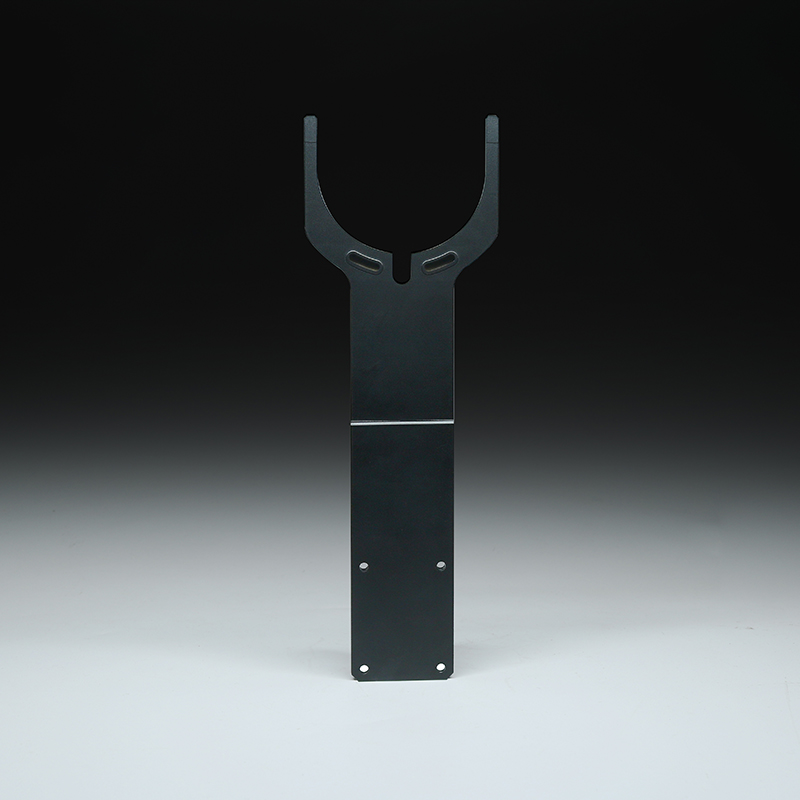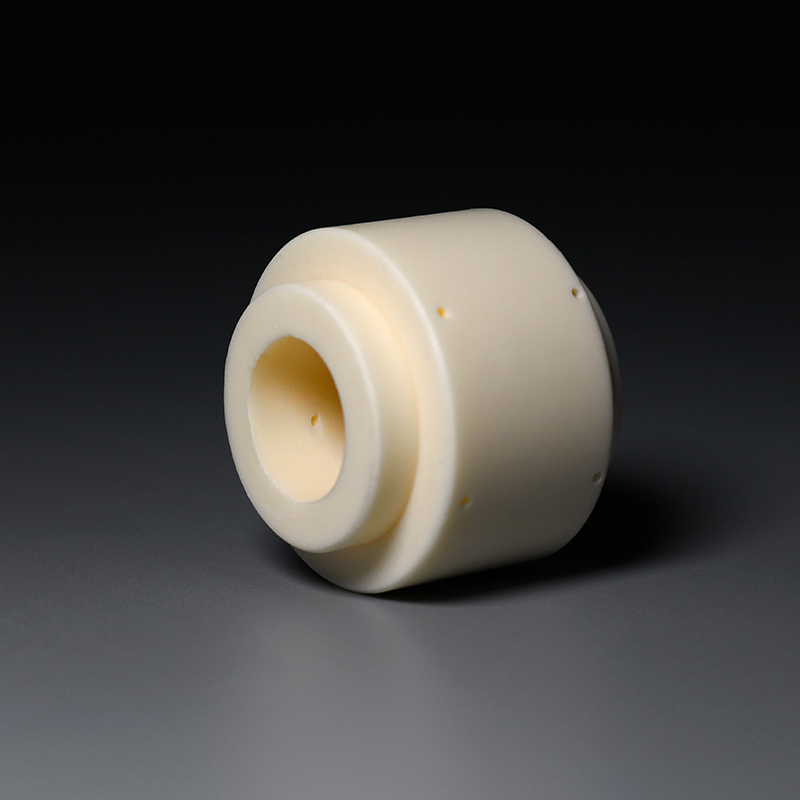


A ceramic piece fired at high temperature suddenly cracks; a ceramic utensil just taken out of the furnace shatters on contact with cold water; a ceramic component in precision instruments fails completely due to tiny temperature changes — these seemingly accidental scenarios all point to a core material property: the thermal expansion coefficient of ceramics.
The shortcoming of ordinary ceramics being “sensitive to extreme heat and cold” has long become a bottleneck in high-end manufacturing, aerospace and other fields, and the emergence of low thermal expansion ceramics has completely broken this limitation. Today, from a professional perspective, we will break down the core principles, type comparisons and application scenarios of low thermal expansion ceramics, and fully understand its core value in this article.
1. Core Concept: What is the Thermal Expansion Coefficient of Ceramics?
The thermal expansion coefficient, in essence, is a core parameter for measuring the degree of a material’s “thermal expansion and contraction”, denoted by α (alpha) with the unit of 10⁻⁶/K. Colloquially, it refers to “the elongation per meter of the material for each 1 Kelvin rise in temperature”.
The value of this parameter directly determines the stability of ceramics with temperature changes:
- Smaller value: The material deforms less when heated, has stronger resistance to temperature fluctuations, and better stability.
- Larger value: The material exhibits obvious thermal expansion and contraction, and is prone to cracking, deformation and failure after repeated temperature changes.
Here is a set of key comparisons to understand the advantages of “low expansion” more intuitively:
表格
| Material Type | Thermal Expansion Coefficient Range (10⁻⁶/K) | Performance under Temperature Changes |
|---|---|---|
| Ordinary Ceramics | 5-10 | Obvious thermal expansion and contraction, prone to cracking and deformation under high temperature or alternating hot and cold conditions |
| Low Thermal Expansion Ceramics | ≤2 | Minimal expansion (invisible to the naked eye), strong resistance to temperature fluctuations |
| High-end Zero Expansion Ceramics (High-Purity Cordierite) | 0±20ppb/K | Nearly no expansion, maintains dimensional stability even in extreme temperatures |
A common misconception to note: low expansion does not mean no expansion, but the expansion is controlled to an extremely tiny range, which is sufficient to meet the stringent precision requirements of high-end scenarios — this is also the core difference between it and ordinary ceramics.
2. Core Principles
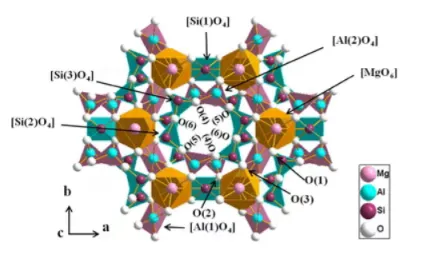
The “stability” of low thermal expansion ceramics stems from their internal crystal structure and atomic bonding mode, which are essentially different from those of ordinary ceramics.
The crystal structures of low thermal expansion ceramics (such as cordierite, zirconia, glass-ceramic, etc.) are extremely regularly arranged, and the bonding force between atoms is extremely strong. When subjected to high temperature, the vibration amplitude of atoms is strictly limited, and no obvious “stretching” or “shrinking” occurs. Just like tightly spliced building blocks, they will not loosen and deform easily even after being exposed to high temperature baking.
In contrast, the atomic arrangement of ordinary ceramics is relatively loose, and the bonding force between atoms is weak. Atoms move violently when heated, leading to obvious volume expansion of the material; when cooled, atoms shrink rapidly. This repeated cycle of “expansion and contraction” generates internal stress in the material, eventually causing cracking and damage.
In addition, the sintering process of low thermal expansion ceramics is more stringent — the crystal structure is further optimized and the atomic bonding force is enhanced by precisely controlling the raw material ratio and sintering temperature, thereby strengthening the low expansion characteristics and structural stability.
3. Common Types of Low Thermal Expansion Ceramics
Common low thermal expansion ceramics on the market can be divided into three categories according to their composition and performance focus, each adapted to different scenarios. The following is a detailed professional comparison for quick selection and differentiation:
3.1 Cordierite Series
Core parameters: Thermal expansion coefficient of about 1−2×10⁻⁶/K, temperature resistance up to 1200℃ and above, excellent flexural strength, and moderate cost — it is the most widely used low thermal expansion ceramic in the industrial field.
Subtypes and differences:
- High-purity nano cordierite: Particle size ≤50nm, thermal expansion coefficient as low as 0.7×10⁻⁶/℃, focusing on extreme precision, suitable for high-end scenarios such as semiconductors and ultra-precision optics.
- Honeycomb cordierite: Porous honeycomb structure, focusing on high-efficiency adaptability, suitable for large-scale industrial scenarios such as automobile exhaust treatment and VOCs treatment.
3.2 Zirconia Series (First Choice for Extreme Scenarios)
Core parameters: Thermal expansion coefficient of about 0.8−1.5×10⁻⁶/K, flexural strength up to 190MPa and above, extremely strong corrosion and wear resistance, temperature resistance up to 1500℃+.
Applicable scenarios: Aerospace (engine cabin doors, high-temperature wave-transparent components), medical care (ceramic implants for the human body), detection instruments for extreme environments and other scenarios with extremely high performance requirements.
3.3 Glass-Ceramic (Representative of Zero Expansion)
Core parameters: Thermal expansion coefficient can approach 0, excellent thermal conductivity, surface roughness Ra <1nm, and extremely high precision — it is the “high-end benchmark” among low thermal expansion ceramics.
Applicable scenarios: Semiconductors (lithography machine square mirrors, reticle substrates), ultra-precision optics (infrared emission windows), high-end scientific research instruments and other scenarios with extreme requirements for precision and stability.
Supplementary Key Performance: Thermal Shock Resistance
All low thermal expansion ceramics have extremely strong thermal shock resistance (ability to resist alternating hot and cold), and can usually withstand thermal cycles of more than 400℃ — for example, being directly put into room temperature water from a high temperature of 1000℃ without cracking. This is a core advantage that ordinary ceramics cannot achieve at all, and it is also the key reason why they can be adapted to extreme scenarios.
4. Application Scenarios
Many people mistakenly believe that low thermal expansion ceramics are far from our lives, but in fact, they have already penetrated all aspects of high-end manufacturing, daily life and special fields, just rarely noticed by us:
4.1 High-end Industrial Field
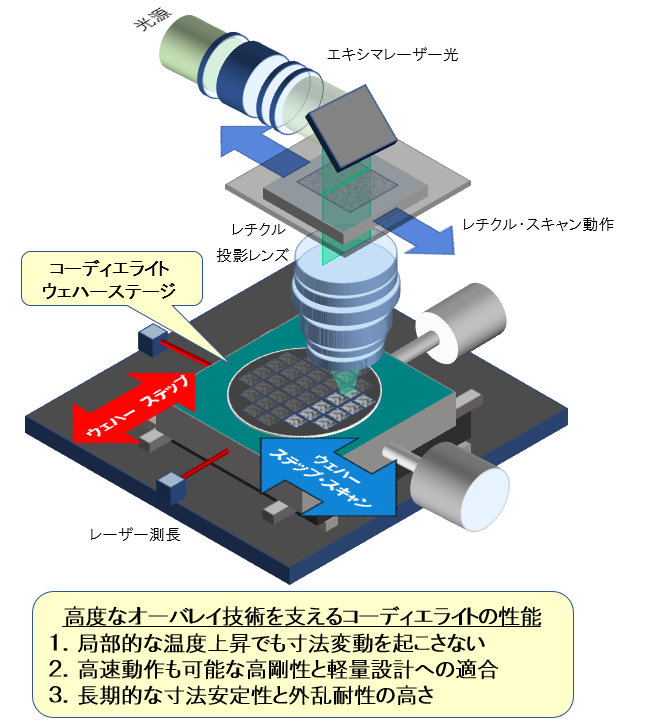
Semiconductor manufacturing: Square mirrors, reticle substrates and ultra-precision worktables of lithography machines rely on low thermal expansion characteristics to ensure the positioning accuracy of 7nm and below processes.
4.2 Aerospace Field
Engine cabin doors, high-temperature wave-transparent components, spacecraft shell components, etc., can withstand extreme high temperatures of 1200℃+, and at the same time resist severe temperature fluctuations in space without expansion or deformation, ensuring the safe operation of spacecraft.
4.3 Special Fields
Medical field: Ceramic implants for the human body (such as joint prostheses) can adapt to changes in human body temperature without dimensional deviation.
Scientific research field: High-temperature experimental crucibles and reaction kettles can be heated repeatedly without damage, ensuring experimental precision.
5. Conclusion: The Core Value of Low Thermal Expansion Ceramics
The core competitiveness of low thermal expansion ceramics is essentially “ultimate stability” — minimizing the impact of thermal expansion and contraction with a regular crystal structure and strong atomic bonding force, breaking the limitation of ordinary ceramics being “sensitive to extreme heat and cold”.
It is not only the “core cornerstone” supporting high-end manufacturing such as semiconductors and aerospace, empowering high-end equipment to break through precision bottlenecks, but also an “invisible guardian” for improving the quality of daily life, making ceramic products more durable and safer.
From the tight arrangement of micro atoms to the stable adaptation of macro scenarios, every characteristic of low thermal expansion ceramics interprets that “details determine success or failure” — it is this extremely tiny expansion that supports the precision and reliability of numerous high-end equipment, and also continuously extends the application boundary of ceramic materials.