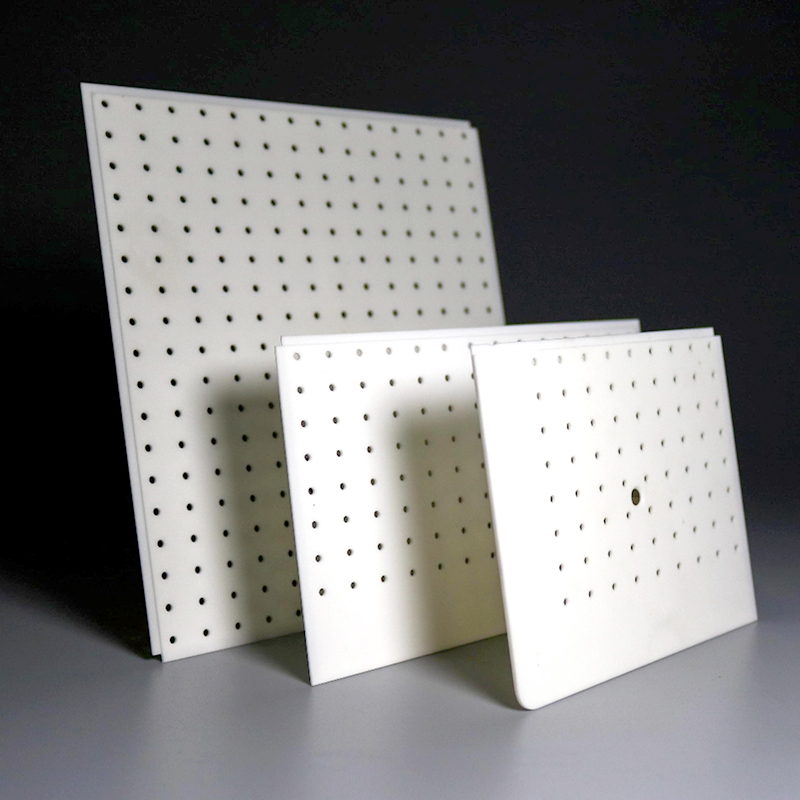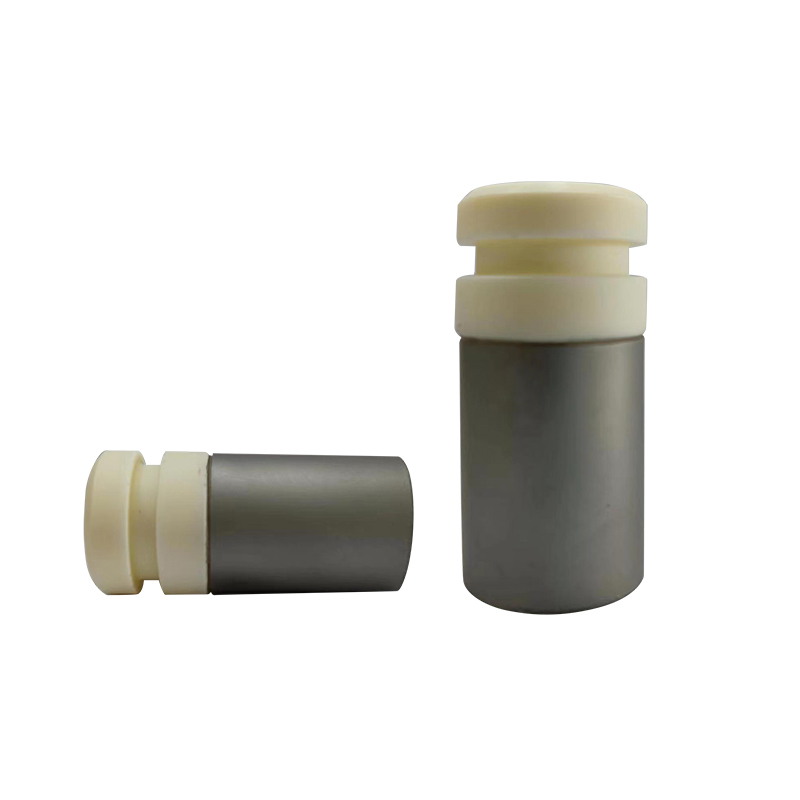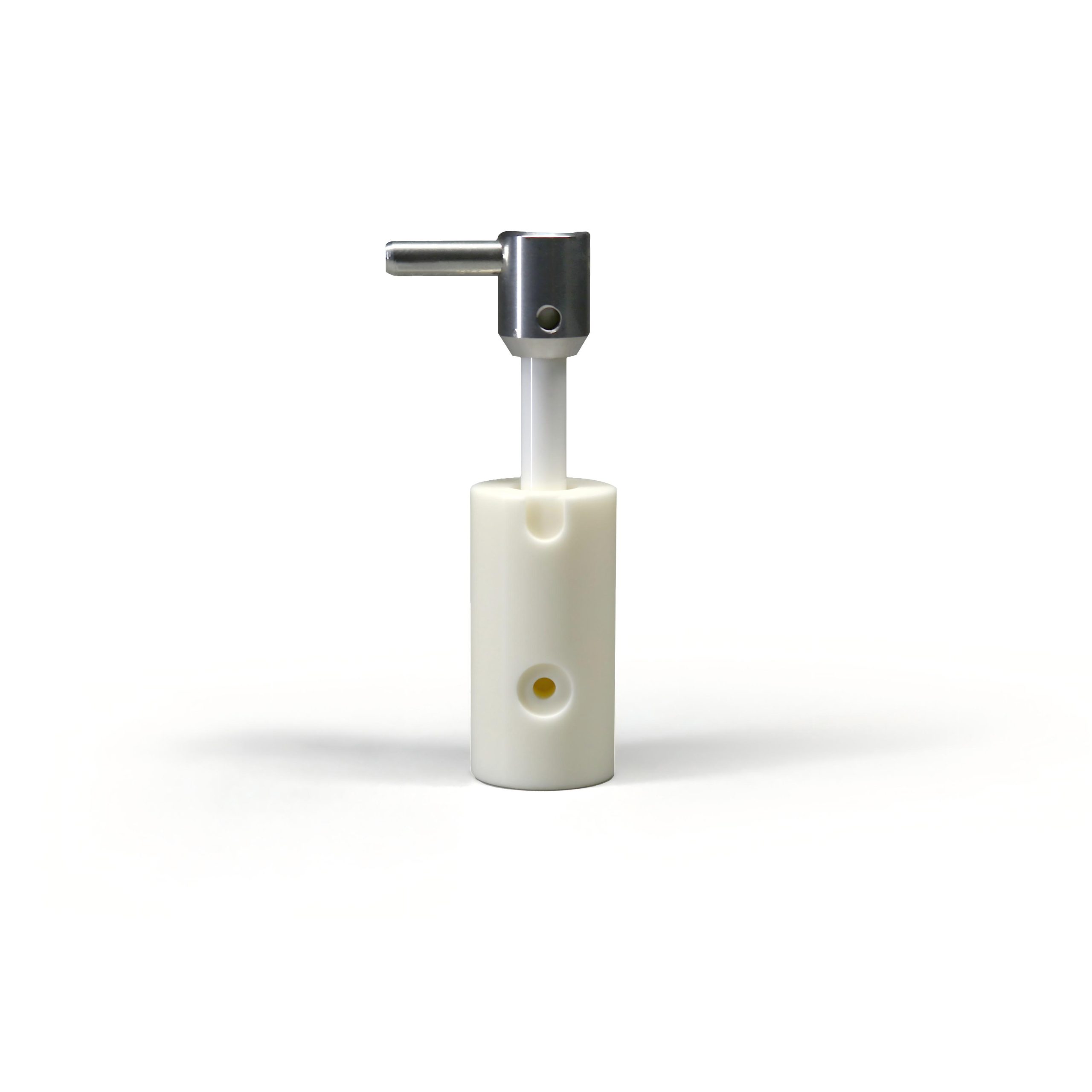


Alumina ceramics (Al₂O₃) are among the most mature and widely used advanced ceramic materials in modern industry. Their long-term dominance in electronics, machinery, chemical engineering, and aviation is closely tied to their sophisticated processing and sintering technologies. From powder purity to forming, debinding, and final sintering, every step plays a decisive role in achieving the material’s exceptional hardness, electrical insulation, and wear resistance.This article provides a comprehensive engineering analysis of the full manufacturing process of alumina ceramics, revealing the scientific mechanisms behind their performance advantages.
1. Raw Powder Characteristics: The Starting Point of Material Performan
The performance of alumina ceramics is not created inside the furnace. It originates from the powder stage.
1.1 Powder Purity
Typical purity grades include 85%, 95%, 99%, 99.5%, and 99.9% Al₂O₃.
- 95% Al₂O₃: mechanical parts, wear-resistant components
- 99.5–99.9% Al₂O₃: electronic substrates, vacuum components, high-insulation parts
High purity reduces glassy phases and impurity oxides (SiO₂, CaO), minimizing grain-boundary conductivity and brittleness.
1.2 Particle Size and Distribution
Alumina powders typically fall within 0.1–1 μm.
- Finer powders → stronger sintering driving force
- Excessively fine powders → higher agglomeration risk
- Uniform size distribution + proper surface area → essential for densification and mechanical strength
1.3 Surface Activity and Additives
Common additives: MgO, Y₂O₃, TiO₂, used for:
- Controlling grain growth
- Enhancing densification
- Improving powder dispersibility and sintering efficiency
2. Forming Techniques: Transforming Powder into Green Bodies
The goal is to create a green body with accurate dimensions, uniform density, and sufficient mechanical strength.
2.1 Dry Pressing
Most economical and suitable for simple geometries.
- Uniaxial dry pressing: efficient for small components
- Cold isostatic pressing (CIP): uniform pressure → higher density (55–60% theoretical)
2.2 Slip Casting
Alumina slurry is poured into porous molds, forming components through capillary action.
Widely used for:
large tubes, crucibles, complex-shaped ceramic housings.
2.3 Ceramic Injection Molding (CIM)
Powder mixed with polymer binders and injected into molds.
Advantages:
High precision, complex shapes, micro-components production.
2.4 Tape Casting
Core process for electronic substrates such as MLCC and LTCC.
- Slurry with dispersant + plasticizer
- Spread into thin sheets and dried
- Used for multilayer ceramic circuits
3. Debinding and Pre-Firing: Critical Steps Hidden in the Temperature Curve
Green bodies contain organic binders and additives that must be removed properly.
3.1 Debinding (200–600°C)
Slow, controlled heating avoids internal gas-pressure buildup and cracking.
Often performed in controlled atmospheres.
3.2 Calcination (≈1000°C)
Used to initiate phase transformation (γ → α-Al₂O₃).
Enhances powder reactivity and stabilizes microstructure.
4. Sintering Techniques: The Decisive Stage for High Performance
Sintering defines final density, grain size, and microstructural integrity.
4.1 Conventional Air Sintering
Temperature: 1550–1650°C, with several hours of holding.
Pros:
- Low cost
- Simple equipment
4.2 Hot Pressing (HP)
Simultaneous high temperature + uniaxial pressure (20–50 MPa).
Benefits:
- Near-full densification
- 20–40% improvement in strength
Used in: high-end structural parts, optical components.
4.3 Hot Isostatic Pressing (HIP)
High temperature (1500–1700°C) + isostatic gas pressure (100–200 MPa Ar).
Advantages:
- Eliminates internal pores
- Achieves 99.9% theoretical density
- Improved toughness and reliability
Widely used for:
medical ceramics, aerospace components, high-end electronics.
4.4 Spark Plasma Sintering (SPS)
A rapid sintering method using pulsed DC plasma.
Features:
- Lower sintering temperatures (1200–1400°C)
- Minutes-level sintering cycles
- Preserves nanocrystalline structure → higher toughness
5. Microstructure–Property Relationships
Sintering controls grain size, porosity, and grain boundaries—directly influencing performance.
| Microstructural Feature | Impact on Properties |
|---|---|
| Fine grains (<1 μm) | Higher strength, hardness, toughness |
| Low porosity (<1%) | Better insulation and thermal conductivity |
| Clean grain boundaries | Improved high-temperature stability and dielectric strength |
| Uniform grain size | Reduced thermal stress, enhanced thermal shock resistance |
Optimized microstructure is the foundation of alumina’s long-term reliability in harsh environments.
6. Emerging Trends in Alumina Ceramic Processing
Digital Furnace Control
AI-assisted temperature monitoring enables precise control of grain growth and densification.
Microwave and Fast Sintering
Uniform internal heating → greatly reduced sintering cycles.
Additive Manufacturing (3D Printing)
SLA and inkjet printing enable highly complex alumina components.
LTCC and Integrated Packaging
Co-firing with glass phases to form multilayer substrates for electronic miniaturization.
7. Conclusion
The exceptional performance of alumina ceramics is the result of decades of scientific advancement in powder engineering, sintering technology, and microstructural control. Every variable—from powder purity to sintering atmosphere—affects the final performance.With the integration of intelligent manufacturing, nanotechnology, and 3D printing, alumina ceramic processing is entering a new era of higher precision and greater performance. These developments will continue to empower applications across electronics, aerospace, energy, chemical engineering, and medical technology.