

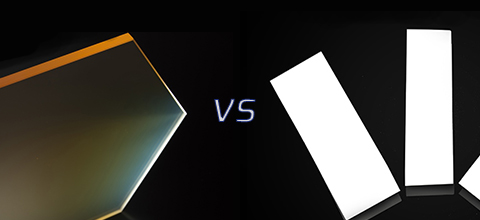
Core Conclusion: High-purity cordierite has overwhelming advantages in thermal conductivity, specific stiffness, lightweight properties, and dynamic response, while maintaining the same level of ultra-low thermal expansion as microcrystalline glass. It also has better chemical stability and processing adaptability, making it the optimal ceramic material for replacing microcrystalline glass in semiconductor lithography (EUV/DUV) and precision optical equipment. It is particularly suitable for dynamic high-precision component scenarios such as ultra-precision stage, laser positioning square mirror, and wafer stage.
The following sections elaborate on two core dimensions: core performance comparison and scenario-based replacement advantages. All data are measured comparisons between semiconductor-grade high-purity cordierite (sintered density ≥ 99.5%) and mainstream ultra-low expansion microcrystalline glass (Zerodur K10 and domestic equivalent models), accurately meeting the application needs of semiconductor manufacturing equipment.
I. Core Performance Hard Comparison (Direct Comparison of Key Indicators)
| Core Performance Indicators | Semiconductor-Grade High-Purity Cordierite | Ultra-Low Expansion Microcrystalline Glass (Zerodur) | Performance Difference/Advantages of Cordierite | Adaptability Requirements for Semiconductor Equipment |
| Coefficient of Thermal Expansion (CTE) 20-100℃ | 0±20 ppb/K (Ultra-Low Expansion) | 0±30 ppb/K (Ultra-Low Expansion) | Better expansion stability, 50% smaller fluctuation range | < 50 ppb/K to avoid component deformation caused by temperature fluctuations |
| Thermal Conductivity | 30-40 W/(m·K) | 10-12 W/(m·K) | Thermal conductivity is 3-4 times that of microcrystalline glass | High thermal conductivity to quickly dissipate local thermal shocks (e.g., EUV exposure, motor heating) |
| Elastic Modulus | 160-190 GPa | 80-90 GPa | Stiffness is more than twice that of microcrystalline glass | High stiffness to resist inertial deformation during high-speed movement |
| Density | 2.5-2.6 g/cm³ | 2.45-2.55 g/cm³ | Density is basically the same, slightly higher but can be reduced by structural optimization | Low density to achieve component lightweight and improve dynamic response |
| Specific Stiffness (Elastic Modulus/Density) | 64-73 GPa·cm³/g | 32-36 GPa·cm³/g | Specific stiffness is twice that of microcrystalline glass | High specific stiffness = lightweight + high deformation resistance, core adaptation to dynamic components |
| Bending Strength | 200-250 MPa | 100-150 MPa | Mechanical strength increased by 60%-150% | Shock and vibration resistance to adapt to high-speed equipment operation conditions |
| Chemical Stability | Acid/alkali/fluorine-based plasma resistant, no crystalline phase precipitation | Weak acid resistant, but not alkali/fluoride resistant; prone to crystallization and powdering after long-term contact | Full working condition chemical stability, no failure risk | Adapt to ultra-clean and corrosive environment in lithography/etching processes |
| Sintered Density | ≥99.5% (ceramic sintering) | Amorphous, no density concept, prone to internal micropores | No internal pores, higher surface processing precision | Surface roughness Ra < 1nm, flatness PV < 10nm |
| Thermal Shock Stability (△T) | ≥300℃ (no cracking under rapid cooling and heating) | ≤150℃ (prone to microcracks under excessive temperature difference) | Thermal shock resistance increased by more than twice | Withstand temperature sudden changes during equipment start-stop and local heating |
Supplementary Notes on Key Performance
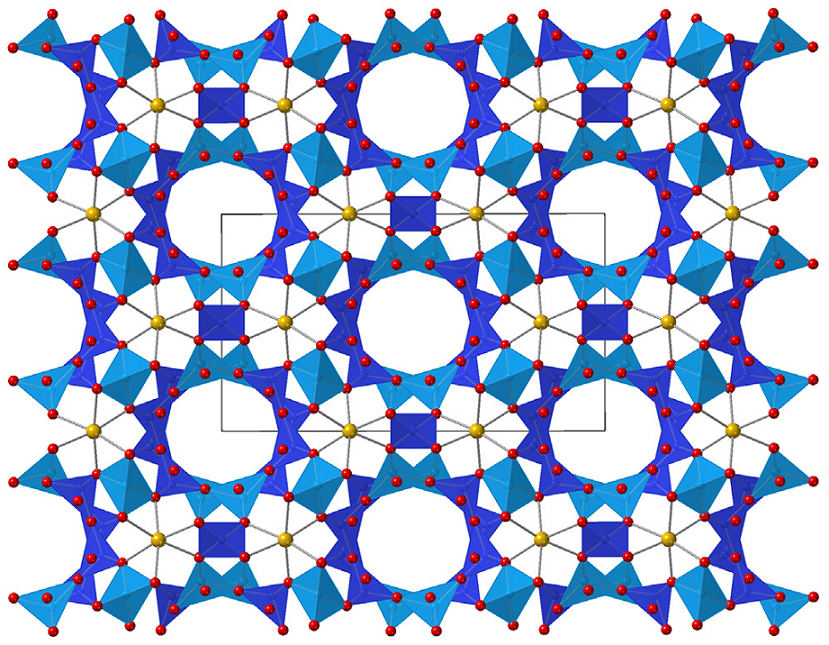
- The ultra-low thermal expansion is the core advantage of microcrystalline glass, but high-purity cordierite has achievedthe same level or even better ultra-low thermal expansion characteristics as microcrystalline glass through precise composition control (MgO-Al₂O₃-SiO₂ ternary system) + nano-sintering technology, breaking the perception that “only microcrystalline glass can achieve ultra-low thermal expansion”;
- Microcrystalline glass is anamorphous inorganic material with natural internal micropores, low stiffness, and poor thermal conductivity, which are the core reasons for its replacement in dynamic high-precision components;
- High-purity cordierite is a polycrystalline ceramic with a sintered density of ≥99.5% and no internal pores. It can further improve surface hardness and optical performance through composite coatings (SiC/SiO₂), fully adapting to optical-grade precision processing.
II. 8 Core Advantages of High-Purity Cordierite Replacing Microcrystalline Glass
1. “Thermal Management Overwhelm” — Ultra-Low Expansion + High Thermal Conductivity, Completely Solving Thermal Drift Pain Points
The low thermal conductivity of microcrystalline glass is its biggest shortcoming: in components such as EUV lithography machine stages and laser positioning square mirrors, local thermal shocks (e.g., EUV exposure, motor operation, laser irradiation) will lead to heat accumulation → local micro-deformation → precision drift (even if CTE is ultra-low, thermal gradient will still cause deformation).
The thermal conductivity of high-purity cordierite is 3-4 times that of microcrystalline glass, which can quickly dissipate local heat within 1 second to achieve uniform temperature across the component. Combined with ultra-low thermal expansion characteristics, it controls thermal deformation within 0.3nm, far lower than the 1nm precision requirement for semiconductor 7nm/5nm processes. It is currently the only material that can simultaneously achieve “ultra-low thermal expansion + high thermal conductivity”.
2. “Optimal Dynamic Performance” — High Specific Stiffness + Lightweight, Adapting to High-Speed Equipment Movement
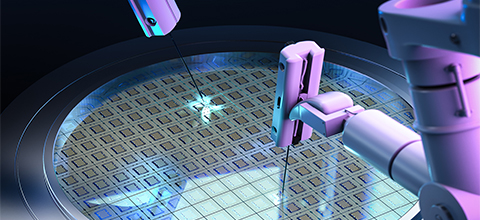
Semiconductor lithography machine stages need to meet the dynamic working conditions of scanning speed > 1000mm/s and acceleration > 10g, which have extremely high requirements for “lightweight + high deformation resistance” of components.
- Microcrystalline glass: low stiffness; to meet deformation resistance requirements, component thickness must be increased → increased weight → slower dynamic response → decreased positioning accuracy;
- High-purity cordierite: specific stiffness is twice that of microcrystalline glass; under the same deformation resistance requirements, components can be reduced by 30%-50%, achieving a perfect balance of “lightweight + high stiffness”, and greatly improving the dynamic response speed and positioning repeatability of equipment. This is the core reason why leading equipment manufacturers such as ASML abandon microcrystalline glass and choose cordierite as the core material for EUV stage substrates.
3. “Stronger Mechanical Reliability” — High Strength + Thermal Shock Resistance, Adapting to Industrial Mass Production Conditions
Microcrystalline glass is an amorphous material with high brittleness and poor shock/vibration/thermal shock resistance. During equipment transportation, installation, and long-term operation, it is prone to internal microcracks (invisible to the naked eye but will lead to gradual precision attenuation) due to slight vibration and sudden temperature changes. Microcracks cannot be repaired, and components can only be replaced eventually, increasing equipment maintenance costs.
The bending strength of high-purity cordierite is 1.6-2.5 times that of microcrystalline glass, and its thermal shock stability is ≥300℃, which can withstand industrial working conditions such as equipment start-stop, transportation vibration, and local temperature sudden changes. The service life of components is ≥5 years (≥100,000 wafers produced) without precision attenuation, greatly reducing equipment maintenance costs and downtime.
4. “Full Working Condition Adaptability of Chemical Stability” — Corrosion Resistance + No Precipitation, Consistent with Semiconductor Ultra-Clean Environment
The semiconductor lithography/etching process is an ultra-clean vacuum environment, and there are corrosive media such as fluorine-based plasma and acid-alkali cleaning fluids, which have strict requirements for “chemical stability + no particle precipitation” of materials (particle count < 10 particles/hour).
- Microcrystalline glass: not resistant to strong alkali and fluoride; long-term contact will cause crystallization and powdering → particle precipitation → contamination of wafers/optical components, and crystallization will lead to permanent failure of component precision;
- High-purity cordierite: a stable polycrystalline ceramic, resistant to acid, alkali, and fluorine-based plasma; no powdering, no precipitation, no deformation after long-term contact with corrosive media, and its surface can achieve an ultra-clean surface with Ra < 0.5nm through precision polishing, fully meeting the requirements of semiconductor ultra-clean environment.
5. “Better Processing Adaptability” — Precision Machinable + Composite Coating Applicable, Meeting Multi-Scenario Needs
- Precision processing: the sintered density of high-purity cordierite is ≥99.5% without internal pores, which can achieve optical-grade precision with surface roughness Ra < 0.5nm and flatness PV < 8nm through ultra-precision polishing, which is the same as the processing precision of microcrystalline glass. Moreover, there is no micro-chipping or powdering during processing, and the processing yield is increased by more than 20%;
- Coating composite: the surface of cordierite can be compounded with SiC, SiO₂, metal coatings, etc., through magnetron sputtering and chemical vapor deposition (CVD) to further improve surface hardness, optical reflectivity, and radiation resistance, adapting to optical component scenarios such as laser positioning square mirrors and EUV reflector substrates. However, due to its amorphous structure, microcrystalline glass has poor coating adhesion and is prone to coating peeling.
6. “Better Mass Production Consistency” — Mature Ceramic Sintering Process, Controllable Batch Stability
The production process of microcrystalline glass is melting cooling + crystallization treatment. During crystallization, uneven crystalline phase distribution → large CTE fluctuation is prone to occur (the CTE difference between batches can reach ±50ppb/K), resulting in inconsistent precision of processed components, which requires additional manual screening and increases production costs.
High-purity cordierite adopts ceramic powder sintering process (domestic equivalent models have achieved mass production of powder). Through precise control of powder particle size + standardized sintering process, it can achieve CTE difference between batches ≤ ±10ppb/K and sintering shrinkage deviation ≤ ±0.1%. The mass production consistency is far better than that of microcrystalline glass, fully adapting to the large-scale mass production needs of semiconductor equipment.
7. “More Controllable Cost and Supply Chain” — Localization Replacement Realized, Breaking Overseas Monopoly
- Microcrystalline glass: only a few overseas enterprises such as Schott (Zerodur) can produce semiconductor-grade products; overseas monopoly → high price (single square meter substrate > 100,000 yuan), long delivery time (3-6 months), limited customization, and there is a risk of supply interruption affected by the international supply chain;
- High-purity cordierite: mass production of semiconductor-grade powder (equivalent to Kyocera CO720/CO220) has been realized in China, and the processing technology of ceramic components is mature; the price is 20%-30% lower than that of microcrystalline glass, and the delivery time is shortened to 1-2 months. It also supports small-batch customization (e.g., adjusting powder particle size and composition to adapt to different component needs), and the supply chain is completely controllable, which is consistent with the core demand oflocalization replacement of Chinese semiconductor equipment.
8. “Wider Application Scenarios” — Full Coverage from Precision Optics to Structural Components
The application of microcrystalline glass is limited to static optical components (e.g., astronomical telescope lenses, static measurement reference mirrors). Due to the shortcomings of dynamic performance, thermal conductivity, and mechanical strength, it cannot adapt to dynamic high-precision structural components of semiconductor equipment.
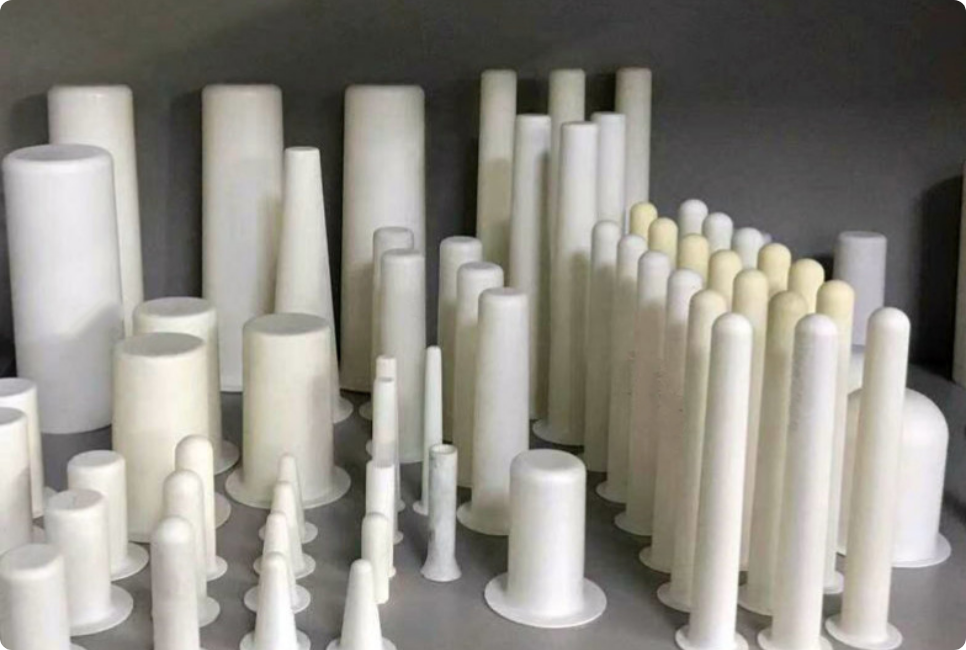
High-purity cordierite can achieve full coverage from static optical components to dynamic structural components. In semiconductor manufacturing, it can be used not only as optical components such as laser positioning square mirrors and EUV reflector substrates, but also as structural components such as ultra-precision stage substrates, wafer transfer stages, ESC electrostatic chuck bases, and etching chamber liners. One material covers multi-link needs, greatly simplifying the material selection and supply chain management costs of equipment manufacturers.
III. Precise Matching of Replacement Scenarios (Which Scenarios Prioritize Cordierite? Which Can Retain Microcrystalline Glass?)
“Priority Replacement” — High-Purity Cordierite is Completely Superior, the Optimal Solution (Core Semiconductor Scenarios)
- Ultra-precision stage/wafer stage substrates of EUV/DUV lithography machines (core scenario);
- Square mirrors/reference mirrors for laser interference positioning;
- 300mm/450mm wafer transfer stages and vacuum robotic end effectors;
- Semiconductor ESC electrostatic chuck bases, etching/deposition chamber liners, and gas distribution plates;
- High-speed motion platforms and nano-level positioning components of precision testing equipment.
“Microcrystalline Glass Can Be Retained” — Static Low-Power Scenarios with Acceptable Cost-Effectiveness
- Fixed lenses/reference mirrors of astronomical telescopes and static optical measuring instruments (no dynamic movement, no local thermal shock; the optical performance of microcrystalline glass has met the needs, and the price is slightly lower);
- Low-precision, low-speed static positioning components (no acceleration requirements; the ultra-low thermal expansion characteristics of microcrystalline glass can meet the precision needs).
IV. Summary: High-Purity Cordierite is a “Comprehensive Upgrade Replacement” for Microcrystalline Glass
The core value of microcrystalline glass is ultra-low thermal expansion, but under the core needs of semiconductor high-end manufacturing such as dynamic high precision, high heat flux, ultra-cleanliness, and industrial mass production, its shortcomings such as low thermal conductivity, low stiffness, low strength, and poor chemical stability are magnified infinitely, and it can no longer adapt to the precision requirements of advanced processes.
Through precise composition control + nano-sintering technology, high-purity cordierite inherits the core advantage of ultra-low thermal expansion of microcrystalline glass, and achieves comprehensive upgrades in thermal conductivity, specific stiffness, mechanical strength, chemical stability, and dynamic performance. It also has advantages such as good processing adaptability, high mass production consistency, and controllable supply chain, making it the only optimal solution for replacing microcrystalline glass in current semiconductor lithography (EUV/DUV) and precision optical equipment.
For domestic semiconductor equipment, the localized mass production of high-purity cordierite not only breaks the monopoly of overseas materials, but also improves the precision, reliability, and mass production capacity of domestic equipment from the material source, which is the core basic material supporting the breakthrough of China’s semiconductor 7nm/5nm advanced processes.
As a benchmark enterprise deeply engaged in the field of semiconductor high-end ceramic materials, Shenzhen Longci always takes “breaking overseas monopoly and empowering domestic semiconductors” as its mission, focusing on the R&D, production, and industrialization of high-purity cordierite powder and ceramic components, and is committed to providing core material solutions for advanced semiconductor processes.
Relying on the in-depth research of the core technical team, Shenzhen Longci has realized the mass production of semiconductor-grade high-purity cordierite powder equivalent to Kyocera CO720/CO220 series. The product has reached the advanced level of the industry in key indicators such as thermal expansion coefficient, thermal conductivity, and mass production consistency, which can perfectly replace Schott Zerodur microcrystalline glass and is widely applicable to core component scenarios such as EUV/DUV lithography machine stages, laser positioning square mirrors, and wafer transfer stages.
In the future, Loongceram will continue to deepen technological innovation, iterate and upgrade product performance, deepen the semiconductor high-end ceramic material track, empower the high-quality development of China’s semiconductor industry with professional strength, and become a leader in the domestic high-purity cordierite field!