

1. Introduction: When Wear Is Combined with Mechanical and Thermal Stress
In many industrial systems, wear-resistant components are not exposed to abrasion alone.
They often operate under combined conditions of sliding wear, impact loading, vibration, and thermal fluctuation.
In such environments, materials with extremely high hardness but limited fracture toughness may fail through microcrack accumulation and sudden brittle fracture.
Zirconia-based ceramics were developed specifically to address this limitation by introducing intrinsic crack resistance mechanisms at the material level.
2. The Core Advantage of Zirconia Ceramics
2.1 Stress-Induced Phase Transformation Mechanism
Zirconia (ZrO₂) is unique among technical ceramics due to its stress-induced phase transformation behavior.Under localized mechanical stress—such as contact wear or particle impact—zirconia undergoes a transformation from the metastable tetragonal phase to the monoclinic phase, accompanied by a volumetric expansion of approximately 3–5%.
This transformation produces two critical engineering effects:
- Local compressive stress around crack tips
- Energy dissipation that slows or arrests crack propagation
2.2 Impact on Wear Behavior
From a wear engineering perspective, transformation toughening influences wear performance in several ways:
- Reduces surface microcracking under repeated contact
- Improves tolerance to mixed wear modes (abrasion + impact)
- Enhances long-term dimensional stability under cyclic loading
This explains why zirconia often outperforms harder ceramics in real-world wear environments, despite having slightly lower hardness values.
3. Types of Zirconia Ceramics Used in Wear Applications
Not all zirconia ceramics behave the same. Engineering selection depends on the stabilization system and microstructure.
3.1 Yttria-Stabilized Zirconia (Y-TZP)
- High fracture toughness
- Fine-grained microstructure
- Excellent performance at room to moderate temperatures
Limitations:
At elevated temperatures or in humid environments, Y-TZP may experience low-temperature degradation (LTD), which must be considered in long-term applications.
3.2 Partially Stabilized Zirconia (PSZ)
- Coarser microstructure with retained cubic phase
- Good balance between toughness and thermal stability
- Suitable for mechanically demanding wear components
PSZ is often selected when thermal stability is as important as wear resistance.
3.3 Zirconia Toughened Alumina (ZTA)
ZTA combines alumina’s hardness with zirconia’s transformation toughening:
- Improved wear resistance compared to pure zirconia
- Better crack resistance than alumina
- Stable performance across wider temperature ranges
4. Zirconia vs Alumina vs Silicon Carbide in Wear Applications
| Property | Alumina | Zirconia | Silicon Carbide |
|---|---|---|---|
| Hardness | Very High | High | Extremely High |
| Fracture Toughness | Low | Very High | Moderate |
| Impact Resistance | Limited | Excellent | Limited |
| Wear with Shock | Poor–Moderate | Excellent | Moderate |
| Thermal Stability | Excellent | Moderate | Excellent |
This comparison highlights a key engineering insight:
Zirconia is selected not for maximum hardness, but for failure resistance under combined stress conditions.
5. Sintering and Microstructure Control in Zirconia Wear Components
Zirconia’s performance is highly sensitive to processing:
- Grain size affects transformation kinetics
- Stabilizer distribution influences phase stability
- Residual porosity can negate toughening benefits
Advanced sintering methods such as hot pressing or HIP post-treatment are often applied to ensure:
- Uniform microstructure
- Controlled grain growth
- Consistent mechanical reliability
6. Typical Industrial Applications of Zirconia Wear Ceramics
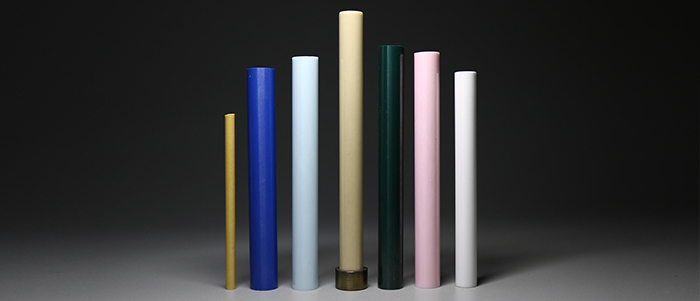
Zirconia ceramics are commonly used in:
- Pump plungers and valve seats subjected to pulsating loads
- Wear components in high-speed mechanical systems
- Precision industrial parts where crack resistance is critical
In these applications, zirconia’s value lies in its predictable failure resistance rather than absolute wear rate minimization.
Loongceram Engineering Insight
Engineering Insight – Zirconia Wear Components
At Loongeram, zirconia-based wear components are evaluated through a combined lens of wear mechanism analysis and phase stability control.Engineering assessments focus on matching zirconia type (Y-TZP, PSZ, or ZTA) with operating stress mode, temperature range, and service life expectations—ensuring that transformation toughening enhances reliability rather than introducing long-term instability.
7. Engineering Takeaway
Zirconia ceramics occupy a unique position among wear-resistant materials.
They are not designed to maximize hardness, but to manage damage accumulation and delay failure under complex loading conditions.
For wear applications involving impact, vibration, or cyclic stress, zirconia-based ceramics often represent the most reliable engineering solution.