

Introduction: When Conventional Wear Materials Reach Their Limits
In extreme industrial environments, wear rarely occurs in isolation.
Components are often exposed simultaneously to high abrasion, elevated temperatures, corrosive chemicals, and thermal cycling.Under such conditions, many wear-resistant materials—hardened steels, surface-treated alloys, or even oxide ceramics—experience accelerated degradation due to softening, oxidation, or chemical attack.
Silicon carbide (SiC) ceramics are selected in these environments not as an incremental upgrade, but as a fundamentally different materials solution driven by covalent bonding and exceptional thermochemical stability.
1. Why Silicon Carbide Excels in Severe Wear Environments
1.1 Covalent Bonding and Extreme Hardness
Silicon carbide is dominated by strong covalent bonds, resulting in:
- Very high hardness (second only to diamond and boron carbide among industrial ceramics)
- High elastic modulus and resistance to plastic deformation
- Minimal lattice slip under high contact stress
In abrasive wear scenarios, this bonding structure prevents micro-cutting and surface ploughing, allowing SiC to maintain surface integrity where softer materials fail rapidly.
1.2 Chemical and Thermal Stability as Wear Modifiers
In harsh environments, wear is often accelerated by chemical reactions or thermal effects, not mechanical contact alone.
SiC demonstrates:
- Excellent oxidation resistance at elevated temperatures
- High chemical inertness in acidic and alkaline media
- Stable mechanical properties across a wide temperature range
This stability prevents synergistic wear mechanisms, such as corrosion-assisted abrasion, which commonly limit the service life of metals and some oxide ceramics.
2. Wear Mechanisms Addressed by Silicon Carbide Ceramics
From an engineering perspective, silicon carbide is particularly effective against:
- Severe abrasive wear from hard particles
- Erosive wear in high-velocity fluid streams
- High-temperature wear involving oxidation or softening of counter-materials
Unlike transformation-toughened ceramics, SiC does not rely on crack-shielding mechanisms.
Its wear resistance is primarily derived from intrinsic hardness and environmental stability.
3. Processing Routes and Their Impact on SiC Wear Performance
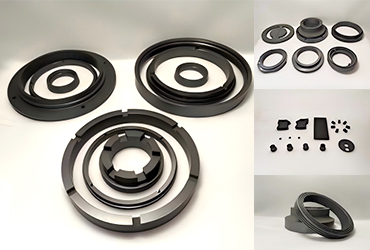
3.1 Reaction-Bonded vs Sintered Silicon Carbide
Different SiC processing routes result in distinct performance profiles:
- Reaction-bonded SiC (RB-SiC)
- Lower sintering temperature
- Residual free silicon phase
- Suitable for moderate wear applications
- Pressureless sintered or hot-pressed SiC
- Higher density and purity
- Superior wear and corrosion resistance
- Preferred for severe industrial environments
For high-reliability wear components, fully sintered SiC is generally favored.
3.2 Microstructure Control and Defect Sensitivity
Due to its high stiffness and limited fracture toughness, SiC performance is highly sensitive to:
- Residual porosity
- Large flaw populations
- Grain boundary impurities
Advanced sintering and post-densification techniques (such as HIP) are often employed to minimize critical defects and improve long-term reliability.
4. Engineering Trade-Offs: Strength vs Toughness
While silicon carbide offers exceptional wear resistance, it is not universally optimal.
Key considerations include:
- Lower fracture toughness compared to zirconia
- Sensitivity to impact loading
- Higher manufacturing cost and complexity
As a result, SiC is best applied in systems where abrasive, erosive, or chemical wear dominates, and mechanical shock is limited or well-controlled.
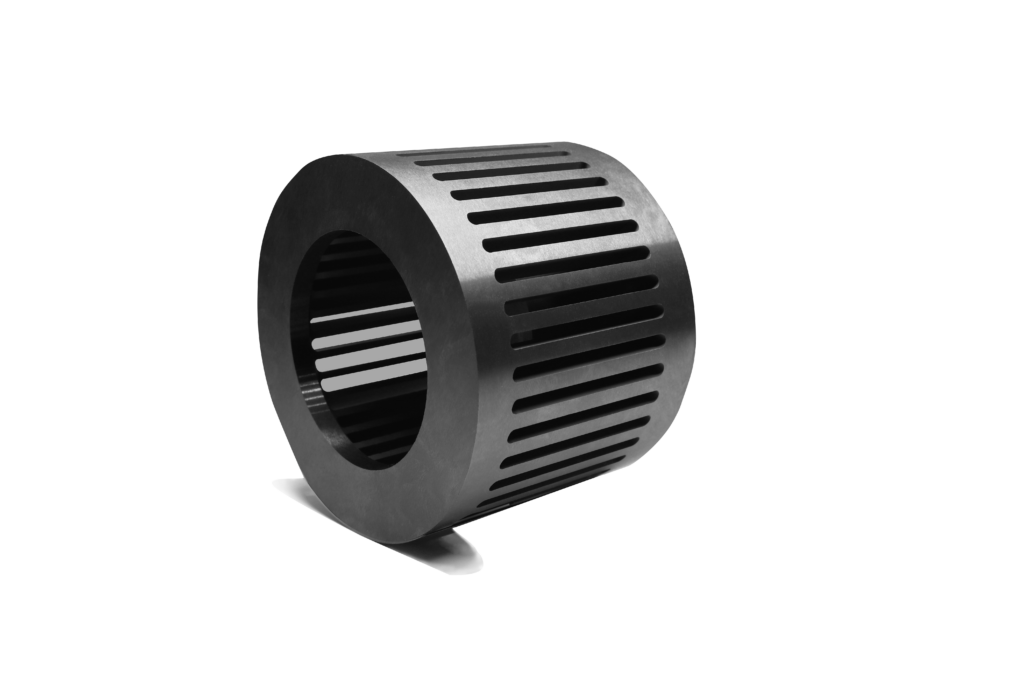
5. Typical Industrial Applications of Silicon Carbide Wear Components
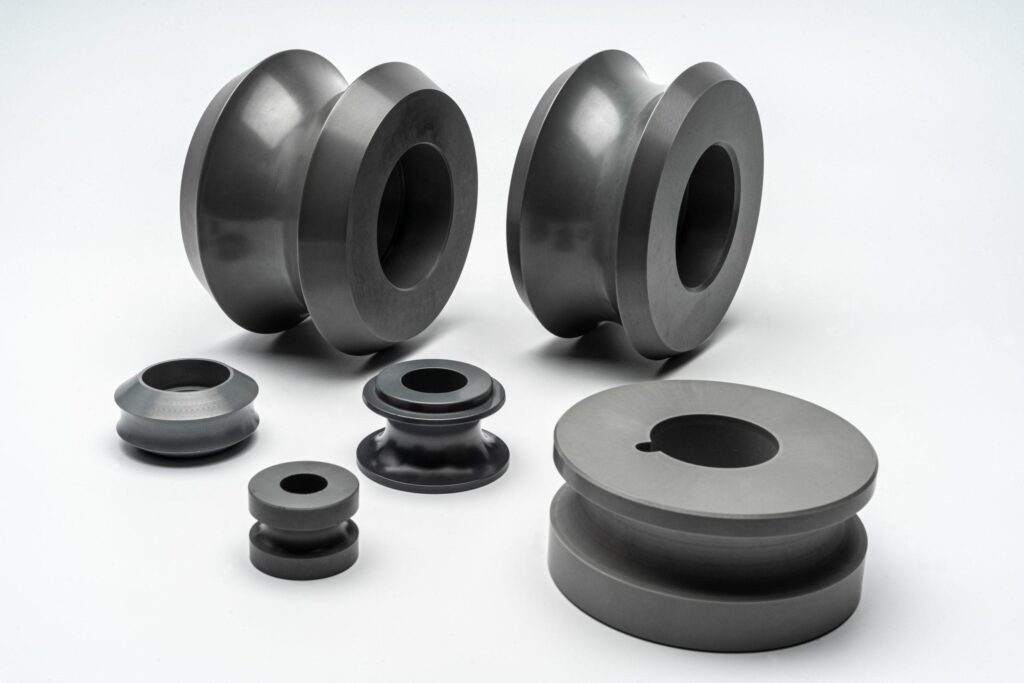
Silicon carbide ceramics are commonly used in:
- Mining and mineral processing equipment
- Chemical pumps and seals handling aggressive media
- High-temperature wear fixtures and heat-resistant components
- Energy and environmental systems exposed to corrosive particulates
6. Silicon Carbide vs Other Wear-Resistant Ceramics
| Property | Alumina | Zirconia | Silicon Carbide |
|---|---|---|---|
| Hardness | High | Moderate | Extremely High |
| Fracture Toughness | Low | Very High | Moderate |
| Chemical Stability | Good | Moderate | Excellent |
| High-Temperature Wear | Moderate | Limited | Excellent |
| Impact Resistance | Limited | Excellent | Limited |
This comparison underscores a critical engineering principle:
Material selection must prioritize dominant failure mechanisms, not single performance metrics.
Loongeram Engineering Insight (Non-Promotional Module)
Engineering Insight – Silicon Carbide for Severe Wear
At Loongeram, silicon carbide is applied selectively in wear systems where abrasion, erosion, and chemical stability dominate over impact resistance.
Engineering evaluations emphasize defect population control, densification consistency, and environment-specific degradation mechanisms to ensure predictable long-term performance under extreme operating conditions.
7. Engineering Takeaway
Silicon carbide ceramics represent the upper performance tier of wear-resistant materials for harsh industrial environments.
When applied within appropriate mechanical and environmental boundaries, SiC delivers unmatched resistance to abrasion, erosion, and chemical attack—making it a critical material for systems where reliability and longevity outweigh cost considerations.