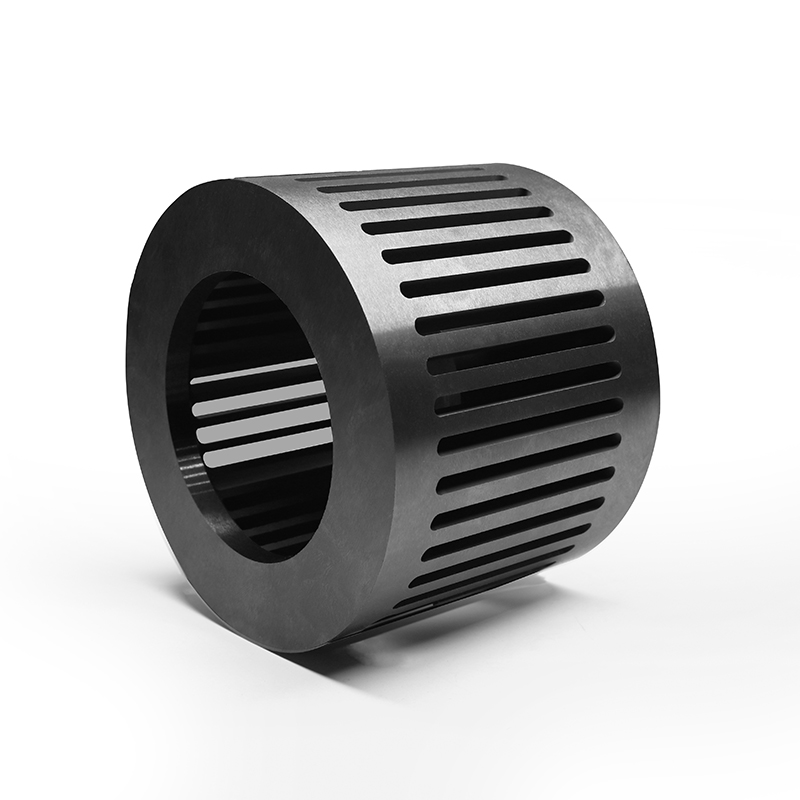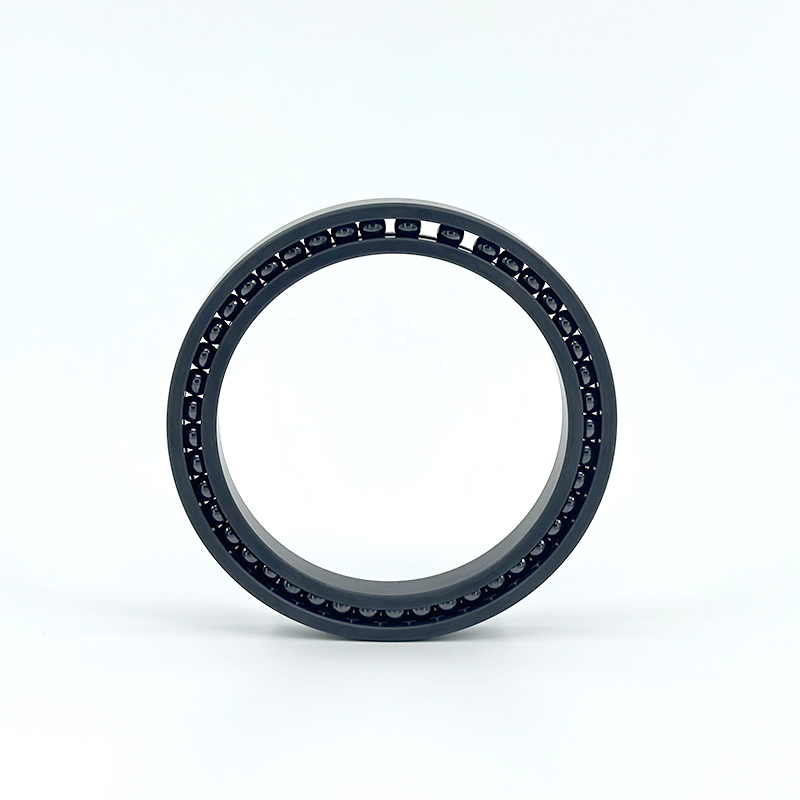


Zirconia Toughened Alumina (ZTA) ceramics are advanced composite materials developed by dispersing zirconia (ZrO₂) particles into an alumina (Al₂O₃) matrix. This composite design significantly enhances mechanical strength, toughness, and durability. Owing to their unique microstructure and exceptional performance, ZTA ceramics have attracted growing attention across multiple high-tech industries. This article provides a comprehensive technical overview of the structural characteristics, toughening mechanisms, and industrial applications of ZTA ceramics, supported by authoritative research and reliable data.
1. Property Regulation and Microstructural Design
The superior performance of ZTA ceramics is rooted in their multi-phase composite structure—a hard α-Al₂O₃ matrix reinforced by finely dispersed metastable tetragonal zirconia (t-ZrO₂).Optimized ZTA materials typically contain 10–30 vol% ZrO₂, with zirconia particle sizes precisely controlled between 0.2–1.0 μm to ensure uniform dispersion and a strong interphase interface.
Key design considerations:
- Uniform Phase Distribution
Through advanced powder synthesis techniques—such as co-precipitation and sol–gel processing—a homogeneous nanoscale dispersion of alumina and zirconia phases can be achieved, which is essential for consistent mechanical properties. - Grain Boundary Engineering
Small additions of sintering aids like SiO₂ and MgO are used to tailor grain boundary chemistry, enhance interfacial bonding, and control microstructural evolution during sintering. - Residual Stress Field Optimization
Due to the mismatch in thermal expansion coefficients between alumina (8.0×10⁻⁶/K) and zirconia (10.5×10⁻⁶/K), beneficial compressive stresses are generated during cooling, further improving the fracture resistance of the composite.
2. Multiple Toughening Mechanisms
The core strength of ZTA ceramics lies in their multi-mechanism toughening system, which primarily includes stress-induced phase transformation, microcrack toughening, and crack deflection/bridging.
- Transformation Toughening
Under mechanical stress, tetragonal ZrO₂ transforms into monoclinic ZrO₂, accompanied by a 3–5% volume expansion and a ~7% shear strain. This transformation generates compressive stresses around crack tips, effectively impeding crack propagation and absorbing fracture energy—leading to a significant improvement in fracture toughness. - Microcrack Toughening
The local volume expansion during zirconia transformation can create fine microcracks in the alumina matrix. These microcracks help dissipate energy and divert the main crack path, enhancing the overall toughness without causing catastrophic failure. - Crack Deflection and Bridging
- Deflection: When a propagating crack encounters a zirconia particle, elastic modulus mismatch causes the crack to deviate or bend, increasing the crack path length and energy consumption.
- Bridging: Some zirconia particles act as “bridges” between crack surfaces, providing closure forces that resist further opening and propagation.
3. Performance Advantages
Through the synergy of its composite design and toughening mechanisms, ZTA ceramics achieve an ideal balance between hardness, strength, and toughness.
- High Strength and Fracture Toughness
Flexural strength can exceed 800 MPa, while fracture toughness reaches up to 8 MPa·m¹/², outperforming conventional alumina ceramics. - Superior Wear Resistance
Combining high hardness with a low friction coefficient, ZTA exhibits outstanding wear resistance in abrasive environments, making it suitable for high-load mechanical components. - Excellent Thermal Stability
ZTA maintains its structural integrity and performance at temperatures up to 1000°C, ideal for high-temperature industrial applications. - Biocompatibility and Chemical Inertness
Non-toxic and corrosion-resistant, ZTA ceramics have proven compatibility in biomedical environments.
Authoritative institutions such as the International Organization for Standardization (ISO) and the European Ceramic Society (ECerS) have established standardized testing protocols to ensure the reliability and reproducibility of ZTA performance data.
4. Industrial Applications
The outstanding mechanical and physical properties of ZTA ceramics make them highly versatile across multiple advanced industries.
- 1.Mechanical Engineering
Used in cutting tools, bearings, and seals, ZTA ceramics deliver longer service life and higher operational stability. For example, ZTA cutting tools in CNC machining can process high-strength alloys with reduced tool wear and downtime. - Biomedical Engineering
Owing to its biocompatibility and corrosion resistance, ZTA is widely used in dental implants and orthopedic joint prostheses. ZTA hip implants exhibit superior wear resistance and impact strength, extending their operational lifespan to 20–50 years in vivo. - Electronics and Semiconductor Applications
With high dielectric strength, excellent thermal stability, and superior mechanical properties, ZTA is an ideal material for electronic substrates, ceramic packages, and high-reliability insulation components—particularly in environments subject to vibration or mechanical shock. - Aerospace and Energy Industries
ZTA coatings and components are valued for their high-temperature resistance and mechanical robustness. Plasma-sprayed ZTA coatings enhance turbine blade durability, offering exceptional adhesion, wear resistance, and thermal protection in extreme conditions.
5. Conclusion
Zirconia Toughened Alumina (ZTA) ceramics represent a milestone in composite ceramic engineering. Through precise microstructural design and transformation toughening, ZTA successfully mitigates the inherent brittleness of traditional ceramics, combining hardness and toughness in a single material system.
As advancements in materials genomics, multiscale modeling, and precision processing continue, ZTA ceramics are expected to play a vital role in next-generation industrial, electronic, biomedical, and aerospace applications, providing high-performance material solutions for emerging technologies.