 +86-18627039022
 jackiecheng@loongceram.com



 English


Thermal Shock Resistance of Advanced Technical Ceramics
Abstract Thermal shock resistance is one of the most critical yet challenging performance indicators for advanced technical ceramics. While ceramics are renowned for their high hardness, thermal stability, and corrosion resistance, their inherent brittleness makes them particularly vulnerable to rapid temperature changes. This article provides a systematic and engineering-oriented analysis of thermal shock mechanisms, evaluation […]
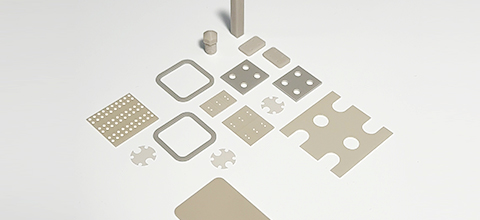
Aluminum Nitride Thermal Conductivity: Properties, Mechanisms, and Engineering Applications
Aluminum nitride (AlN) is widely recognized as one of the most important ceramic materials in modern thermal management engineering. Its exceptionally high aluminum nitride thermal conductivity—combined with electrical insulation, low density, and chemical stability—makes it a preferred substrate and packaging material in high-power electronics, LEDs, semiconductor manufacturing, and advanced heat-dissipation systems. This article provides an […]
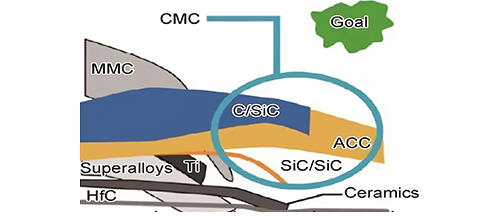
Applications of Composite Ceramic Materials in Extreme Environments
Introduction In modern high-end manufacturing and advanced packaging systems, operating conditions increasingly involve high temperatures, rapid thermal cycling, strong radiation, mechanical shock, and corrosive atmospheres. Traditional metallic materials often fail in such extreme environments due to thermal expansion mismatch, corrosion attack, thermal-shock-induced cracking, or structural degradation.To overcome these limitations, engineers are turning toward composite ceramic […]
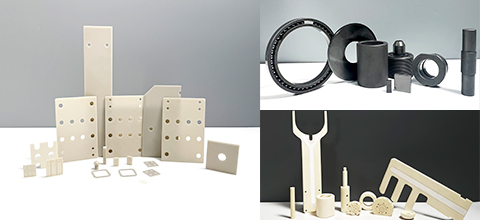
Comparison of Aluminum Nitride (AlN), Silicon Carbide (SiC), and Alumina (Al₂O₃): A Technical Analysis for Power Electronics and Advanced Packaging
In advanced semiconductor packaging and power electronics, material selection directly affects thermal management performance, reliability, and cost. This article provides a professional and engineering-based comparison of Aluminum Nitride (AlN), Silicon Carbide (SiC), and Alumina (Al₂O₃) from the perspectives of material properties, manufacturing processes, and application suitability. 1. Fundamental Material Property Comparison The table below summarizes […]
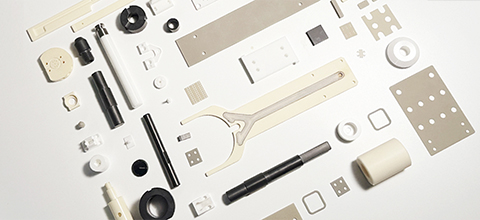
Ceramic Material Selection: A Practical Engineering Guide to Key Properties and Application Matching
In engineering design and industrial manufacturing, choosing the wrong material is often more costly than design errors themselves. Ceramic materials—known for their exceptional hardness, electrical insulation, and high-temperature stability—are widely applied in electronics packaging, mechanical sealing, energy equipment, chemical processing, and aerospace systems.However, ceramics vary significantly: alumina, zirconia, silicon nitride, silicon carbide, and others differ […]

