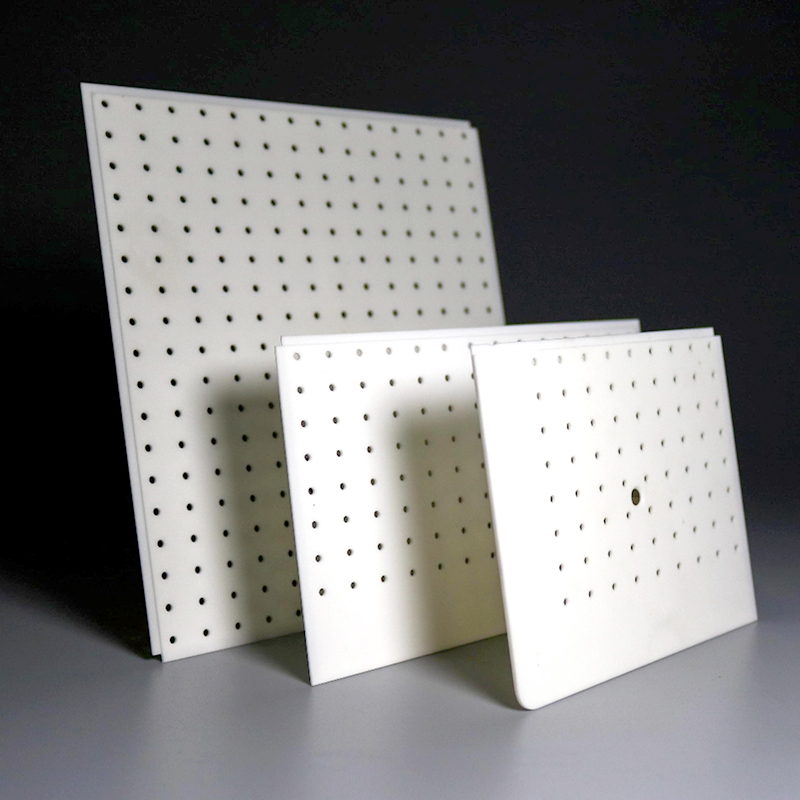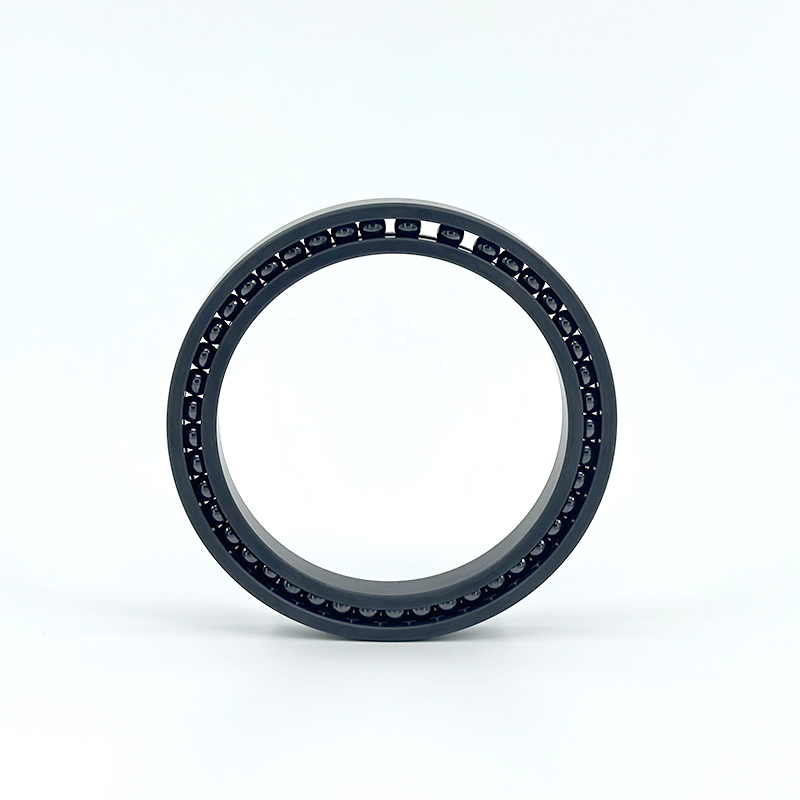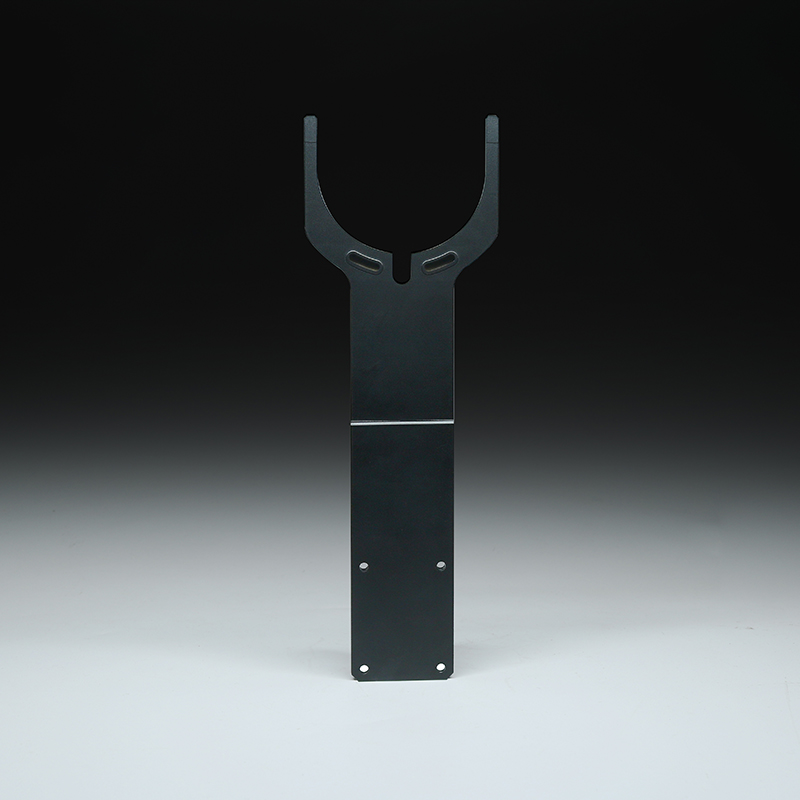


1. Why Compare Cordierite and Low-Expansion Glass-Ceramics?
In precision-driven industries such as semiconductor manufacturing, space optics, and high-accuracy metrology, material selection is governed less by absolute strength and more by dimensional stability under thermal variation.
Two material families are frequently considered for such applications:
- Cordierite ceramics (Mg₂Al₄Si₅O₁₈)
- Low-expansion glass-ceramics (e.g., lithium aluminosilicate-based materials)
Although both are characterized by low coefficients of thermal expansion (CTE), their structure, processing routes, mechanical behavior, and long-term reliability differ fundamentally.
This article provides a materials-engineering comparison, rather than a marketing-level overview.
2. What Is Cordierite?
2.1 Composition and Crystal Structure
Cordierite is a magnesium aluminosilicate ceramic with the ideal chemical formula:
Mg₂Al₄Si₅O₁₈
Structurally, cordierite is a framework silicate composed of interconnected SiO₄ and AlO₄ tetrahedra, with Mg²⁺ ions occupying channel-like sites.
This unique crystal topology leads to directionally compensating lattice vibrations, which is the fundamental reason for its low macroscopic thermal expansion.
High-purity cordierite ceramics require:
- Strict control of alkali impurities
- Phase stability between cordierite and indialite
- Uniform microstructure after sintering
At Loongeram, high-purity cordierite development focuses on phase control and long-term dimensional reproducibility, not just nominal CTE values.
3. What Are Low-Expansion Glass-Ceramics?
Low-expansion glass-ceramics are typically derived from controlled crystallization of precursor glass, most commonly in the Li₂O–Al₂O₃–SiO₂ (LAS) system.
Their low thermal expansion arises from:
- Specific crystalline phases with negative or near-zero thermal expansion
- A residual glassy matrix that influences fracture behavior and machinability
These materials are widely known for their application in:
- Optical mirrors
- Telescope substrates
- Precision reference plates
However, their glass-derived nature introduces different engineering constraints compared with fully crystalline ceramics.
4. Thermal Expansion Behavior
4.1 Typical CTE Comparison
| Material | CTE (20–800 °C) |
|---|---|
| High-Purity Cordierite Ceramic | 0.5-1.0×10⁻⁶/k |
| Low-Expansion Glass-Ceramic | ~0–1.0 ×10⁻⁶ /K |
At first glance, glass-ceramics appear superior.
However, engineering performance depends on stability over time, thermal cycling response, and anisotropy control, not only the absolute CTE value.
4.2 Thermal Cycling and Structural Relaxation
Cordierite ceramics exhibit fully crystalline behavior, meaning their lattice response is highly repeatable under cyclic heating and cooling.
- Glass-ceramics, due to the presence of a residual glass phase, may experience structural relaxation or subtle drift during long-term thermal exposure.
For equipment that undergoes thousands of thermal cycles, this distinction becomes critical.
5. Mechanical and Structural Considerations
| Property | Cordierite Ceramic | Low-Expansion Glass-Ceramic |
|---|---|---|
| Microstructure | Fully crystalline | Partially crystalline + glass |
| Elastic Modulus | Moderate (stress-tolerant) | Higher, but more brittle |
| Fracture Behavior | Ceramic-like, predictable | Glass-like, crack-sensitive |
| Thermal Shock Resistance | Excellent | Moderate |
From an engineering perspective:
- Cordierite favors stress accommodation and long-term stability
- Glass-ceramics favor optical precision but require careful mechanical design
6. Manufacturing and Processing Implications
6.1 Cordierite Ceramic Processing
Cordierite components are typically produced via:
- Powder synthesis and shaping
- High-temperature sintering with phase control
- Microstructure optimization for porosity and grain size
This route enables scalable production and consistent batch-to-batch performance, which is essential for semiconductor equipment suppliers.
6.2 Glass-Ceramic Processing
Glass-ceramics require:
- Glass melting and forming
- Precisely controlled nucleation and crystallization heat treatments
- Post-machining and polishing
While capable of extremely tight tolerances, this process is energy-intensive, time-sensitive, and less flexible for complex geometries.
7. Application-Oriented Material Selection
7.1 Semiconductor Manufacturing Equipment
Cordierite ceramics are widely used for:
- Thermally stable support structures
- Alignment frames and reference bases
- Components requiring electrical insulation and low drift
Their predictable response under long-term thermal cycling makes them well-suited for high-uptime manufacturing environments.
7.2 Space Optics and Precision Instruments
Low-expansion glass-ceramics dominate in:
- Optical mirror substrates
- High-precision optical reference components
Cordierite ceramics, however, are frequently used as:
- Structural supports
- Mirror backing structures
- Thermally stable frames
In such systems, cordierite complements rather than replaces glass-ceramics.
8. Cordierite Ceramic vs. Glass-Ceramic: Engineering Trade-Off Summary
| Selection Priority | Recommended Material |
|---|---|
| Ultra-low absolute CTE | Glass-Ceramic |
| Long-term thermal cycling stability | Cordierite Ceramic |
| Structural support components | Cordierite Ceramic |
| Optical reflective surfaces | Glass-Ceramic |
| Scalable industrial production | Cordierite Ceramic |
9. Engineering Q&A (SEO-Friendly)
Q1: Is cordierite a glass-ceramic?
No. Cordierite is a fully crystalline ceramic, while glass-ceramics contain both crystalline and glassy phases.
Q2: Which material is more stable over long-term thermal cycling?
Cordierite ceramics generally show more repeatable dimensional behavior under repeated cycles.
Q3: Why are glass-ceramics preferred for mirrors?
Because of their near-zero CTE and excellent polishability for optical surfaces.
Q4: Can cordierite replace low-expansion glass-ceramics in optics?
Not for reflective surfaces, but it is widely used for support and structural components.
Q5: How important is purity in cordierite ceramics?
High purity is essential to avoid secondary phases that can affect thermal expansion consistency.
Q6: What role does Loongeram play in cordierite applications?
Loongeram focuses on high-purity, phase-stable cordierite ceramics for semiconductor and precision engineering systems.
Q7: Which material is more suitable for high-volume industrial equipment?
Cordierite ceramics, due to their scalability and processing robustness.
10. Conclusion
Although cordierite ceramics and low-expansion glass-ceramics share the common goal of thermal stability, they represent two fundamentally different engineering philosophies.
- Glass-ceramics optimize absolute thermal expansion minimization
- Cordierite ceramics optimize long-term structural reliability under real operating conditions
For precision engineering systems where repeatability, scalability, and thermal cycling resistance matter as much as nominal CTE, high-purity cordierite ceramics remain an indispensable material choice.