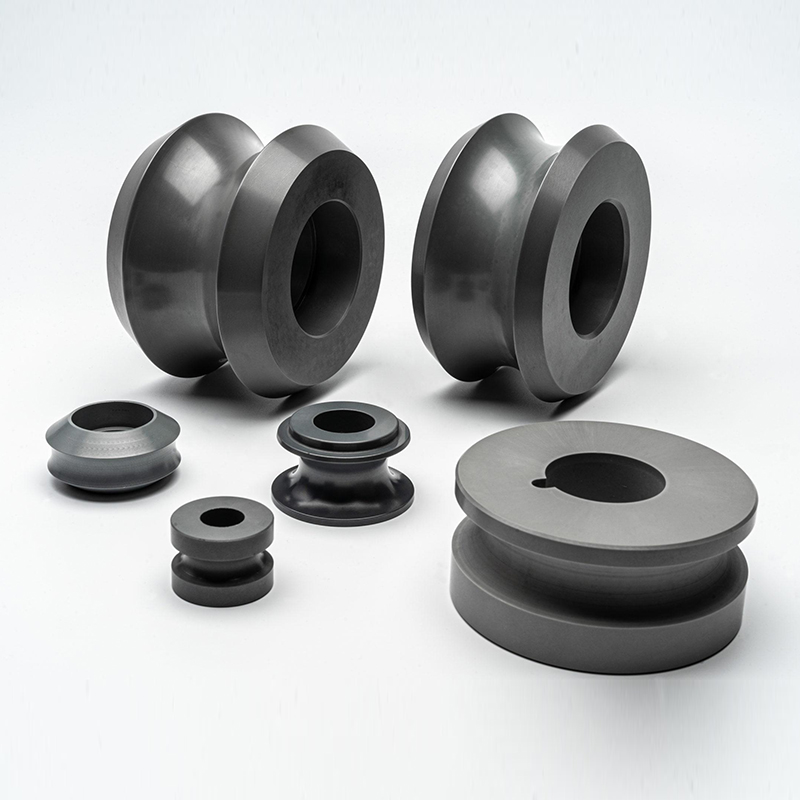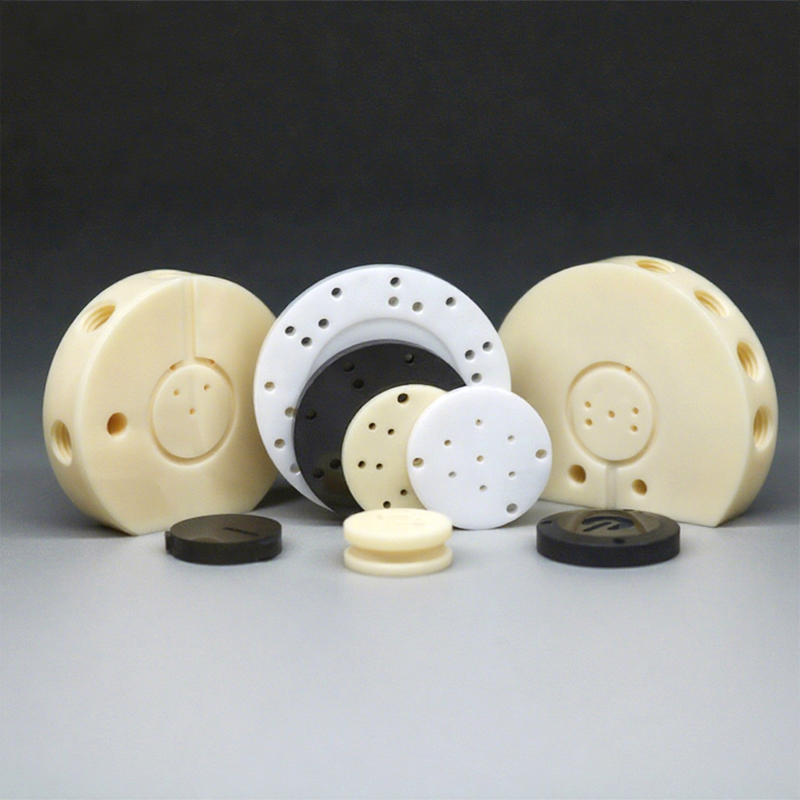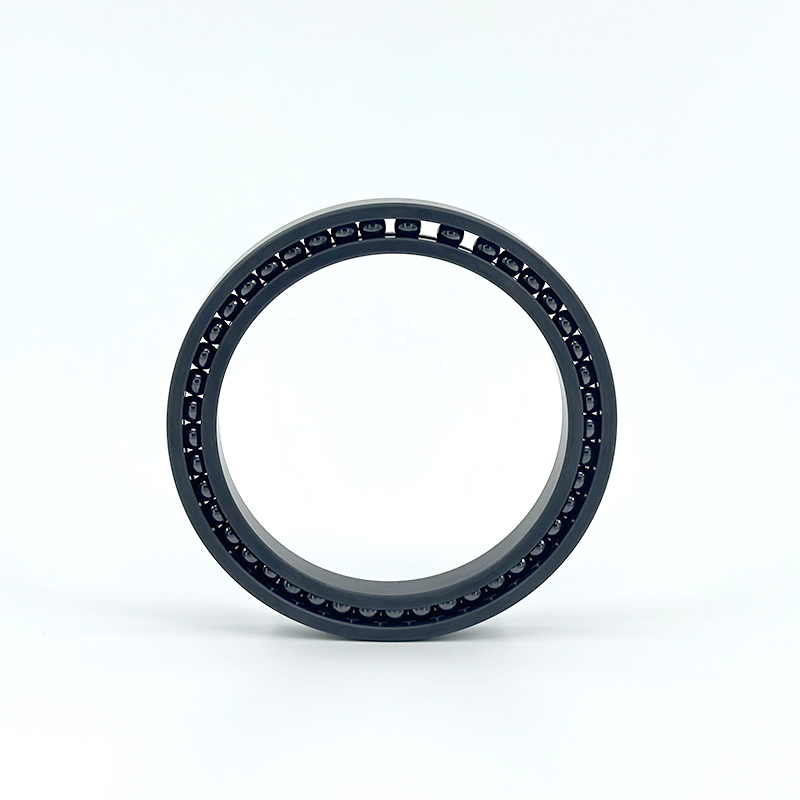


1. Why Alumina Remains the Baseline Wear Ceramic
Alumina (Al₂O₃) is often considered the reference material for wear-resistant ceramics.
Not because it excels in every performance metric, but because its property set is stable, predictable, and scalable across industrial volumes.
From an engineering standpoint, alumina’s wear resistance originates from:
- High intrinsic hardness of the corundum crystal structure
- Strong ionic–covalent bonding
- Excellent chemical and thermal stability
However, hardness alone does not guarantee durability. Understanding how alumina behaves under real service conditions is essential for correct material selection.
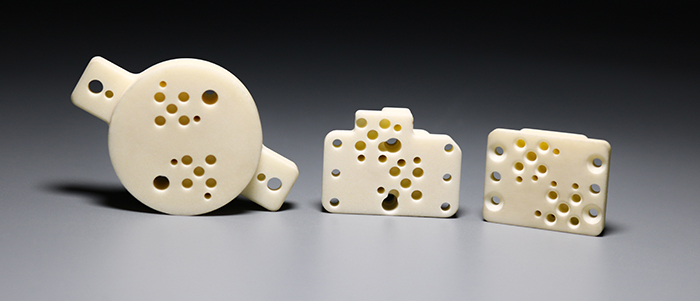
2. Crystal Structure and Its Influence on Wear Resistance
Alumina used in wear applications is predominantly α-alumina, which crystallizes in a hexagonal close-packed oxygen lattice with aluminum ions occupying octahedral sites.
This structure leads to:
- High lattice stability
- Low atomic mobility at operating temperatures
- Strong resistance to plastic deformation
Engineering implication:
Under abrasive contact, alumina resists penetration and micro-cutting, resulting in low steady-state wear rates when loading conditions remain stable.
3. Key Mechanical and Thermal Properties (Engineering-Relevant)
| Property | Typical Value (≥99% Al₂O₃) | Engineering Significance |
|---|---|---|
| Vickers Hardness | 14–18 GPa | Excellent resistance to abrasive wear |
| Density | 3.8–3.95 g/cm³ | Lightweight compared to metal alternatives |
| Fracture Toughness (K_IC) | 3–4 MPa·m¹ᐟ² | Limited impact tolerance |
| Elastic Modulus | ~380 GPa | High stiffness, low elastic compliance |
| Max Service Temp (air) | >1600°C | Suitable for high-temperature wear zones |
| Chemical Stability | Excellent | Resistant to most acids and molten metals |
4. Dominant Wear Mechanisms in Alumina Components
4.1 Abrasive Wear (Primary Strength)
Alumina performs exceptionally well in:
- Sliding abrasion
- Particle-laden flow
- Dry or lubricated contact
The wear process is typically gradual material removal, not catastrophic failure.
4.2 Brittle Fracture (Primary Limitation)
Due to limited fracture toughness, alumina is sensitive to:
- Impact loading
- Edge chipping
- Stress concentration from sharp geometries
Microcracks initiated at surface defects or pores can propagate rapidly, leading to sudden failure.
5. Processing and Sintering: Why “Same Alumina” Performs Differently
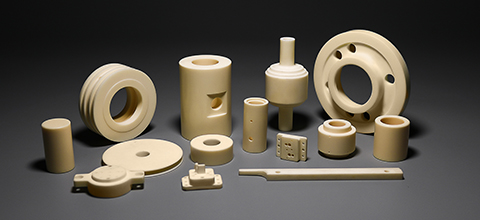
Wear resistance is not defined by chemistry alone. Key processing factors include:
- Powder purity and impurity control
- Particle size distribution
- Green body density uniformity
- Residual porosity after sintering
Common Sintering Routes
- Pressureless sintering – standard for most wear parts
- Hot pressing / HIP – applied where higher reliability and reduced defect population are required
Engineering reality:
Two alumina parts with identical composition can show dramatically different service life due to microstructural differences.
6. Where Alumina Performs Best
Ideal Applications
- Wear liners
- Pump components
- Valve seats
- Guide rails
- Grinding and milling media
Less Suitable Scenarios
- High-impact environments
- Rapid thermal cycling
- Complex geometries with stress concentration
Loongeram Engineering Insight
In wear applications, alumina does not fail gradually—it fails when the system design asks it to do something it was never meant to do. Correct geometry, surface finish, and load definition matter as much as the material itself.
7. Frequently Asked Questions (Engineer-Focused Q&A)
Q1: Is higher-purity alumina always better for wear resistance?
Not necessarily. Higher purity improves hardness and chemical stability, but it can also reduce fracture tolerance. Selection should balance purity with expected mechanical loading.
Q2: Why does alumina sometimes crack even under low wear rates?
Cracking is often caused by localized stress concentration, thermal mismatch, or residual porosity rather than wear itself.
Q3: Can alumina replace hardened steel in all wear applications?
No. Alumina outperforms steel in abrasive wear and corrosion environments, but steel remains superior under impact-dominated loading.
Q4: How does grain size affect alumina wear behavior?
Finer grains generally improve strength and wear uniformity, while excessive grain growth can promote crack initiation.
Q5: Is alumina suitable for slurry and particle erosion?
Yes, provided flow velocity and particle impact angles are controlled. In severe erosion conditions, ZTA or SiC may be more appropriate.
Q6: Does surface finish matter for alumina wear parts?
Absolutely. Poor surface finish increases friction, accelerates microcrack initiation, and reduces service life.
Q7: When should alumina be replaced by zirconia or ZTA?
When impact, vibration, or cyclic loading becomes dominant, zirconia or ZTA offers better structural reliability.