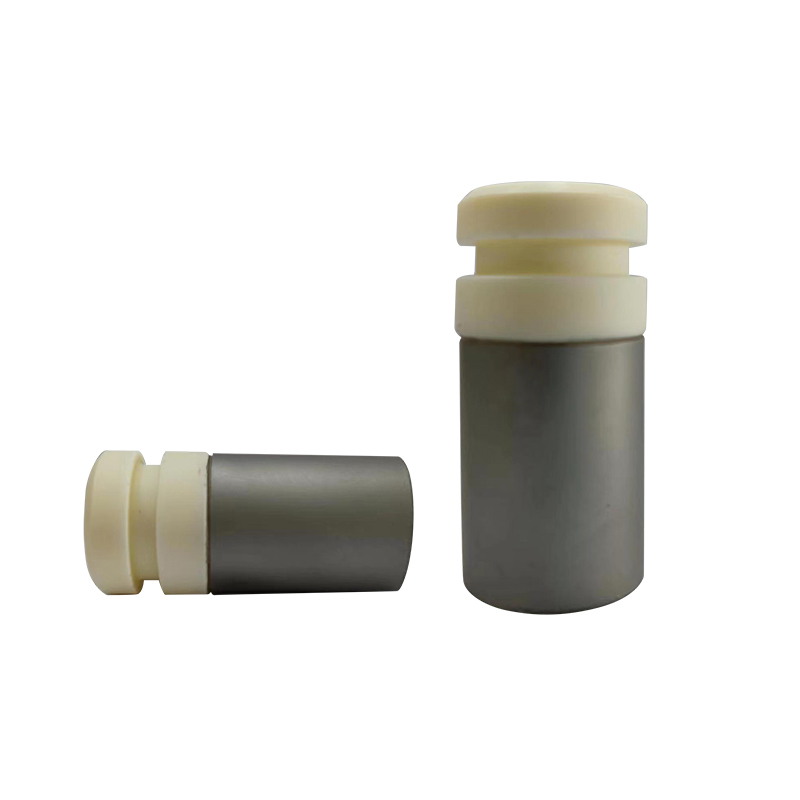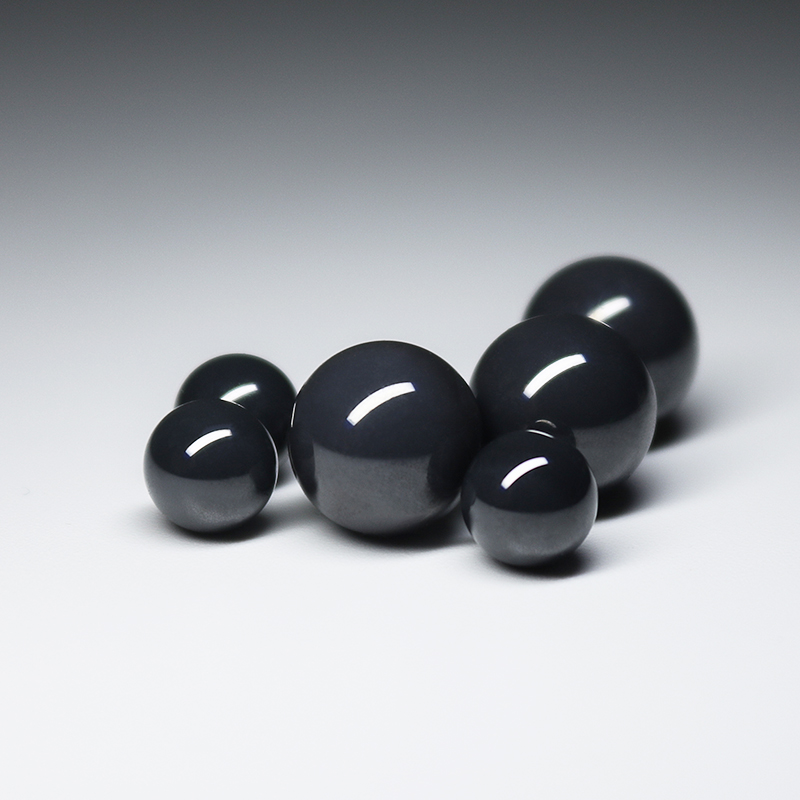


Boron nitride (BN) is an advanced ceramic material with unique structural and performance characteristics. It exhibits excellent comprehensive properties in high-temperature environments, electrical insulation, lubrication, and thermal management, earning it the nickname “white graphite.” With outstanding chemical stability and thermal conductivity, BN has become a key functional material in high-tech fields such as aerospace, semiconductors, and thermal interface materials.
1. Chemical Formula and Crystal Structure of Boron Nitride
1.1 Chemical Formula and Composition
The chemical formula of boron nitride is BN, consisting of one boron atom and one nitrogen atom bonded covalently. Its crystal structures are similar to those of carbon allotropes, giving rise to several structural forms.
1.2 Types of Crystal Structures
- Hexagonal Boron Nitride (h-BN):
Its structure resembles graphite and is the most stable and common crystal form. Atoms within layers are bonded by strong covalent bonds, while adjacent layers are linked by weak van der Waals forces, with an interlayer spacing of approximately 0.333 nm. It has excellent lubricity and electrical insulation. - Cubic Boron Nitride (c-BN):
Structurally similar to diamond, c-BN has a three-dimensional covalent network. It is the second hardest material in nature, next only to diamond. - Amorphous Boron Nitride (a-BN):
Similar to amorphous carbon, it consists of randomly arranged atoms with no long-range order and is commonly used in thin films and protective coatings.
| Crystal Type | Structure Type | Density (g/cm³) | Features | Typical Applications |
|---|---|---|---|---|
| h-BN | Layered hexagonal | 2.27 | High insulation, excellent lubricity | Electrical insulators, lubricants |
| c-BN | Cubic diamond-like | 3.48 | Superhard, wear-resistant | Cutting tools, wear-resistant coatings |
| a-BN | Amorphous | 2.1–2.3 | Stable, easily deposited | Electronic films, protective layers |
2. Main Physical and Chemical Properties of Boron Nitride
2.1 Thermal and Electrical Properties
BN exhibits exceptionally high thermal conductivity while maintaining excellent electrical insulation, a rare combination that makes it highly valuable in electronics and semiconductor packaging.
| Material | Thermal Conductivity (W/m·K) | Dielectric Constant (1 MHz) | Volume Resistivity (Ω·cm) | Melting Point (°C) |
|---|---|---|---|---|
| h-BN | 300–400 (in-plane) | 3.9 | >10¹⁴ | 2973 |
| c-BN | 740 | 4.4 | >10¹⁴ | >3000 |
| AlN | 180–200 | 8.5 | >10¹⁴ | 2200 |
| Si₃N₄ | 30 | 8.0 | >10¹³ | 1900 |
| Al₂O₃ | 25 | 9.8 | >10¹⁴ | 2050 |
Conclusions:
- BN’s thermal conductivity is significantly higher than that of alumina and silicon nitride, ranking among the best insulating ceramics.
- Its low dielectric constant makes it ideal for high-frequency electronic devices by minimizing signal loss.
- The thermal conductivity of c-BN approaches that of diamond, making it one of the best inorganic insulators for heat dissipation.
2.2 Mechanical Properties
Different crystal structures of BN exhibit distinct mechanical behaviors, as shown below:
| Material | Hardness (GPa) | Elastic Modulus (GPa) | Flexural Strength (MPa) |
|---|---|---|---|
| h-BN | 2 | 30 | 70–100 |
| c-BN | 45–50 | 800 | — |
| AlN | 11 | 310 | 350 |
| Si₃N₄ | 14 | 300 | 800 |
| Al₂O₃ | 16 | 380 | 400 |
Conclusions:
- c-BN is a superhard material, second only to diamond.
- h-BN, though softer, has a layered structure that provides excellent lubrication and thermal shock resistance.
2.3 Chemical Stability and Oxidation Resistance
BN’s strong covalent bonding ensures superior stability and oxidation resistance, showing high chemical inertness toward most molten metals, acids, and alkalis.
Conclusions:
- h-BN remains stable up to 1000°C in air and up to 2000°C in inert atmospheres.
- c-BN exhibits better oxidation resistance than diamond, maintaining structural stability even above 1200°C.
3. Major Industrial Applications of Boron Nitride
3.1 Electronics and Semiconductor Fields
- Power Electronics Substrates:
h-BN can be directly used as an insulating layer for circuit boards. Its high thermal conductivity and insulation effectively transfer heat from chips to metal bases or heat sinks. - Functional Thin Films:
Using chemical vapor deposition (CVD), ultra-thin h-BN films can be grown on chips or flexible substrates, serving as atomically thin thermal or insulating layers in 2D transistors and flexible electronics. - Insulating Coatings and Thermal Interface Materials (TIMs):
When h-BN is added as a functional filler to polymer matrices, it greatly enhances thermal conductivity while retaining electrical insulation and flexibility, improving heat transfer between chips and heat sinks.
3.2 High-Temperature Structural and Protective Materials
- c-BN Cutting Tools:
Due to its high hardness and chemical inertness, c-BN serves as an ideal diamond substitute for wear-resistant cutting tools. - Aerospace Thermal Protection Systems:
With a resistivity above 10¹⁴ Ω·cm and melting point exceeding 2900°C, BN is among the best materials for high-temperature insulation layers. - Nuclear Industry:
BN’s strong neutron absorption capability makes it suitable for structural protection and shielding components in nuclear systems.
3.3 Lubrication and Anti-Wear Applications
The layered structure of h-BN resembles graphite. Layers are bonded by weak van der Waals forces, allowing easy interlayer sliding — making h-BN an effective solid lubricant.
4. Conclusion
Boron nitride (BN), with its unique layered structure, high thermal conductivity, and excellent electrical insulation, is one of the most promising materials in modern advanced ceramics. From traditional lubricants to high-performance electronic packaging and ultra-hard cutting tools, BN continues to expand its application boundaries. In the future, with advancements in nano-structuring and composite technologies, BN will play an increasingly important role in semiconductor thermal management, new energy systems, and aerospace applications.