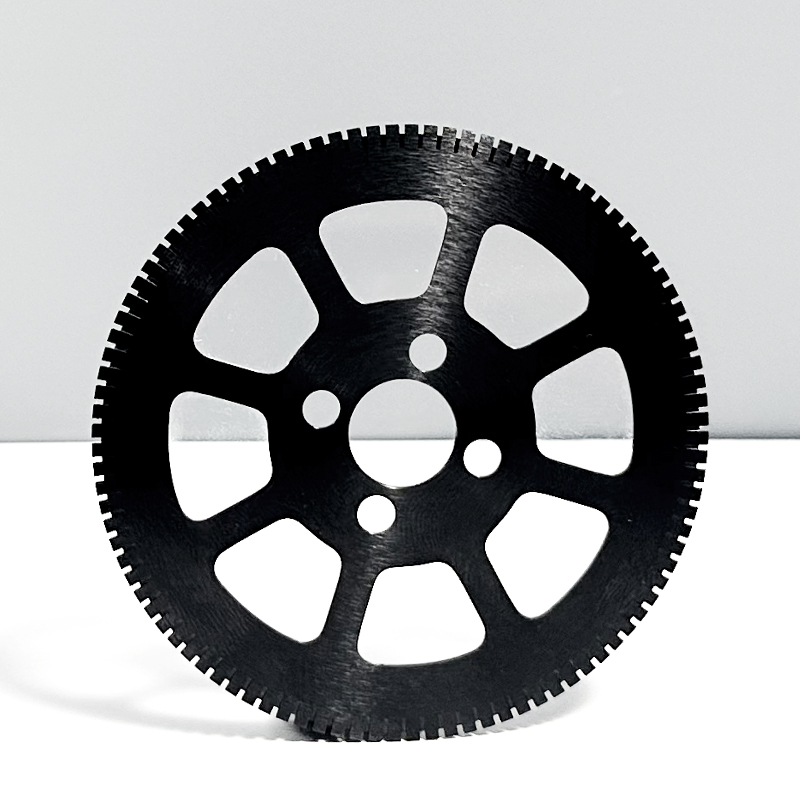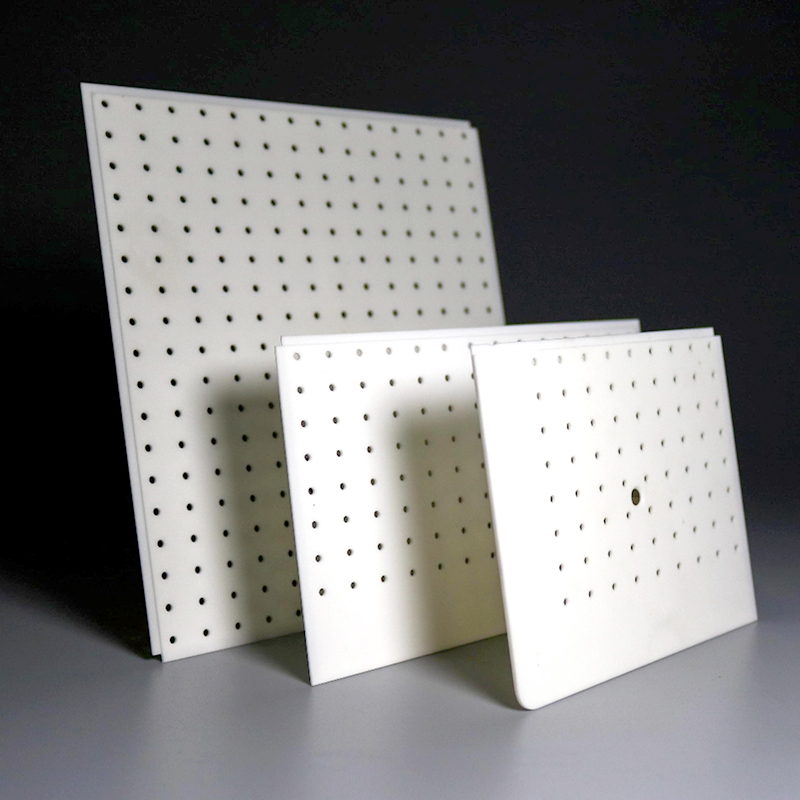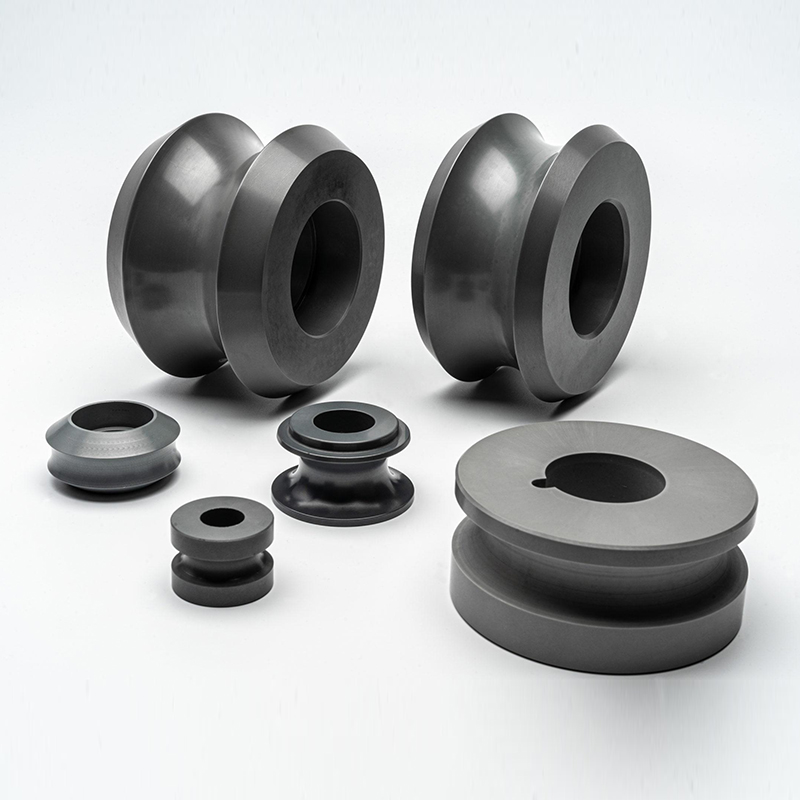


Introduction: Why Silicon Carbide Ceramics Matter in Extreme Environments
Silicon carbide (SiC) ceramics are among the most important advanced structural ceramic materials used today. Owing to their unique atomic structure and exceptional combination of mechanical, thermal, and chemical properties, SiC ceramics play an irreplaceable role in high-temperature, high-wear, and highly corrosive environments.From mechanical seals and heat exchangers to energy systems, aerospace components, and semiconductor-related equipment, SiC ceramics have become a material of choice for extreme-condition engineering.
At Loongeram, silicon carbide is not treated as a generic ceramic material. Instead, it is engineered as a performance-driven solution, optimized through powder selection, microstructural control, forming routes, and application-oriented design to ensure long-term reliability in demanding industrial systems.
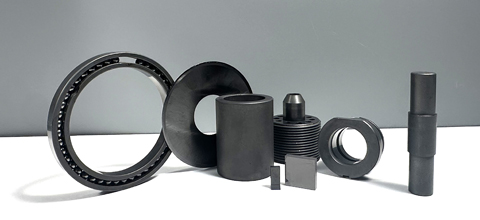
1. Molecular Structure and Crystal Characteristics of Silicon Carbide Ceramics
1.1 Chemical Formula and Atomic Bonding
Silicon carbide consists of silicon (Si) and carbon (C) atoms, with the chemical formula SiC. These atoms are bonded by extremely strong covalent bonds, with a bond energy of approximately 4.6 eV—significantly higher than most oxide ceramics.
This strong covalent bonding is the fundamental reason behind SiC’s:
- Exceptional hardness
- High-temperature stability
- Chemical inertness
- Outstanding wear resistance
1.2 Crystal Structures and Polytypes
Silicon carbide exhibits a wide range of polytypes, caused by different stacking sequences of Si–C bilayers. The most common forms include:
- α-SiC: Hexagonal crystal system, thermodynamically stable at high temperatures
- β-SiC: Cubic crystal system, stable at lower temperatures
In industrial ceramic components, α-SiC is the dominant phase. In its crystal lattice, both silicon and carbon atoms adopt sp³ hybridization, forming a dense tetrahedral coordination structure. This compact atomic arrangement gives SiC ceramics their exceptionally high hardness, stiffness, and structural stability.
2. Outstanding Performance Characteristics of Silicon Carbide Ceramics
2.1 Mechanical Properties
Silicon carbide ceramics demonstrate outstanding mechanical performance under extreme service conditions:
- Ultra-high hardness:
Knoop hardness of 2480–2800 kg/mm², second only to diamond and cubic boron nitride (c-BN) - High elastic modulus:
Approximately 400–450 GPa, ensuring excellent dimensional stability under load - Superior wear resistance:
Extremely low wear rates across a wide range of friction and abrasive environments
From Loongeram’s engineering perspective, these properties make SiC particularly suitable for long-life components operating under continuous mechanical stress.
2.2 Thermal Properties
The thermal performance of silicon carbide ceramics is one of their most valuable advantages:
- High thermal conductivity:
120–200 W/(m·K) at room temperature, enabling efficient heat dissipation - Low coefficient of thermal expansion (CTE):
Approximately 4.5 × 10⁻⁶ /K, resulting in excellent thermal shock resistance - High-temperature strength retention:
Mechanical strength remains stable even at 1600°C
This combination of high thermal conductivity + low CTE makes SiC an ideal material for components exposed to rapid temperature fluctuations or sustained thermal gradients.
2.3 Chemical Stability
Silicon carbide ceramics exhibit exceptional chemical inertness:
- Resistant to most acids and alkalis
- Oxidation resistance up to 1600°C
- Poor wettability with most molten metals, reducing chemical attack and adhesion
These characteristics explain why SiC ceramics are widely used in chemical processing equipment, energy systems, and corrosive high-temperature environments.
3. Preparation Technologies of Silicon Carbide Ceramics
Industrial SiC ceramics are typically produced through advanced processes such as:
- Reaction-bonded SiC (RB-SiC)
- Pressureless sintered SiC (SSiC)
- Recrystallized SiC
- Hot-pressed or HIP-treated SiC
Each route offers different trade-offs between density, mechanical performance, thermal conductivity, and production cost.
At Loongeram, the preparation method is selected based on application-specific requirements, ensuring optimal balance between performance, manufacturability, and cost efficiency.
4. Industrial Applications of Silicon Carbide Ceramics
4.1 Mechanical Seals and Bearings
In mechanical engineering, SiC ceramics are extensively used for:
- Mechanical seal rings:
Outstanding corrosion and wear resistance; service life 5–8 times longer than cemented carbide - Ceramic bearings:
Suitable for high-speed, high-temperature, and corrosive environments - Nozzles and liners:
Excellent performance in sandblasting and powder conveying systems
4.2 Metallurgy and High-Temperature Industries
In high-temperature industrial environments, SiC ceramics offer unique advantages:
- Kiln furniture (rollers, setter plates):
Service life 3–5 times longer than alumina-based materials - High-temperature heat exchangers:
Operating temperatures up to 1300°C, with significantly improved thermal efficiency - Aluminum electrolysis cell linings:
Excellent resistance to cryolite corrosion and extended service life
4.3 Chemical Processing and Energy Industries
Silicon carbide ceramics perform exceptionally well in aggressive chemical conditions:
- Chemical pump components:
High reliability under acid and alkali corrosion - Flue gas treatment systems:
Suitable for desulfurization and denitrification due to high-temperature corrosion resistance - Nuclear industry components:
Low neutron absorption cross-section and excellent radiation resistance
4.4 Aerospace and Defense Applications
In advanced and defense-related technologies, SiC ceramics are increasingly critical:
- Aero-engine components:
High-temperature resistance and low density contribute to improved thrust-to-weight ratios - Armor protection materials:
High hardness combined with low density offers superior ballistic performance - Spaceborne mirrors and optical structures:
High stiffness and minimal thermal deformation ensure optical precision
These applications demand extreme reliability, an area where Loongeram’s material validation and quality control play a decisive role.
Conclusion: Silicon Carbide Ceramics as a Cornerstone of Advanced Engineering
With its unique atomic structure and outstanding combination of properties, silicon carbide ceramics have become indispensable across mechanical engineering, metallurgy, chemical processing, energy systems, aerospace, and defense industries.As manufacturing technologies continue to advance and production costs gradually decrease, the application scope of SiC ceramics will further expand, providing strong material support for next-generation industrial systems.Looking ahead, continuous scientific research and process innovation will unlock even greater potential for silicon carbide ceramics. Backed by materials science expertise, engineering experience, and application-driven design, Loongeram is committed to delivering reliable SiC ceramic solutions that meet the most demanding performance requirements in modern industry.