

Introduction: Why Manufacturing Capability Defines Ceramic Performance
In the field of advanced technical ceramics, material properties do not originate from datasheets—they are engineered through controlled processing, deep materials knowledge, and manufacturing discipline.
At Loongeram, advanced ceramics are not treated as generic materials but as application-specific engineered systems. From powder selection to final inspection, each process step is optimized to meet real-world industrial requirements in semiconductor equipment, power electronics, chemical processing, and high-temperature mechanical systems.
This article provides a transparent, engineering-level overview of how Loongeram transforms ceramic powders into high-performance, high-reliability ceramic components, reinforcing trust through technical depth and process clarity.
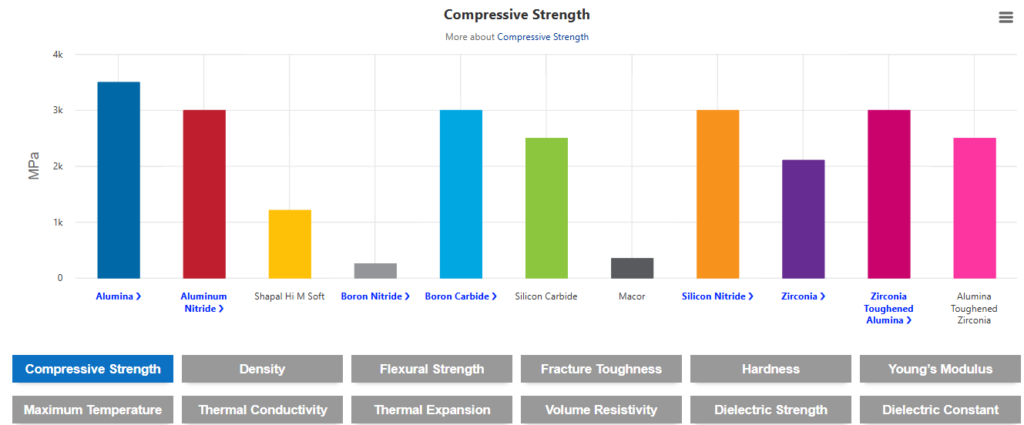
1. Powder Engineering at Loongeram: Performance Starts at the Micron Level
1.1 Material Purity as a Reliability Foundation
Loongeram focuses on high-purity ceramic systems, including:
- Alumina (Al₂O₃): 95%–99.9%
- Aluminum Nitride (AlN): oxygen-controlled grades
- Silicon Carbide (SiC)
- Silicon Nitride (Si₃N₄)
Engineering control points at Loongeram:
- Strict impurity limits to minimize grain-boundary phases
- Oxygen content optimization in AlN to preserve phonon transport and thermal conductivity
- Batch traceability to ensure consistency across production lots
These practices directly support high dielectric strength, stable thermal conductivity, and repeatable mechanical performance, especially critical in semiconductor and electronics applications.
2. Forming Technologies: Matching the Process to the Application
Loongeram selects forming routes based on component geometry, tolerance requirements, and end-use environment, rather than using a one-size-fits-all approach.
2.1 Precision Pressing (Dry Pressing & CIP)
- Suitable for substrates, insulation components, and wear parts
- Cold Isostatic Pressing (CIP) improves green density uniformity
- Reduces internal stress and sintering distortion
2.2 Tape Casting for Electronic Substrates
For electronic and thermal-management ceramics:
- Controlled slurry chemistry
- Tight thickness control
- High flatness and surface uniformity
This process supports stable metallization, predictable thermal paths, and reliable module assembly.
2.3 Ceramic Injection Molding (CIM)
Applied to:
- Complex geometries
- High-volume precision components
Binder systems and debinding schedules are internally optimized to avoid cracking and internal porosity.
3. Sintering Expertise: Where Materials Science Meets Experience
Sintering defines not only density, but also grain size, grain-boundary chemistry, and long-term stability.
3.1 Multi-Route Sintering Capability at Loongeram
Depending on material and application, Loongeram employs:
- Pressureless sintering (oxide ceramics)
- Hot pressing (HP) for difficult-to-sinter systems
- Hot Isostatic Pressing (HIP) to eliminate residual porosity
- Advanced sintering profiles for AlN and Si₃N₄ under controlled atmospheres
Engineering value:
Achieving >99.5–99.9% theoretical density, essential for:
- High insulation reliability
- Thermal conductivity consistency
- Resistance to thermal fatigue
3.2 Microstructure Control as a Competitive Advantage
Loongeram emphasizes grain-size control and porosity elimination, enabling:
- Reduced crack initiation sites
- Stable mechanical properties under thermal cycling
- Predictable electrical and thermal behavior across batches
This is particularly important in power electronics substrates and semiconductor thermal components, where microstructural instability can lead to early failure.
4. Precision Machining & Final Tolerance Control
High-performance ceramics require equally advanced finishing processes.
Loongeram applies:
- Diamond grinding and polishing
- Laser-assisted and ultrasonic machining for complex features
- Tight dimensional control (±0.01 mm typical)
- Ultra-smooth surface finishes for electronic and vacuum applications
This ensures compatibility with metal brazing, metallization layers, and high-vacuum systems.
5. Quality Validation and Trustworthy Performance Data
To support engineering decision-making, Loongeram validates finished components through multi-dimensional testing:
| Property | Typical Control Level | Engineering Relevance |
|---|---|---|
| Density | ≥99% theoretical | Structural reliability |
| Hardness | HV 1800–2200 | Wear and durability |
| Thermal Conductivity | Application-specified | Heat dissipation |
| CTE | Tight tolerance | Interface reliability |
| Dielectric Strength | Industry-grade | Electrical safety |
Each test directly corresponds to real application risks, reinforcing trust in both material data and manufacturing reliability.
6. Application-Oriented Engineering Philosophy
Rather than selling “ceramic materials,” Loongeram provides ceramic solutions engineered for use conditions, including:
- High-power semiconductor packaging
- High-temperature chemical environments
- Wear-intensive mechanical systems
- Electrically insulating but thermally conductive components
By aligning material selection, processing routes, and quality validation with end-use requirements, Loongeram reduces customer risk and development cycles.
Conclusion
The true value of advanced technical ceramics lies not only in material properties but in the engineering systems that produce them.Through controlled powder engineering, application-driven forming, precise sintering, and rigorous validation, Loongeram demonstrates measurable expertise and trustworthy manufacturing capability. This transparent approach builds long-term confidence for engineers seeking ceramic components that perform reliably under demanding industrial conditions.In advanced ceramics, process discipline is performance—and at Loongeram, performance is engineered from the very first powder particle.