

Abstract
Thermal shock resistance is one of the most critical yet challenging performance indicators for advanced technical ceramics. While ceramics are renowned for their high hardness, thermal stability, and corrosion resistance, their inherent brittleness makes them particularly vulnerable to rapid temperature changes. This article provides a systematic and engineering-oriented analysis of thermal shock mechanisms, evaluation models, material performance comparisons, engineering enhancement strategies, and real-world applications of advanced ceramics under extreme thermal conditions.

1. Why Thermal Shock Is a Critical Challenge for Ceramics
Among all engineering materials, ceramics occupy a unique position. They offer superior hardness, high-temperature stability, and chemical inertness. However, these advantages come with an inherent drawback—brittleness.
When a ceramic component experiences a sudden temperature change—for example, quenching from temperatures above 1000 °C down to room temperature—metals can partially accommodate the stress through plastic deformation. Ceramics, by contrast, behave more like rigid glass: once the internally generated thermal stress exceeds their fracture limit, catastrophic cracking occurs almost instantaneously.
This failure phenomenon is known as thermal shock, a form of mechanically driven damage caused by steep temperature gradients within the material.
2. Microscopic Mechanisms of Thermal Shock: How Cracks Initiate and Propagate
To understand thermal shock resistance, one must examine the microstructural origins of failure. Advanced ceramics are typically composed of countless crystalline grains with different orientations and grain boundaries. During rapid heating or cooling:
- Different grains expand or contract at different rates
- Localized thermal stresses accumulate at grain boundaries
- Invisible microcracks form at stress concentration sites
As the temperature gradient increases, these microcracks grow, interact, and eventually link together, forming visible macrocracks and complete fracture.
Key Material Parameters Governing Thermal Shock Resistance
- Coefficient of Thermal Expansion (α): Higher expansion leads to greater thermal stress
- Thermal Conductivity (k): Faster heat transfer reduces temperature gradients
- Fracture Toughness (Kᴵᶜ): Determines resistance to crack propagation
- Elastic Modulus (E): Stiffer materials absorb less strain energy
A simplified engineering relationship is often expressed as:
Thermal Shock Resistance ∝ (Thermal Conductivity × Fracture Toughness) / (Thermal Expansion × Elastic Modulus)
In practical terms, an ideal thermal-shock-resistant ceramic should exhibit:
- High thermal conductivity
- Low thermal expansion
- High fracture toughness
- Balanced mechanical stiffness
3. How Thermal Shock Resistance Is Evaluated
3.1 Critical Temperature Difference (ΔTᶜ)
In both academic research and industrial qualification, thermal shock resistance is commonly evaluated by the critical temperature difference (ΔTᶜ). This parameter represents the maximum temperature drop a material can withstand during rapid cooling without visible cracking.
3.2 Classical and Modified Thermal Shock Parameters
| Parameter | Formula | Physical Meaning |
|---|---|---|
| R | σ_f · k / (E · α) | Resistance to crack initiation |
| R′ | (1–ν) · σ_f · k / (E · α) | Modified model including Poisson’s ratio |
| R″ | k / (E · α) | Damage tolerance during crack propagation |
These models highlight a key insight: increasing strength or thermal conductivity, and reducing thermal expansion, significantly improves thermal shock resistance.
4. Thermal Shock Performance of Representative Advanced Ceramics
| Material | CTE α (×10⁻⁶/K) | Thermal Conductivity (W/m·K) | Fracture Toughness (MPa·m¹ᐟ²) | ΔTᶜ (°C) | Performance |
|---|---|---|---|---|---|
| Silicon Nitride (Si₃N₄) | 3.0 | 70–90 | 6–10 | >800 | Excellent |
| Silicon Carbide (SiC) | 4.0 | 120–200 | 3–5 | 600–800 | Very good |
| Aluminum Nitride (AlN) | 4.5 | 150–180 | 2–3 | 400–600 | Stable |
| ZTA (Zirconia Toughened Alumina) | 7.5 | ~30 | 5–7 | 300–400 | Moderate |
| Alumina (Al₂O₃) | 8.0 | ~25 | 3–4 | <300 | Low |
Engineering Interpretation
- Silicon nitride (Si₃N₄) offers the most balanced performance, combining low thermal expansion and high fracture toughness, making it a flagship material for high-temperature structural applications.
- Silicon carbide (SiC) is distinguished by exceptionally high thermal conductivity, ideal for high heat-flux components such as heat exchangers and burner nozzles.
- Aluminum nitride (AlN) uniquely combines high thermal conductivity with electrical insulation, making it highly valuable for semiconductor packaging and power electronics.
5. Engineering Strategies to Enhance Thermal Shock Resistance
Advanced ceramic manufacturers and engineers apply multiple strategies to improve thermal shock performance:
5.1 Hot Isostatic Pressing (HIP)
Eliminates residual porosity and increases density, improving mechanical reliability.
5.2 Whisker and Fiber Reinforcement
SiC or Al₂O₃ whiskers deflect cracks and prevent straight-line propagation.
5.3 Functionally Graded Structures
Outer layers resist thermal shock, while inner layers provide toughness and strength.
5.4 Surface Coatings and Thermal Barrier Coatings (TBCs)
Reduce temperature gradients at the material surface.
5.5 Nano-Scale Microstructural Engineering
Enhances energy dissipation during crack growth through interfacial design.
In optimized systems, these methods can increase thermal shock resistance by 3–5 times compared with conventional ceramics.
6. Industrial Applications Under Thermal Shock Conditions6.1 Semiconductor Manufacturing Equipment
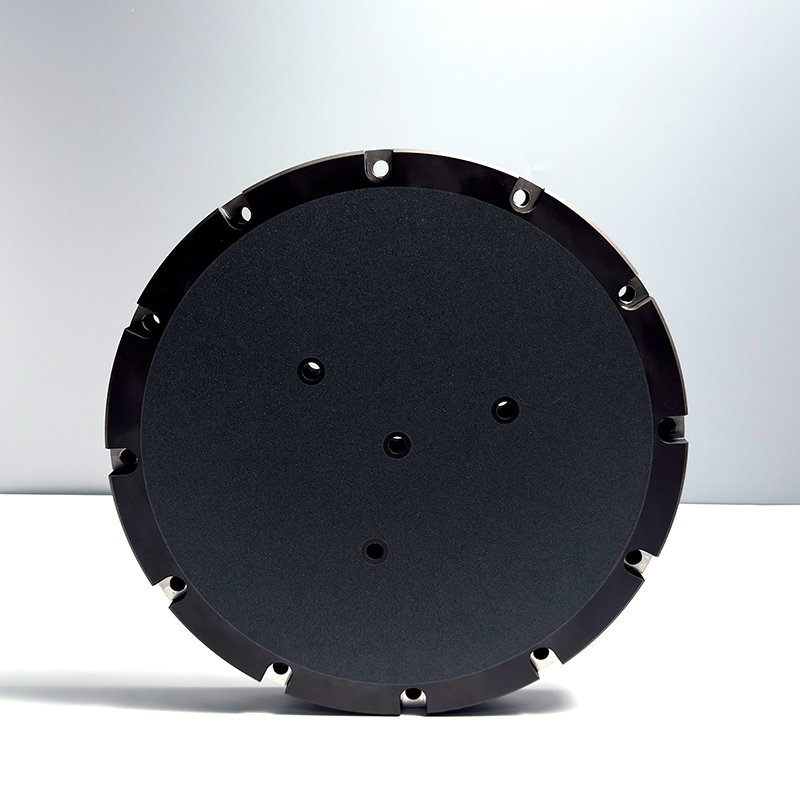
AlN-based susceptors and carriers maintain dimensional stability during rapid heating and cooling cycles.
6.2 Aerospace and Defense
SiC–Si₃N₄ composite thermal shields withstand thermal shock above 1500 °C.
6.3 Energy Systems
Hydrogen combustion nozzles and nuclear reactor insulation components must survive repeated high-temperature cycling.
6.4 Electronic Packaging
AlN circuit substrates combine high thermal conductivity with low CTE to prevent thermal fatigue failures.
Each successful application is the result of extensive thermal shock testing and failure analysis.
7. Future Outlook: From “Heat Resistance” to “Thermal Intelligence”Future research is shifting beyond purely physical reinforcement toward intelligent material design:
- AI and machine learning for thermal fatigue life prediction
- Digital twin modeling for virtual thermal shock simulations
- Advanced composite gradients balancing stiffness and toughness
- Low-carbon manufacturing methods such as microwave sintering
Thermal shock resistance is no longer a single property—it is a system-level engineering philosophy enabling materials to not only survive high temperatures, but to confidently manage extreme temperature gradients.
8. Conclusion
The thermal shock resistance of advanced technical ceramics represents one of the most demanding frontiers in modern materials engineering. It directly affects the safety of engines, the reliability of semiconductor devices, and the survivability of aerospace systems.
As multiscale modeling, nano-engineering, and sustainable manufacturing converge, ceramics are evolving from “brittle glass-like materials” into robust, high-temperature structural solutions capable of standing alongside metals in extreme environments.